South Africa: Finding alternatives - how community partnerships are opening new pathways for women and Survivors

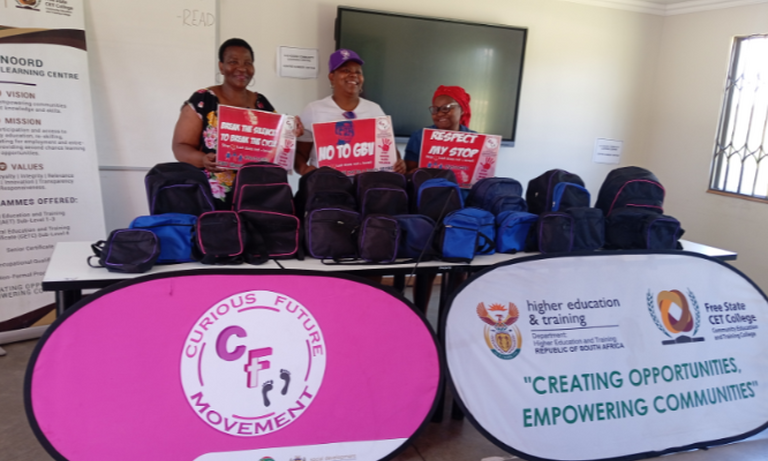
When the Curious Future Movement first partnered with an Adult Basic Education and Training (ABET) center three years ago, the goal was simple: to expose learners many from deeply dysfunctional family backgrounds to conversations that could help them think differently about their futures. What followed, however, went far beyond classroom talks. Through sustained engagement, mentorship, and community partnerships, the initiative began reshaping lives quietly, steadily, and with lasting impact.
At the heart of this journey were learners and women who had long been navigating poverty, unemployment, and, in many cases, violence at home. Many came without knowing what opportunities might lie ahead, only that they needed support, skills, and someone to listen. Over time, facilitators and mentors saw something shift. Learners who had once struggled with confidence began to find their voices. Women who had felt trapped by circumstance started to imagine alternatives.
“Ever since we started with Curious Future Movement three years ago as an ABET center,” reflected one partner, “we have seen positive changes in the learners we referred to them.” Initially, the focus was on learners with academic and personal challenges, but as the Programme expanded, doors opened wider. The center began reaching beyond the classroom embracing women from the surrounding community, particularly those who were unemployed or dealing with the impacts of gender-based violence.
For many women, the experience was transformative not just because of what they learned, but because of what they realized about themselves. Skills training particularly in sewing and small enterprise development became more than a practical tool; it became a pathway to dignity and independence. Training spaces became places of healing, where women could separate their identities as survivors from their aspirations as earners and leaders.
Yet the journey was not without its limitations. Participants were honest about what was still needed. “If we can have a regular mentor or facilitator permanently for proper guidance,” one woman shared, “and increase the training days with more opportunities to learn skills, that would make a real difference.” The need for consistency, deeper mentorship, and expanded learning opportunities remains central to the next phase of growth.
Perhaps the most powerful testimony came from a survivor reflecting on missed chances. “How I wish I had known about your organization earlier,” she said. “I would have made different decisions instead of staying in an abusive relationship for so many years, because I did not have an alternative.” Her words speak to a reality faced by many women economic dependence often traps survivors in cycles of violence, leaving them feeling they have nowhere else to go.
By creating tangible alternatives skills, training spaces, peer support, and real pathways to income the Programme began addressing this gap directly. Women were no longer seen solely through the lens of vulnerability, but as individuals with potential, agency, and the right to economic independence. Separating victim support programs from skills training allowed women to engage at their own pace, ensuring safety, dignity, and empowerment were prioritized equally.
Sustainability has become a guiding principle for the initiative. The organization now has sewing machines and access to two different venues that allow training to continue and expand. Victims and survivors are trained at a venue closer to the Victim Support Services office, ensuring accessibility and confidentiality, while unemployed women from the broader community are supported through the Community Learning Centre. This intentional separation ensures that each group receives appropriate, tailored support.
Looking ahead, the vision is clear. The organization aims to secure its own permanent container that will serve as a dedicated training space for women linked to the Victim Support Services offices. This would provide stability, reduce dependence on shared facilities, and allow for long-term planning. It would also symbolize something deeper a permanent, visible commitment to women’s empowerment within the community.
What began as a modest partnership has evolved into a model of how grassroots collaboration can address interconnected challenges: education, unemployment, and gender-based violence. By listening to women’s voices, responding to real needs, and building practical alternatives, the Curious Future Movement has shown that change does not always begin with large-scale interventions. Sometimes, it starts with opening a door and keeping it open long enough for women to walk through on their own terms.
Comments
Related Stories Of Change