South Africa: Long-term support for families after femicide

Following the arrest of the perpetrator in 2024, Roslin’s family was referred to the Callas Foundation through trusted community leaders. This referral pathway reflected the Foundation’s strong community roots and its accessibility to families affected by gender‑based violence. From the outset, the organisation recognised that femicide is not a single event but a prolonged crisis that affects families over years, not months, and that meaningful support must extend beyond the moment of arrest or sentencing.
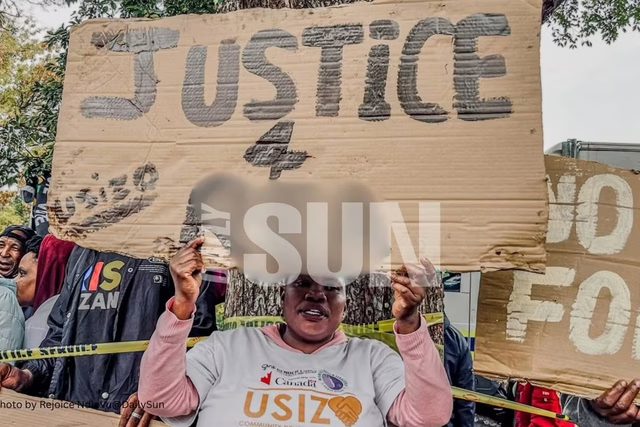
The Callas Foundation provided continuous court accompaniment, ensuring that the family was informed, prepared, and supported throughout the justice process. Legal proceedings are often overwhelming for victims’ families, marked by repeated delays, unfamiliar procedures, and the emotional burden of reliving trauma. By walking alongside the family through every court appearance, the Foundation helped them participate meaningfully in the process and mitigated the sense of isolation that many survivors experience when institutional systems move on.
At the same time, the Foundation prioritised the emotional wellbeing of Roslin’s children. Psychosocial debriefing and counselling were provided to help them process grief and trauma in ways appropriate to their age and circumstances. These interventions acknowledged the children not only as witnesses to violence but as rights‑holders whose experiences and healing required intentional, sustained support. In doing so, the Foundation addressed the silent and lasting harm that femicide inflicts on children left behind.
Stability and legal protection were equally critical. The Callas Foundation supported the children’s maternal grandmother to obtain a Letter of Authority for her late daughter’s estate and to assume formal legal guardianship of the children. This process was essential in safeguarding their rights, securing continuity of care, and protecting them from further disruption at a time of extreme vulnerability. Without this intervention, the children faced heightened risks linked to legal uncertainty and fragmented caregiving.
As is common in femicide cases, support from institutions and even community networks diminished as the case moved slowly through the courts. Public attention faded, yet the family’s needs remained acute. Over the course of 19 months, the Callas Foundation maintained consistent engagement, demonstrating the importance of long‑term accompaniment rather than short‑term crisis responses. The perpetrator was denied bail throughout the proceedings, and on 12 November 2025, he pleaded guilty. He was sentenced to 25 years’ imprisonment, with eligibility for parole after 15 years.
The conclusion of the legal process, however, did not mark the end of the family’s challenges. In December 2025, the children’s maternal grandmother — their legal guardian and primary caregiver — passed away. Her death placed the children at renewed risk of instability, reopening questions of care, protection, and emotional security at a moment when they were still recovering from multiple layers of loss.
Once again, the Callas Foundation responded. Working closely with extended family members, the organisation supported the process of securing appropriate caregiving arrangements to ensure that the children’s wellbeing, safety, and emotional needs were prioritised. This intervention reinforced the reality that justice, while essential, is insufficient on its own to restore dignity, stability, and hope for families affected by femicide.
This story illustrates the urgent need for sustained, rights‑based, and trauma‑informed responses to gender‑based violence. Legal accountability matters, but it does not undo grief, repair disrupted childhoods, or rebuild broken family systems. Through consistent accompaniment, advocacy, and care, the Callas Foundation ensured that this family was not abandoned once headlines faded or court doors closed.
By centring survivors’ dignity and long‑term healing, the Foundation’s work affirms a critical truth: responding to femicide must extend beyond the verdict. It requires commitment, compassion, and the recognition that justice is not a moment — it is a process that must hold families long after the courtroom falls silent.
Comments
Related Stories Of Change