South Africa: Restoring dignity and independence to GBV survivors through skills and entrepreneurship

For many survivors of gender-based violence (GBV), leaving an abusive relationship is only the first step in a much longer journey towards safety and independence. Economic dependence often keeps women trapped in harmful situations, unable to imagine a future free from abuse. In Bethlehem in South Africa's Free State province, one woman is helping change that reality by equipping survivors with practical skills, confidence and opportunities to build sustainable livelihoods.
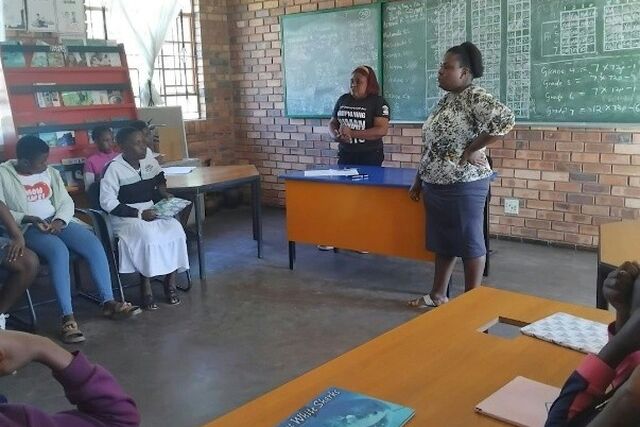
A beautician and salon owner originally from Lesotho and now based in Bethlehem, believes that economic empowerment is a powerful tool in the fight against GBV. Rather than focusing solely on running a profitable business, she has dedicated her time and expertise to helping women rebuild their lives through skills development. Working in partnership with a shelter supporting GBV survivors, Ithabeleng provided training in beauty therapy, including nail technology, eyelash installation, hair styling and weave installation. The initiative was designed to address two interconnected challenges facing many survivors: unemployment and financial dependence on abusive partners.
Before the intervention, many of the women had limited employment opportunities, little or no formal education, and no independent source of income. As a result, some remained in abusive relationships because they lacked the financial means to support themselves and their children. Recognising this challenge, the shelter approached Ithabeleng to provide practical training that could help survivors generate income and regain control over their lives.
When approached by the shelter, Ithabeleng immediately embraced the opportunity to contribute. Motivated by a passion for women's empowerment, she agreed to provide the training at a discounted rate to support the work of the non-profit organisation.
The programme went beyond teaching technical beauty skills. Survivors also received entrepreneurship training to help them understand how to start, manage and sustain small businesses. In addition, the shelter provided complementary training in basic computer literacy, sewing and gardening, giving participants a broader range of skills to support their future livelihoods. The impact of the programme has already begun to transform lives.
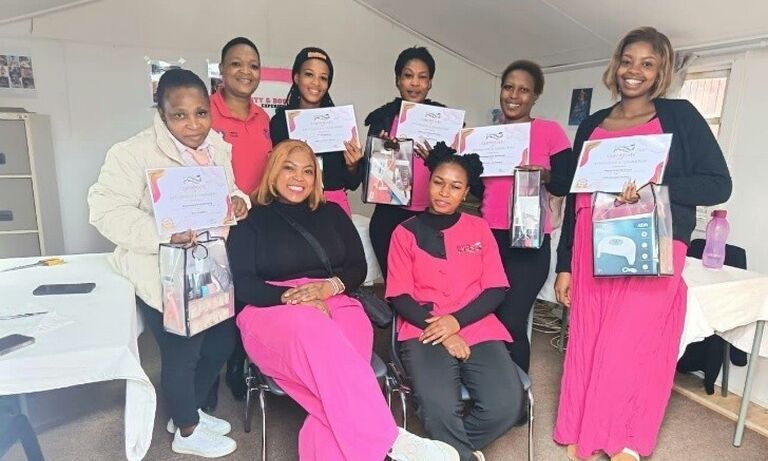
After completing their training, participants received certificates recognising their achievement. They have since started practising their skills by providing services to staff members at the shelter, who pay for their work. The income generated is being used to purchase additional materials and equipment, allowing the women to take the first steps towards establishing their own businesses. For many participants, the training has provided more than technical skills. It has restored confidence, self-worth and hope for the future.
One survivor, Pulane Mokone, said the programme had given her a pathway to independence.
"I appreciate the beauty training I received through the organisation because I was dependent on my partner for financial support because I am unemployed and have no formal education. Now I have these certificates and skills which I am going to use to start my own salon and earn money. Now I know how to do nails and I enjoy doing nails."
Another participant, Liesbeth Rickets, described how the training helped her envision a future free from dependence on abusive relationships.
"I am proud of being in this shelter and I enjoy staying here. I thank the shelter for making me better and confident. I am now confident that when I leave the shelter I will be able to support myself by doing nails and hair. I do not have to depend on a man anymore for financial support."
For Palesa Ramolota, the experience was life-changing.
"Being in the shelter boosted my self-esteem. I did not love myself before and allowed abuse in my relationship. Coming to the shelter benefited me in getting skills in nails, eyelashes, weave and makeup. I have already started working with staff members in the organisation, and they pay me for doing their nails. I am so happy and cannot wait to do more."
Evidence of the change can be seen through the certificates awarded to participants, photographs of their work, and the growing number of women already earning income through the skills they have acquired. What began as a training programme is steadily becoming a foundation for long-term economic independence.
The sustainability of the initiative is a key strength. Ithabeleng has committed to continuing as a mentor to the women after the training ends. She has encouraged participants to contact her whenever they need guidance, technical support or business advice. Survivors also received starter packs to help them begin providing services immediately and generating income.
As their client base grows, the women are expected to reinvest earnings into purchasing additional materials and expanding their businesses. This practical approach enables participants to move from training into entrepreneurship while building self-reliance and resilience. The initiative demonstrates how community partnerships can play a meaningful role in addressing the root causes of GBV. By equipping survivors with marketable skills, business knowledge and ongoing mentorship, the programme is helping women regain their independence, rebuild their confidence and create new opportunities for themselves.
For these survivors, empowerment is no longer just an idea. It is visible in every certificate earned, every client served, and every step taken towards a future free from violence and financial dependence. Through the dedication of Ithabeleng and the support of the shelter, women are not only surviving abuse. They are creating sustainable livelihoods and reclaiming control of their lives.
Comments
Related Stories Of Change