South Africa: Khanyisile Ngobeni’s journey towards confidence and Independence

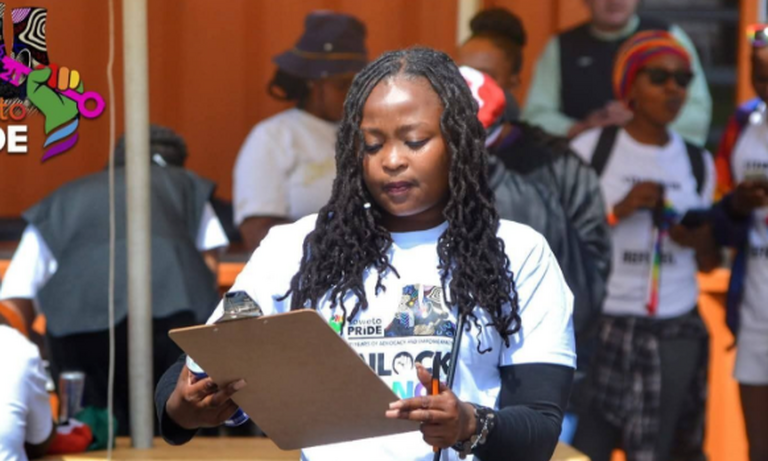
For more than five years, Khanyisile Ngobeni found herself outside the world of formal employment. Like many women, prolonged unemployment began to affect not only her financial stability, but also her confidence, self-worth, and sense of purpose. Opportunities felt distant, and without access to practical work experience, it became increasingly difficult to imagine a pathway back into the workplace.
That turning point came when Khanyisile joined Gender Links as an intern. The internship offered more than just a role; it provided a structured, supportive environment where she could learn, contribute, and rediscover her capabilities. From the outset, the experience exposed her to the inner workings of a feminist organization committed to justice, accountability, and social change.
One of the most impactful aspects of the internship was gaining hands-on exposure to organizational operations, finance procedures, and Program coordination. Khanyisile learned how administrative and financial systems underpin effective Program implementation. She was introduced to budgeting processes, basic financial reporting, documentation standards, and compliance requirements areas she had previously only understood in theory.
Through this exposure, her confidence grew. Handling administrative and financial tasks helped her appreciate the importance of accuracy, transparency, and accountability in managing organizational resources. She began to understand how strong financial systems support sustainability and credibility with donors and partners, and why even behind-the-scenes work plays a critical role in advancing gender justice.
The internship also deepened her understanding of Program coordination. Khanyisile supported planning processes, documentation, and communication across different teams, giving her insight into how collaboration drives effective Program delivery. Working alongside colleagues showed her how teamwork, shared responsibility, and clear communication are essential particularly in organizations operating within complex social and community contexts.
Learning under the guidance of the Executive Director and the Finance Team was especially formative. Their mentorship went beyond technical instruction; it offered insight into leadership, decision-making, and problem‑solving in real time. Khanyisile observed how challenges are managed while balancing Program demands, financial responsibilities, and staff wellbeing. She felt supported to ask questions, make mistakes, and learn from them an experience that strengthened her professional confidence.
Beyond skills, the internship reshaped how Khanyisile viewed herself. Being entrusted with meaningful responsibilities helped her see herself as capable, employable, and deserving stability and independence. The experience reinforced discipline, accountability, and professional standards that are often difficult to grasp without real‑world practice.
Importantly, the internship also strengthened her commitment to feminist values. Being part of an organization that centers care, justice, and accountability helped her understand how administrative work contributes to broader social change. She recognized that every role whether public facing or operational supports the collective mission of advancing gender equality and human rights.
The change in Khanyisile’s life is tangible. The most immediate evidence is her transition from long-term unemployment to formal employment in a structured role. Employment records, defined responsibilities, and consistent participation in daily work provide concrete proof of this shift. She is now actively engaged in administration, finance, and Program‑related tasks, contributing meaningfully to organizational operations.
Her professional growth is also reflected in the skills she applies to daily. Khanyisile is able to independently manage documentation, support financial processes, work within established systems, and meet deadlines. These are not temporary gains, but sustained abilities are applied in a real work environment. Equally visible is the growth in her confidence and professional conduct. Colleagues and supervisors observe her ability to communicate effectively, take initiative, and collaborate as part of a team. Feedback and guidance further confirm her readiness to perform in a professional setting.
Financial independence marks another significant change. Earning an income and managing her own needs has restored a sense of self‑reliance and stability after years of dependency and uncertainty. This independence has also influenced how she plans, makes decisions, and invests in her own development. Reflecting on her journey, Khanyisile describes the internship as transformative not just because of the skills gained, but because of what it made possible. Access to meaningful work allowed her to take control of her life, restore her confidence, and begin building a more stable and hopeful future.
“I am deeply grateful for the opportunity to learn and grow through this internship,” she reflects. The experience has equipped her with practical skills, professional confidence, and a clearer sense of purpose, preparing her for future roles within the nonprofit and social justice sector. Khanyisile’s story is a reminder that opportunity, mentorship, and trust can be life‑changing. When women are given space to learn, contribute, and grow, employment becomes more than survival it becomes a pathway to dignity, independence, and lasting change.
Comments
Related Stories Of Change