South Africa: Building collective power through community practice

A fragmented landscape
In the Umgungundlovu District of KwaZulu-Natal, community-based organisations (CBOs) and non-profit organisations (NPOs play a vital role in supporting women, young people, and other marginalised groups. Deeply rooted in their communities, these organisations respond daily to poverty, gender inequality, unemployment, and social exclusion. Yet despite their commitment, many have long worked in isolation.
Before the intervention, organisations often competed for limited resources, duplicated efforts, and lacked shared platforms for learning, coordination, and collective advocacy. This fragmentation limited the scale and sustainability of their impact. Women-led organisations faced additional structural barriers, including weak governance systems, low visibility, and minimal influence in decision-making spaces.
At the same time, indigenous unemployed young women in rural areas and townships remained among the most excluded. Many experienced poverty, gender-based violence, social marginalisation, and limited access to skills, economic opportunities, and support networks. Short-term projects and isolated interventions failed to address these interconnected challenges in a meaningful and lasting way.
A shift in thinking
The Sasopsbiz Foundation recognised that lasting gender justice and economic empowerment cannot be achieved through stand-alone projects or office-based programmes. Sustainable change requires collective action, grounded in everyday community practice and driven by women themselves.
This understanding led to the development of the Practice-Based Community Empowerment Model, which places learning, leadership, and economic activity within real community spaces. The model prioritises collaboration over competition, shared values over individual gain, and long-term movement building over short-term outputs. It was within this context that the Umgungundlovu Community Empowerment Network Initiative (UCENI) was established. UCENI was designed as a collaborative platform to bring community organisations together, strengthen collective capacity, and build a women-led movement rooted in trust, shared purpose, and practical action.
From isolated projects to collective practice
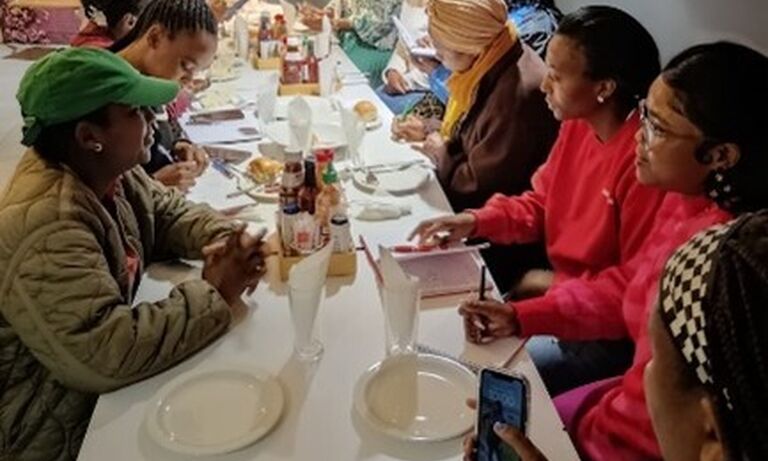
What has changed is not only what is being done in Umgungundlovu, but how it is being done, and with whom. Where once organisations worked as disconnected projects, a growing, women-led movement is now taking shape. Through UCENI, organisations no longer operate in silos. They collaborate, share resources, coordinate activities, and support one another across communities. Training, learning, and leadership development are no longer confined to offices or workshops. Instead, the community itself has become the place of practice.
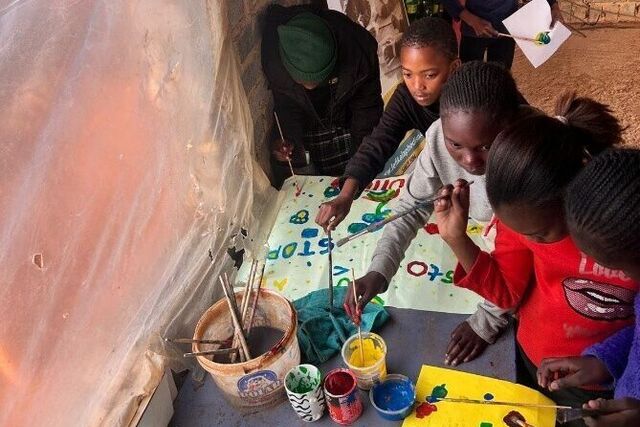
Programmes now take place in homes, schools, community halls, clinics, and local initiatives. This shift has made empowerment efforts more relevant, accessible, and grounded in lived realities and the local economy. Women, particularly indigenous unemployed young women, are no longer positioned only as beneficiaries. They are emerging as learners, leaders, organisers, and future entrepreneurs who help shape their own futures.
A critical change has also occurred in the role of the Sasopsbiz Foundation. Rather than acting as a primary implementer, Sasopsbiz has positioned itself as a facilitator and convener. Its focus is on coordination, systems-building, partnership strengthening, and quality assurance. This approach has enabled community NPOs to move from passive recipients of support to active co-creators of change.
Growth, confidence, and collaboration
UCENI has grown from around 12 loosely connected organisations to more than 20 active members. Alongside this growth, important qualitative shifts are evident. Organisations collaborate rather than compete. Activities are increasingly coordinated across communities. Governance awareness and organisational confidence have strengthened, particularly among women-led NPOs.
Most importantly, thinking has shifted from short-term projects to long-term movement building. The network is no longer focused solely on service delivery, but on building collective power that can influence systems and sustain change over time.
As one member organisation reflects:
“Sasopsbiz believed in us before we even had a track record. Through their support, we were able to start working, gain direction, and give our organisation a name and purpose within the community.”
— Grace of Hope NPO
Another highlights the impact of collaboration on recognition and visibility:
“We have worked in the community for many years, but through this partnership our work is now being recognised and respected. Collaborating with Sasopsbiz strengthened our visibility and confirmed the value of what we have always been doing.”
— Women of Action NPO
For others, the value lies in the relationships that have been built:
“What we appreciate most is the relationship. We are learning from each other, sharing resources, and supporting one another in ways that make our work stronger and more sustainable.”
— Izwi Labafelokazi NPO
Evidence of change
The change is evidenced by both quantitative and qualitative indicators. The growth of UCENI itself demonstrates increased trust, collaboration, and collective commitment. Regular joint activities, shared programmes, and referrals between organisations show that collaboration is now embedded in practice.
There is also clear evidence of a shift from office-based work to community-embedded practice. Programmes are delivered in community halls, schools, and local initiatives in areas such as Mpolweni, KwaMnyandu, Hluhluwe, and Vulindlela. This shift has expanded reach and relevance, bringing empowerment closer to people’s daily lives. Improved governance awareness among member organisations is reflected in participation in governance training and increased organisational confidence. Expansion beyond Umgungundlovu into other districts of KwaZulu-Natal signals that UCENI is evolving from a local initiative into a broader, province-oriented movement.
Sustaining and growing the movement
The sustainability of this change lies in its design. By embedding collaboration, learning, and leadership within everyday community practice, the network reduces reliance on short-term funding cycles and individual organisations.
Sasopsbiz Foundation will continue to play a facilitative and convening role, supporting coordination, shared learning, and quality assurance while enabling member organisations to take increasing ownership of decision-making. This distributed leadership approach strengthens collective resilience and reduces dependency.
Ongoing governance and capacity-building will further strengthen accountability and organisational confidence among women-led NPOs. Regular networking sessions, peer learning platforms, and joint community programmes will reinforce collaboration and prevent a return to siloed operations.
At grassroots level, peer circles for young women and networks of women artisans will nurture leadership, accountability, and mutual support. Gradual expansion beyond Umgungundlovu will link UCENI to wider provincial networks and opportunities, sustaining momentum and deepening impact.
By rooting empowerment in community practice, shared values, and collective leadership, this growing movement is demonstrating that meaningful, lasting change is possible when women organise, learn, and lead together.
Comments
Related Stories Of Change