South Africa: Nurturing a young woman’s leadership and girl child advocacy

A difficult beginning
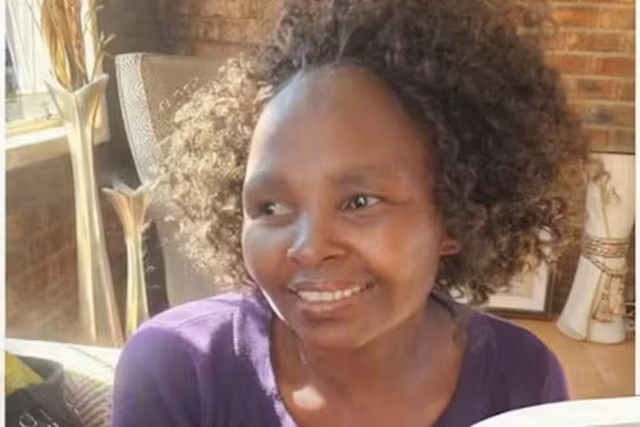
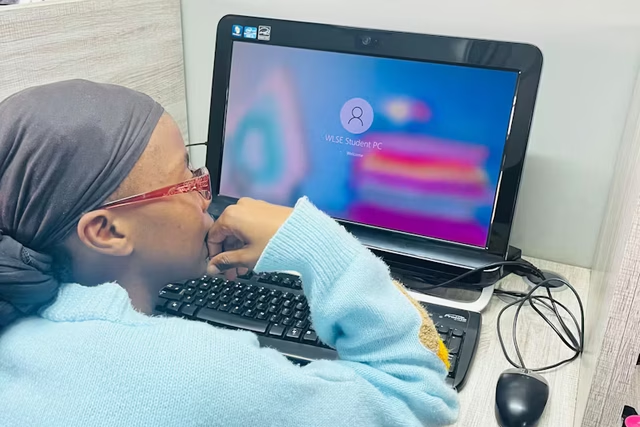
Mosa Machaze is a young woman from Krugersdorp whose life changed dramatically while she was still in high school. Within days, she lost both her father and her grandmother. At the time, she was living with her sibling and her unemployed immigrant mother. The loss of key family members brought emotional strain and uncertainty, and her future appeared fragile.
Like many young girls in South Africa, Mosa faced challenges that extended beyond personal grief. Structural inequalities, economic insecurity, and limited access to platforms where young women’s voices are heard often restrict the opportunities available to girls, particularly those from vulnerable households. While her circumstances were difficult, Mosa possessed qualities that would later shape her journey: quiet confidence, empathy, and a natural ability to communicate.
Investing in the African girl child
The Her Rising Leadership Programme for Girls (HRLPG) was established to support African girls between the ages of 12 and 16, particularly those living in peri‑urban and rural areas. The programme focuses on strengthening agency, building leadership skills, and expanding networks for young girls. Its approach is feminist and holistic, recognising that leadership development must address both personal growth and the broader social realities young women face.
Through targeted training and mentorship, the programme seeks to equip girls with the confidence and skills to advocate for themselves and others. It places strong emphasis on self‑awareness, communication, public speaking, and role‑modelling, while creating safe spaces where girls can develop their voices and leadership identities.
Mosa was selected as part of the first cohort of the programme. Her selection recognised both her potential and her existing abilities, particularly her aptitude for public speaking and thoughtful engagement with social issues affecting girls and young women.
From learner to advocate
Participation in the Her Rising Leadership Programme marked a turning point for Mosa. Through a series of structured training sessions, she developed her public speaking, presentation, and leadership skills. The programme content supported her to deepen her sense of agency and confidence, while refining her ability to articulate ideas clearly and persuasively.
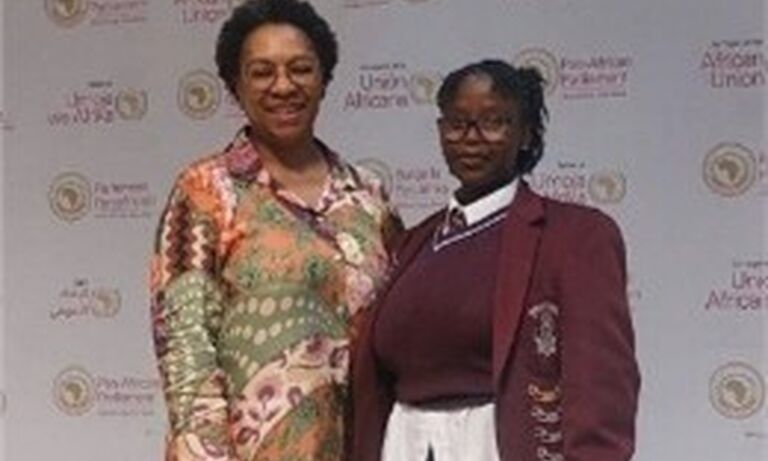
As her confidence grew, so did her exposure to leadership opportunities. Mosa’s talent and composure stood out, leading to her selection as the girl‑child representative at the Pan‑African Parliament commemoration of the Beijing Platform for Action. At just 16 years old, she addressed a room filled with African parliamentary leaders, speaking convincingly on issues affecting girls across the continent.
Her presence and contribution at this high‑level platform demonstrated a significant shift. What had begun as participation in a leadership programme had evolved into meaningful engagement in continental decision‑making spaces. Her wisdom, calm delivery, and thoughtfulness captured the attention of her audience and underscored the importance of including young women’s voices in policy discussions.
Evidence of change
The clearest evidence of change lies in Mosa’s ability to speak confidently at one of Africa’s highest decision making platforms. A video recording of her address at the Pan‑African Parliament, alongside feedback received from organisers and participants, confirms the impact of her contribution.
Beyond the platform itself, the transformation is also reflected in how Mosa communicates. She articulates her views with clarity and conviction, conveying messages rooted in empathy and a strong sense of social justice. Her advocacy reflects not only personal growth, but the effectiveness of intentional investment in young women’s leadership.
Mosa herself reflects on this growth:
“Mosa carries a quiet strength that is felt before it is even seen. She is a grounded and thoughtful young girl who is gentle in her delivery. The programme content succeeded in enhancing her natural attributes, like her deep sense of empathy, maturity, sincerity and consistency. She was able to communicate powerful messages that reflect her advocacy towards change.”
— Mosa Machaze
Feedback from those who witnessed her contribution further reinforces this shift:
“Mosa was excellent. Thank you for making her available. We are all impressed by her input.”
— Florence Maleka
These reflections highlight how structured leadership development, combined with personal resilience, can unlock the potential of young women and position them as credible advocates in influential spaces.
Why this change matters
Mosa’s journey illustrates the importance of investing in the leadership of young women, particularly those facing personal and structural challenges. Her story challenges assumptions about age, experience, and who belongs in decision‑making spaces. It also demonstrates that when young girls are given the tools, mentorship, and platforms to lead, they are capable of contributing meaningfully to national and continental conversations.
The change is not only about individual achievement. It signals what is possible when programmes are designed to nurture confidence, amplify young voices, and recognise girls as agents of change rather than passive beneficiaries.
Sustainability and next steps
The sustainability of this change lies in continued engagement and collaboration. SAWID plans to work with other organisations, including the International Women’s Forum of South Africa and UNISA, to sustain leadership development initiatives for young girls. These partnerships aim to expand opportunities, strengthen networks, and support young women as they transition into further leadership roles.
By building pathways that extend beyond a single programme, the initiative seeks to ensure that young women like Mosa continue to grow, learn, and influence change over time. Her journey stands as a reminder that nurturing leadership early is not only an investment in individual lives, but in a more just and inclusive future.
Comments
Related Stories Of Change