South Africa: From silence to leadership – an elderly woman claims her rights and her voice

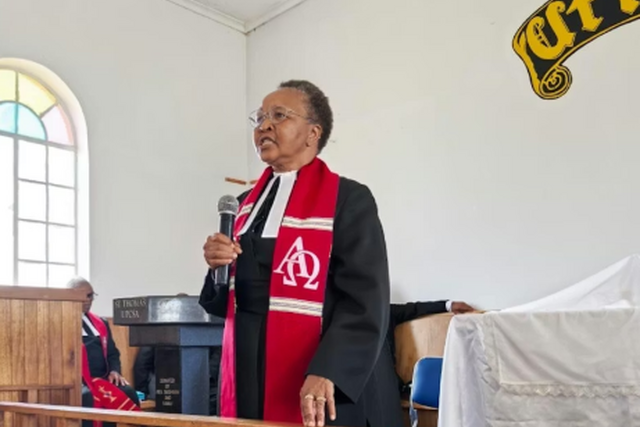
Mam Gladys Yakobi is an elderly woman in her sixties from Town2, a marginalized community in Khayelitsha, South Africa. Like many older women living in low‑income communities, her life before the intervention was shaped by vulnerability, silence, and limited access to information about her rights. Social isolation, poverty, and exposure to abuse within her household and community were part of her daily reality.
Before engaging with The Great People of South Africa (TGPSA), Mam Yakobi lived within a context marked by harmful gender norms that often silence older women. Alcohol and substance abuse among younger family members, combined with economic hardship, increased her exposure to neglect and mistreatment. Abuse was frequently normalized, endured quietly, and rarely discussed. At the time, Mam Yakobi did not have the knowledge or confidence to identify what she was experiencing as abuse, nor did she know that older women had rights that deserved protection.
TGPSA initially focused much of its work on young women and youth. However, through sustained community engagement, the organization began to recognize a critical gap: elderly women were also experiencing gender‑based violence, neglect, and abuse, yet their experiences were largely invisible within GBVF responses. Mam Yakobi’s story brought this reality into focus and highlighted the urgency of expanding legal empowerment and rights awareness initiatives to include older women.
Through support from Women’s Voice and Leadership South Africa, TGPSA implemented community‑based legal empowerment programs aimed at strengthening access to justice. The key objectives were to build legal knowledge, help community members identify abuse, and enable survivors to speak out and claim their rights with confidence. Mam Yakobi became part of this journey through her participation in legal awareness sessions, community dialogues, and organizational activities.
The change that followed was gradual but profound. In safe and respectful spaces created by TGPSA, Mam Yakobi learned about human rights and about what constitutes abuse and gender‑based violence. Importantly, she came to understand that GBV affects women of all ages, not only the young. Her experiences were listened to and validated, allowing her to move from silence to self‑expression.
Over time, Mam Yakobi gained the confidence to speak openly about her experiences and to support other elderly women facing similar challenges. What makes her story unique is not only her personal growth, but the length and depth of her journey with the organization. She transitioned from a quiet beneficiary into a recognized community leader, ensuring that the voices of elderly women are no longer overlooked.
The transformation has been deeply positive. Mam Yakobi now understands her basic human rights, can identify abuse, and actively speaks out against the mistreatment of elderly women in her community. She participates regularly in organizational programs, community discussions, and advocacy spaces, using her voice to challenge harmful practices and raise awareness.
Her leadership has grown to such an extent that she has been integrated into the organization’s board. In this role, she contributes to shaping strategy and programs, ensuring that decisions reflect the lived realities of older women. Her presence in governance spaces represents a powerful shift: elderly women are not only beneficiaries, but active decision‑makers.
The impact of this change extends beyond Mam Yakobi herself. Her family has also been touched by the organization’s work. Her grandson, Olungile Yakobi, participated in the Community‑Based Paralegal Training Program, demonstrating how legal empowerment and rights awareness can strengthen justice and accountability across generations. This intergenerational involvement reflects the wider ripple effect of empowerment rooted in dignity and knowledge.
The evidence of change is clear. Before the intervention, Mam Yakobi had limited awareness of her rights, and abuse and neglect were normalized. Elderly women’s voices were largely absent from community discussions. Today, she confidently speaks about human rights and GBVF, challenges abuse, and encourages other women to come forward. Her sustained participation in programs, public leadership roles, and board membership demonstrate that this change is real and enduring.
Mam Yakobi’s own words reflect this transformation: “Before, I did not know that what I was experiencing was abuse. Now I know my human rights. I can speak. I can stand up for myself and for other elderly women.” Organizational leaders note that her journey has reshaped how programs are designed and whose voices are prioritized. Community members observe that seeing her speak with confidence has encouraged other elderly women to recognize that they matter and that abuse is not acceptable.
Sustainability lies in Mam Yakobi’s continued role as a community voice and board member. Through her leadership, elderly women remain central to advocacy and Program design. TGPSA will continue expanding its focus on elder abuse, intergenerational justice, and community‑integrated protection models, ensuring that older women are no longer invisible within GBVF and human rights responses. From silence to leadership, Mam Gladys Yakobi’s story shows that empowerment has no age limit. When dignity, knowledge, and voice are restored, elderly women can claim their rights and help reshape the systems meant to protect them.
Comments
Related Stories Of Change