South Africa: From silence to agency - A story of change through feminist political education

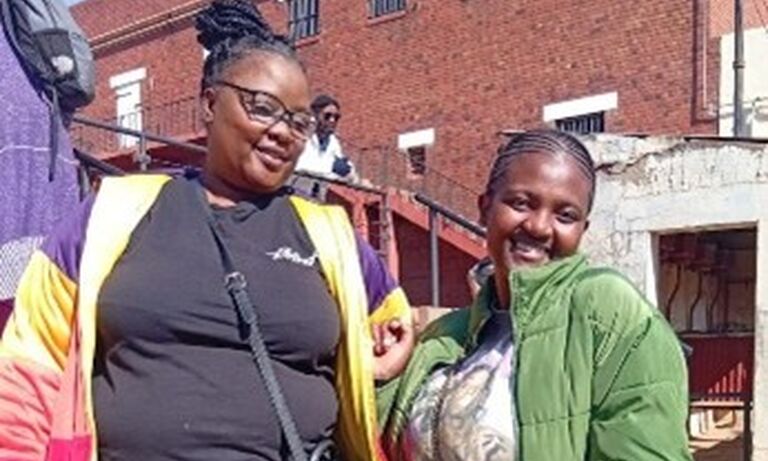
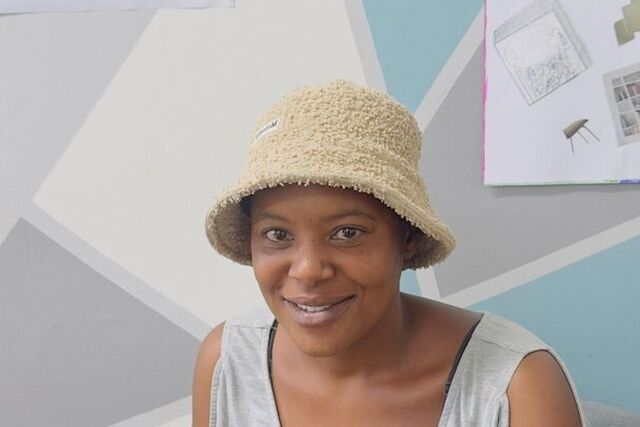
Kegomodicoe Mothogobeng Mocoancoeng’s journey is a story of quiet courage and deep transformation. It is a story of a woman who moved from living with unspoken pain to claiming her voice, agency and political power. Grounded in feminist political education and collective care, her story illustrates how sustained learning spaces can transform not only individuals, but also the work they do in their communities.
Kegomodicoe is a feminist activist and queer woman from Sebokeng in the Vaal, South Africa. Before her involvement with the One in Nine Campaign, she occupied a position familiar to many frontline gender-based violence (GBV) practitioners. Professionally, she supported survivors of violence through her role as a facilitator and field worker in the Victim Empowerment Programme at Badumetse Batho Centre, under the Department of Social Development. Personally, however, she was still carrying her own unresolved experiences of GBV.
At that time, her understanding of GBV was largely rooted in service delivery – helping survivors access counselling, referrals and basic support. While this work was important, it did not yet include a feminist or structural analysis of violence. GBV was seen mainly as an individual issue, rather than one shaped by patriarchy, inequality, labour, sexuality and power. This limitation affected not only how she facilitated programmes, but also how she saw herself.
On a deeply personal level, Kegomodicoe describes having internalised a victim identity. She struggled with confidence, belonging and participation, particularly in activist and learning spaces. Although committed to supporting others, she often felt uncertain of her own voice. This tension between caring for survivors and silencing her own pain constrained her sense of agency and limited the depth of her professional practice.
Her first encounter with the One in Nine Campaign took place during a community dialogue in the Vaal, while she was living in Tembisa. What began as a single engagement grew into sustained participation in One in Nine’s feminist learning spaces. These spaces are intentionally designed to centre survivors’ lived experiences, intergenerational knowledge, healing justice and collective political analysis. Rather than offering once-off trainings, the campaign prioritises ongoing dialogue, reflection and relationship-building.
Over time, Kegomodicoe began to experience a profound shift. Through continuous workshops and engagements, she developed a deeper understanding of gender-based violence as a systemic and socio-economic issue, rather than a private or personal failure. She explored how gender intersects with labour, sexuality and power, and how women’s organising and collective resistance are essential tools for social change.
Crucially, the learning environment allowed her to bring her whole self into the space. Engaging with facilitators, peers, elders such as the Grannies and Mkhulu, and feminist leaders, she gradually unlearned internalised victimhood. Healing, spirituality and shared storytelling became central to the process. Through trust and consistency, she began to reframe herself not as someone defined by violence, but as a political subject with voice, agency and power.
Today, Kegomodicoe describes herself very differently. “Through One in Nine, I learned that I am not a victim of gender-based violence. I am a woman with power. I can stand against violence without being silenced, and I can help other women find their voices too,” she says.
This shift is visible not only in her words, but also in how she shows up in collective spaces. Facilitators observed a clear change over time. When she first joined, her participation was marked by sadness and heaviness. Gradually, this gave way to confident, assertive and politically grounded contributions. Her body language, tone and presence changed. The transformation was not sudden, but steady – built through sustained feminist political education.
Nompumelelo Mathabela, who worked closely with her, reflects on this journey:
“When she first joined the programme, Kegomodicoe was clearly passionate about her work, but she had not yet acknowledged or shared her own experiences of gender-based violence. Over time, through continuous sessions, she began to trust the space and her fellow feminist sisters, and started sharing her pain and personal experiences.”
She adds that something shifted emotionally. “It became evident that a heavy emotional burden had been lifted. She became more open and playful, and while she still shared her story with honesty, she cried less and spoke with greater strength, clarity and power in her voice.”
Peers also witnessed this change. According to Boitumelo Tefo, “Before, she carried a lot of doubt and self-isolated during sessions. Now she speaks with intention and stands her ground, even when it’s difficult. That confidence has influenced how other women show up in the space.”
Importantly, this personal transformation has translated into practice. In her professional role, Kegomodicoe now applies a feminist, survivor-centred and structural analysis of GBV in her facilitation work. Her approach goes beyond service delivery to include political education, collective care and empowerment. This shows that the change is not temporary, but embedded in both her identity and her work.
The change is considered sustainable because it is continuously reinforced. Kegomodicoe remains actively involved in One in Nine’s feminist learning spaces, where peer accountability, critical reflection and intergenerational exchange are ongoing. Planned next steps include learner-led dialogues in communities, peer-to-peer knowledge sharing, and supporting other women and survivors to recognise their agency and sense of belonging.
Kegomodicoe’s story demonstrates that when women are given time, space and collective support to heal and learn, silence can be transformed into agency. Her journey stands as a powerful example of how feminist political education can nurture drivers of change who, in turn, strengthen movements for gender equality and justice.
Comments
Related Stories Of Change