South Africa: From learners to leaders

Through Love Land, a youth‑friendly sexual and reproductive health and rights (SRHR) platform developed by Taboobreaker, these learners have moved from participants to partners, shaping how young people across South Africa engage with sexual health, mental wellbeing and healthy relationships.
LEAP Science and Maths School Langa serves learners from historically underserved communities. Many face limited access to comprehensive sexual education, few safe spaces to discuss sensitive topics, and even fewer opportunities to influence how educational content is designed or delivered. Conversations about sexuality, consent and mental health are often clouded by stigma, discomfort or silence.
Before Love Land, learners at LEAP School Langa had little space to speak openly about these realities. They also had no formal channels to contribute their ideas or lived experiences to educational tools meant for people their age. At the same time, Taboobreaker identified a clear gap in accessible, engaging and youth‑centred SRHR education. Love Land was developed to meet that need through a three‑part approach: a board game, a mobile app and the Love Land Academy, which trains facilitators to deliver content confidently and safely.
From the outset, Love Land was designed with co‑creation in mind. Young people were not only the audience but central contributors. This approach took shape through 20 facilitated board game and app testing sessions at LEAP School Langa. During these sessions, learners explored topics such as gender‑based violence prevention, mental health, healthy relationships and sexual health, while continuously sharing feedback on what worked, what did not and what was missing.
Over time, five learners stood out through their thoughtful contributions, confidence and commitment. Their feedback consistently reflected a deep understanding of the realities young people face.
“When asked whether Love Land was important or who it should be for, one learner said, ‘The topics on Love Land relate to everyone,’” shared A, age 17.
Another learner, B, age 18, stressed that sexual and mental health “must be your priority”, underscoring the urgency of accessible information and supportive spaces.
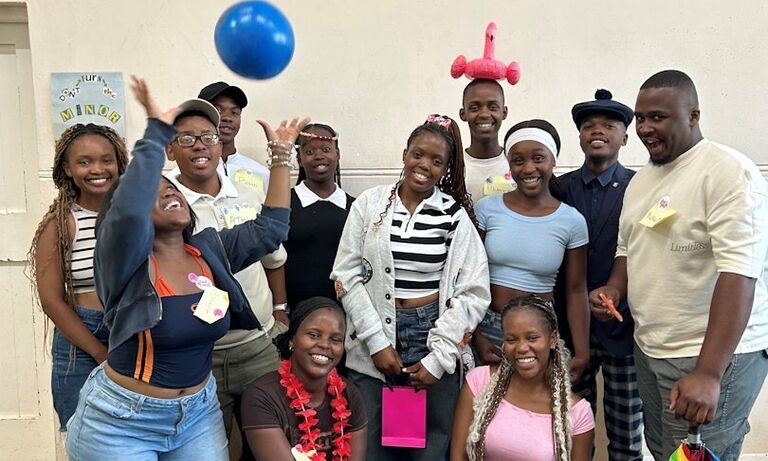
In December 2025, Taboobreaker invited eight former LEAP learners to an in‑person session to explore deeper collaboration. The intention was clear: move beyond consultation towards shared ownership. Five young people immediately committed, with plans for two more to join. During this session, one young woman asked directly whether she could become a peer facilitator and trainer, signalling a strong demand for youth leadership pathways within the programme.
Since then, these five learners have transitioned into active co‑creators and leaders. They are now involved in filming Love Land Academy tutorial videos used to train educators and facilitators across South Africa and beyond. These videos are grounded in youth voice, experience and language, making them more relatable and effective.
They are also becoming the founding members of Love Land’s first-ever Youth Advisory Board. Each young person holds a portfolio aligned to their interests and career aspirations, allowing them to contribute meaningfully while building skills. Through this process, they gain confidence, leadership experience, paid opportunities and a platform to influence national and regional SRHR education.
For Love Land, the impact is equally significant. Training materials and strategic decisions are now shaped by authentic youth insight. This ensures that content reflects real lived experiences, addresses myths and responds to the questions young people actually ask.
S, age 17, highlighted the importance of repetition and clarity in learning: “It is important to have information repeated on topic islands. For example, young people must know that you can get pregnant before your first period, and it must be on multiple topic islands.” This insight, drawn from personal reflection, directly informed content design.
The evidence of change is clear. Five youth actively participate in filming tutorial content. Plans to formalise the Youth Advisory Board are underway. Feedback from learners has been documented and integrated into Love Land training materials. Former LEAP learners continue to commit time and energy as peer facilitators and advisors. Perhaps most importantly, there is a visible shift in confidence, ownership and sustained engagement.
This transformation did not happen overnight. It emerged through trust‑building, consistent engagement and a willingness to listen. Before Love Land, these young people were recipients of information. Now, they are creators, trainers and advisors shaping how Love Land is delivered and scaled.
The change is designed to last. Sustainability rests on formally embedding youth leadership within Love Land’s structure through the Youth Advisory Board. Co‑created tutorial videos will form part of facilitator onboarding, ensuring consistent quality as the programme expands. Facilitator accreditation, partnerships with schools and community centres and integration into health and education programmes will strengthen long‑term impact.
The digital platform allows Love Land to expand at low cost across South Africa and into other African countries. Continuous feedback loops ensure the programme remains relevant, culturally sensitive and responsive as it grows.
At its core, this story is about young people being trusted with responsibility and voice. It shows what becomes possible when learners are seen not only as beneficiaries, but as leaders and drivers of change.
Comments
Related Stories Of Change