South Africa: From feminist political education to systemic change

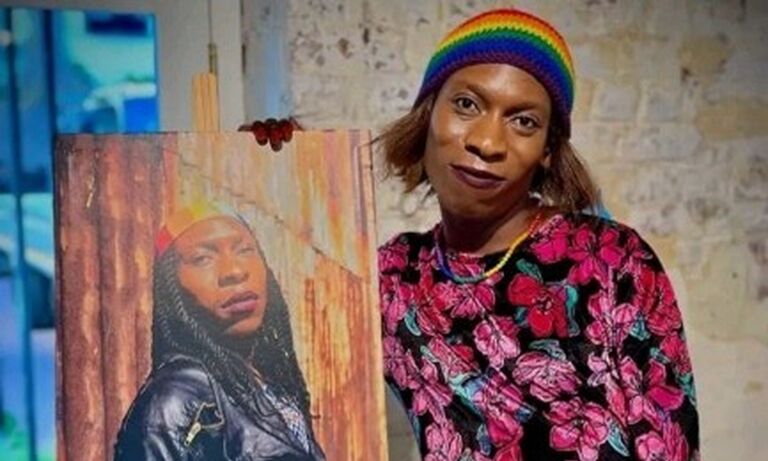
Thabsie Mabezane is a young trans woman from South Africa’s East Rand, currently based in Evaton. She lives and works at the Lebo Basadi Foundation transitional home, where she supports women facing displacement. A feminist and activist, Thabsie is deeply committed to challenging systems that marginalise women and LGBTIQ+ people, particularly those whose lives are shaped by poverty, exclusion and violence.
Before her engagement with the One in Nine Campaign (1in9), Thabsie was already active in gender equality and sexual orientation, gender identity and expression advocacy. However, she worked within a context marked by deep structural exclusion. Black trans women and LGBTIQ+ people in South Africa continue to face systemic discrimination, especially in access to shelter, social development services and safe housing. Even within civil society and feminist spaces, trans women are often excluded from full participation, weakening the promise of intersectional feminist organising.
This context limited the reach and sustainability of Thabsie’s activism. While passionate and committed, she had limited access to sustained feminist political education, structured movement‑building tools and healing‑centred leadership support. Interventions that addressed both the political root causes of exclusion and the personal toll of activism were urgently needed.
Through sustained participation in One in Nine Campaign programmes, Thabsie’s leadership journey shifted in transformative ways. The most significant change has been a strengthening of her feminist leadership, political consciousness and movement‑building capacity. This transformation has taken place at individual, relational and societal levels.
Engagement in feminist political education enabled Thabsie to move beyond identity‑based advocacy to a structurally informed feminist practice. She deepened her analysis of patriarchy, displacement and cis‑hetero‑patriarchal systems, and gained practical tools to challenge these systems across multiple spaces. This shift strengthened her confidence and clarity as a feminist leader, allowing her to influence organisations, family and community relationships, and policy discussions.
This change did not happen overnight. It emerged through Thabsie’s participation in multiple 1in9 interventions, including feminist political education and leadership development programmes, healing‑centred facilitation and reflective spaces, arts‑based activism and storytelling, and movement‑building and community engagement initiatives. These approaches combined political analysis with care, creativity and accountability. Feminist mentorship played a critical role, offering guidance and support while encouraging sustained application of learning.
The impact of this journey is visible and verifiable. At a personal level, Thabsie clearly articulates how feminist political education reshaped her understanding of power, leadership and responsibility. She now engages with systems rather than symptoms, linking lived experience to political structures in ways that strengthen advocacy and organising.
Institutionally, Thabsie has taken on a stronger leadership role within the Lebo Basadi Foundation, strengthening its organisational capacity and feminist orientation. She has actively engaged the Department of Social Development on the need for inclusive shelter policies, bringing trans women’s lived experiences into spaces where they are often absent. Her advocacy has contributed to broader conversations about trans‑inclusive service provision and feminist leadership within civil society.
Societally, Thabsie’s work has gained wider recognition. She has received national awards for community service and social justice leadership and was selected to participate in the UN Women Human Rights Defenders Project. She has facilitated feminist political education workshops and community dialogues, sharing knowledge and tools with others navigating similar struggles.
A key outcome of this journey is the establishment of AfroPride Arts, an emerging arts‑based platform that integrates feminist knowledge production, healing and activism. While not yet publicly launched, the initiative reflects methodologies central to One in Nine Campaign’s work and signals new pathways for liberation, creativity and movement‑building.
As Thabsie explains: “My political understanding, leadership role, and responsibility within communities have transformed. Through 1in9’s feminist political education, I moved from focusing only on identity to understanding the political systems that shape our lives. This enabled me to strengthen Lebo Basadi Foundation, qualify for the UN Women Human Rights Defenders Project, and establish AfroPride Arts as a platform for liberation.”
Change has also been felt in close relationships. Kamogelo Mokobe reflects: “Participating in 1in9 programmes together shifted how we navigate family and community spaces. We have become co‑creators of change, using feminist political tools to challenge patriarchy and cis‑hetero‑patriarchal norms in everyday life.”
From the perspective of One in Nine Campaign staff, Thabsie’s contribution has been significant. Her advocacy has strengthened trans‑inclusive feminist leadership within civil society and informed critical discussions on inclusive shelter policies. Her work reflects growing credibility, influence and access to decision‑making arenas that were previously limited.
Thabsie attributes approximately 80 percent of this change to her engagement with One in Nine Campaign. The journey continues to be sustained through ongoing application of feminist political education in leadership and advocacy, continued mentorship and peer learning, support for AfroPride Arts, and knowledge‑sharing through workshops, creative platforms and policy engagement spaces.
Looking ahead, the next steps include scaling art as a tool for liberation across African contexts, building wider networks of co‑creators grounded in intersectional feminist leadership, and strengthening collaboration between feminist, queer and human rights movements. Thabsie’s journey illustrates how feminist political education, when combined with healing and movement‑building, can catalyse sustained leadership and systemic change.
Through this work, individual transformation becomes collective action, contributing to a broader struggle for gender justice, dignity and inclusion.
Comments
Related Stories Of Change