South Africa: - From correctional official to community healer

A community under strain
Ward 12, the main township in Eshowe under the uMlalazi Municipality, faces deep and interconnected social challenges. High levels of poverty and unemployment have fuelled substance abuse among both young people and adults. This, in turn, has contributed to crime, domestic violence, rape, poor mental health, and family breakdown.
Women and children are often the most affected. Many live in unsafe environments, experiencing abuse linked to substance use by partners or family members. Before the intervention, access to support services was limited, and many people did not know where or how to seek help. Violence and addiction were often addressed only after serious harm had already occurred.
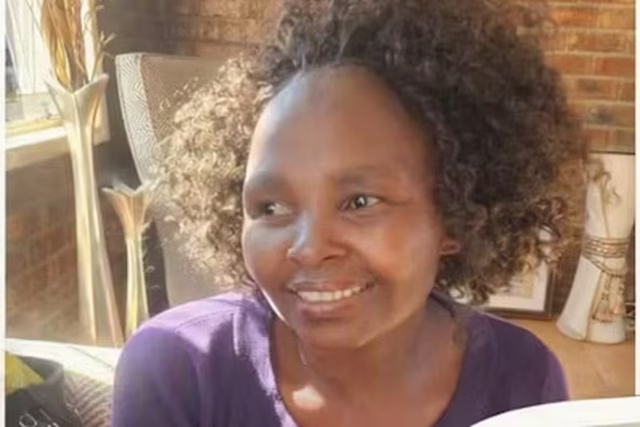
It was within this context that Mrs Dumisile Fikile Dube, Treasurer of The Rainbow Circle Organisation and founder of Rise and Shine NPO, began her journey as a community healer.
From the prison system to prevention
Before her community work, Mrs Dube served as a Correctional Services Official. In this role, she witnessed first‑hand how substance abuse led many men into conflict with the law and long prison sentences. Over time, she came to a difficult realisation: by the time people reached prison, it was often too late. The roots of the problem lay much earlier, within communities themselves.
After leaving Correctional Services, Mrs Dube made a decisive choice. She used her own pension money to establish Rise and Shine NPO, focusing on preventing substance abuse, particularly among young people. As the work grew, she increasingly encountered women who were either struggling with addiction themselves or experiencing gender‑based violence linked to substance use within their families.
Her approach was shaped by lived experience and a deep understanding of the links between substance abuse, gender‑based violence, mental health, and poverty. Through partnerships with The Rainbow Circle Organisation, SAPS, the Department of Social Development, and the Department of Health, Mrs Dube began building a coordinated, community‑based response.
What has changed
The change brought about through Mrs Dube’s work has been both meaningful and visible at individual and community level. What has changed most is how substance abuse and gender‑based violence are understood and addressed in Ward 12. Before, many young people and adult men used drugs without support. Women suffered abuse in silence, with limited access to help. There was little coordination between community organisations and government departments, and cases were often reported only once serious damage had been done.
Today, awareness has increased, early intervention is more common, and collaboration is stronger. Through Rise and Shine NPO, people struggling with substance abuse receive structured support programmes. Women affected by drug‑related violence are assisted through referrals to SAPS, the Department of Health, the Department of Social Development, and The Rainbow Circle Organisation.
One of the most significant acts of commitment by Mrs Dube was offering her own residence as a White Door facility for The Rainbow Circle Organisation. Located privately in her backyard, this space provides a safe and confidential environment where women can seek support, heal, and rebuild their lives.
As a result, isolation has reduced, families are seeking help earlier, and community members increasingly recognise that substance abuse and violence can be addressed through collective action rather than silence.
Evidence of change on the ground
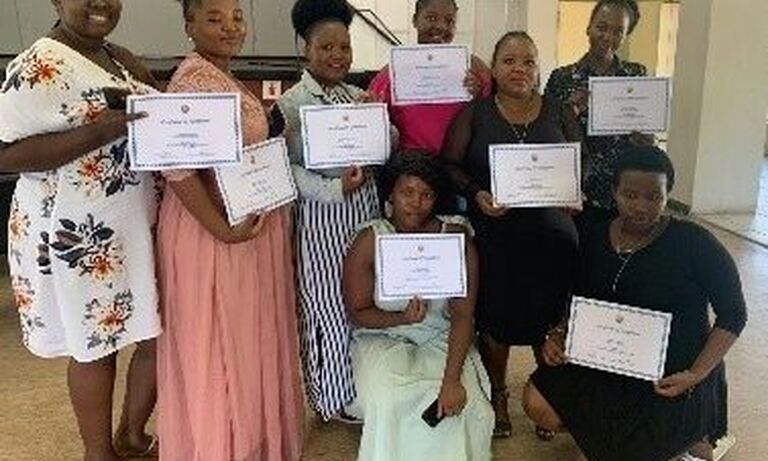
The impact of this work is reflected in the lives of women, men, and young people accessing support. Women have been able to participate in skills development programmes, including baking and cooking initiatives facilitated through The Rainbow Circle Organisation. Several women completed the training, and some went on to form a co‑operative supported by the National Development Agency (NDA), creating opportunities for income generation and greater independence.
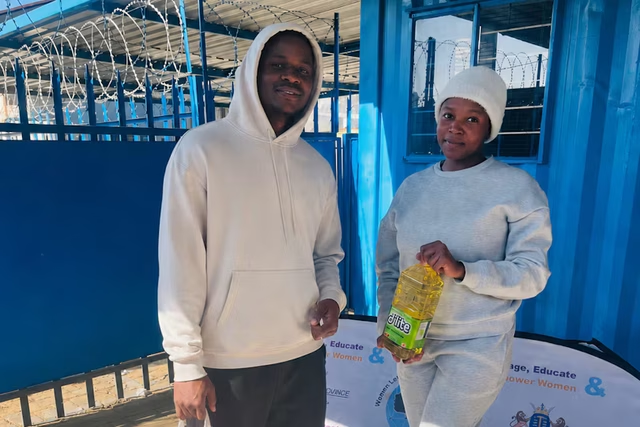
Clients of Rise and Shine NPO also receive daily meals, meeting immediate needs while creating space for engagement, trust, and healing. These moments of care often become entry points for individuals to open up about their struggles and accept support in addressing substance use.
One beneficiary shared:
“Ngibonga Rainbow Circle and Rise and Shine ukuthi benginike iskill sokuziphilisa. Ngakwazi ukuthenga iTV ekhaya ngoba sengikwazi ukupheka nokubhaka amakhekhe.”
— Andy Andile Ngema
A stakeholder working closely with the organisation observed:
“I personally have been working hand in hand with Rise and Shine, also assisting them in obtaining funding related to substance abuse. I see their potential and the difference they make to the community. More work needs to be done.”
— Zinhle Zungu
Reflecting on Mrs Dube’s leadership and commitment, a long‑time collaborator noted:
“When she approached me to assist her in opening her NPO and told me about her vision, I was more than excited to lend a helping hand. Together we are fighting the social ills that face our people in Eshowe and surrounding areas.”
— Peggy Strachan
How the change came about
This change did not happen overnight. It emerged through consistent, community‑based work focused on prevention, healing, and collaboration. Substance abuse programmes, stakeholder referrals, skills development initiatives, and partnerships between Rise and Shine NPO and The Rainbow Circle Organisation created a coordinated response where none had existed before. By working closely with government departments and civil society, Mrs Dube helped bridge gaps between services and the people who need them most.
Sustaining and expanding the work
The change achieved so far is expected to be sustained through ongoing community engagement, collaboration, and skills‑based interventions. Rise and Shine NPO continues to work with community members, government departments, and partner organisations to ensure early and consistent access to support for those affected by substance abuse and gender‑based violence.
Looking ahead, the organisation has a clear vision to establish a rehabilitation centre. The planned centre will provide a safe and supportive space for young people and women struggling with substance abuse, alongside a dedicated skills development component. This approach recognises that recovery is more sustainable when people are supported not only to heal, but also to rebuild their livelihoods.
Grounded in lived experience and community trust, this long‑term vision holds the potential to further reduce substance abuse, strengthen families, and improve wellbeing in Ward 12 and beyond — transforming pain into purpose, and vulnerability into collective strength.
Comments
Related Stories Of Change