South Africa: Finding voice, purpose, and power through youth led climate action

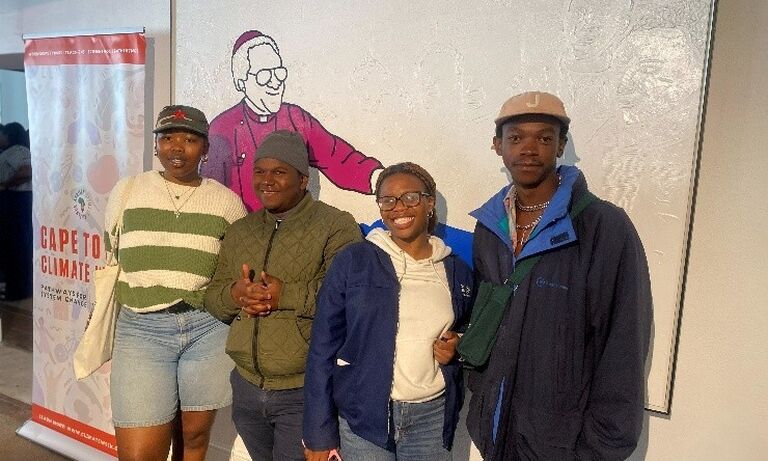
Climate justice spaces often felt distant and difficult to enter. Opportunities to develop skills, build confidence, and turn passion into meaningful action were not easily accessible. While Inam was drawn to social and environmental issues, there were few platforms that nurtured young people’s voices, particularly those who did not fit traditional leadership moulds.
This gap left many young activists, including Inam, searching for ways to contribute meaningfully while still finding their own voice.
A shift rooted in long‑term support
That journey began to change through sustained engagement with Project 90 by 2030, first as a participant in the YouLead Initiative and later as an alumni volunteer. Over time, Inam experienced a clear shift in confidence, agency, and clarity of purpose.
Through the programme, Inam became more vocal in articulating their beliefs and more grounded in their activism. They began using creative expression and storytelling not only as personal outlets, but as tools for climate and social justice. This process helped them connect their lived experience to broader environmental struggles affecting poor and marginalised communities.
Participation in Project 90 by 2030 also helped Inam gain direction academically and professionally. Their studies in Sociology and Environmental and Geographical Science became closely aligned with their commitment to climate justice, reinforcing the connection between learning, activism, and community impact.
How change took root
This transformation did not happen overnight. It was made possible through participation in multiple capacity‑building workshops facilitated by Project 90 by 2030. These included training in public speaking, storytelling, climate education, and practical skills such as photography.
The workshops created safe and affirming spaces where young people could practise speaking in public, share personal experiences, and develop confidence without fear of judgement. In these spaces, lived experience was valued as knowledge, and young people were encouraged to speak from where they stood.
Ongoing engagement through dialogues, peer learning, and collaboration with other activists further strengthened Inam’s understanding of climate justice and their sense of belonging within broader movements. These relationships helped affirm that their voice mattered and that they had a role to play in shaping solutions.
As one participant reflected on the process, “I found the work very informative and challenging at the same time, because getting the information was difficult.” The challenge itself became part of the learning, pushing participants to think critically and deepen their engagement.
Another participant described the experience as affirming and energising: “My experience was very fun, seeing that we have similarities with people in the space and knowing that we want to make a change, but are trying to find a way to put everything we have learned into something we can use in our everyday lives.”
Evidence of lasting change
The impact of this journey is visible in Inam’s continued involvement with Project 90 by 2030 and the African Climate Alliance as an alumni and volunteer. Rather than stepping away after the programme ended, Inam remained actively engaged, contributing to dialogues, campaigns, and community actions.
Skills gained through the programme, particularly photography, have been used practically, including as a source of income. This demonstrates how creative tools can support both activism and economic agency.
Socially and professionally, Inam now shows increased confidence, leadership, and the ability to communicate complex climate issues through art, activism, and academic work. Their ability to move between spaces — community, creative, and academic — reflects a growing confidence in navigating systems that once felt inaccessible.
Observers within the programme have taken note. One reflected that participants were “well informed and very interested in the work, and if there was more, they would love to do within the space — and that is inspiring.”
Sustainability through continued engagement
Inam’s story highlights the importance of long‑term engagement rather than once‑off interventions. The programme’s impact has endured because it created pathways for alumni to remain involved, mentor others, and reinvest their skills into new cohorts of young people.
As an alumni volunteer, Inam contributes to intergenerational learning and the strengthening of youth‑led climate action. Their continued relationship with Project 90 by 2030 supports leadership development and helps ensure that knowledge and experience are passed on rather than lost.
Looking ahead, Inam intends to deepen their work at the intersection of climate justice, social justice, and creative expression. Their journey shows how sustained support can help young people from marginalised communities move from searching for space to claiming their voice — and using it to drive change.
Inam’s experience is a reminder that when young people are trusted, supported, and equipped with skills, they do not only find their purpose. They become powerful agents of change for their communities and for the planet.
Comments
Related Stories Of Change