South Africa: Empowering a community through access and awareness

A significant number of people in Soul City are undocumented. Children without birth certificates and adults without identity documents struggle to access basic rights such as healthcare, social grants, or school registration. Women, youth, and children are particularly affected, facing heightened vulnerability to violence, exploitation, and poverty. Despite these realities, Soul City has long been underserved, with few organisations offering consistent, on‑the‑ground support.
Sizolwethu Child and Youth Care Organisation is a grassroots organisation working to support vulnerable communities affected by GBV, poverty, and lack of access to essential government services. Made up of social workers, volunteers, and community activists, the organisation is committed to creating lasting social change in overlooked and marginalised areas.
The organisation was first introduced to Soul City through referrals from local GBV brigades. As the team became more involved, it became clear how deep and interconnected the community’s needs were. One of the most urgent challenges was documentation. Without IDs or birth certificates, residents were locked out of the very systems meant to protect and support them.
Building trust through presence and action
What makes this intervention unique is not only the scale of the need, but the resilience of the community and the organisation’s approach to building trust. Rather than operating from a distance, Sizolwethu committed to consistent, visible engagement. The team showed up regularly, listened carefully, and responded to individual needs with care and persistence.
Through strategic outreach, the organisation mobilised key government stakeholders, including the Department of Home Affairs, the South African Social Security Agency (SASSA), and the Department of Health, to come directly into the community. These services, which were previously out of reach, became accessible within Soul City itself.
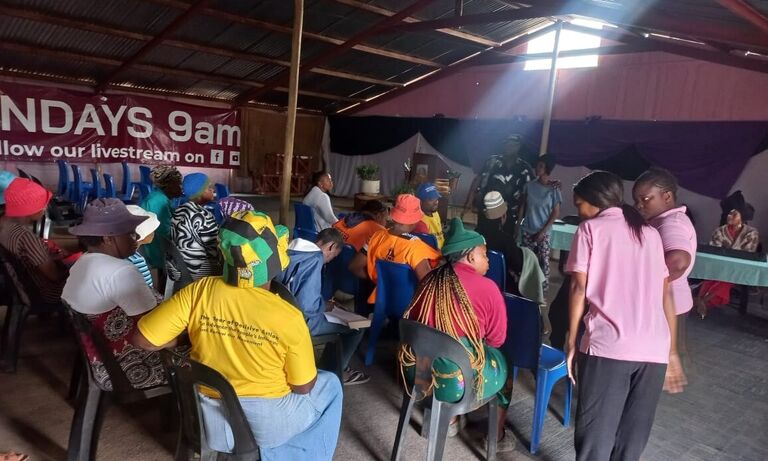
Alongside this, the organisation hosted GBV awareness sessions, provided psychosocial support, and strengthened referral systems for at‑risk individuals. Survivors of violence, children in need of protection, and young people struggling with substance abuse were supported or referred to appropriate services.
This work was not about quick fixes. It was about restoring dignity, rebuilding trust, and creating pathways for people who had been invisible for too long.
Small changes with powerful impact
Soul City continues to face many of the same challenges. Poverty, crime, drug abuse, and violence have not disappeared. Yet the organisation’s presence has brought pockets of change and hope. The transformation is not total, but it is real.
Individuals who were once undocumented, unsupported, and unheard are now accessing services and receiving care. Families who had been excluded from social grants for years are finally able to apply. Survivors of GBV are finding spaces where they can speak and be supported. Young people struggling with substance abuse are being referred for help rather than ignored.
As one resident shared, “Before this support, many of us did not have IDs or access to basic services. Now, with the help from the organisation, I was able to apply for my ID, and I feel more hopeful about the future.”
A GBV Brigade member reflected on the broader impact: “The work done here has been vital. Our community has faced many challenges with GBV and lack of documentation, but the partnership with this organisation has brought real support and awareness.”
These changes may seem small in isolation, but together they create ripples that move through families and the wider community. Sizolwethu has become a bridge between Soul City and systems that once felt unreachable.
Evidence of change on the ground
The impact of this work is visible and documented. Community members now approach the organisation directly, refer others, and actively participate in outreach activities. Participant registers from GBV awareness sessions and ID and grant application drives show steady engagement.
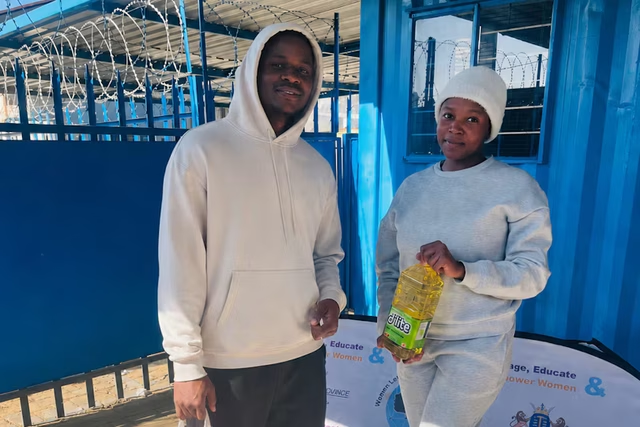
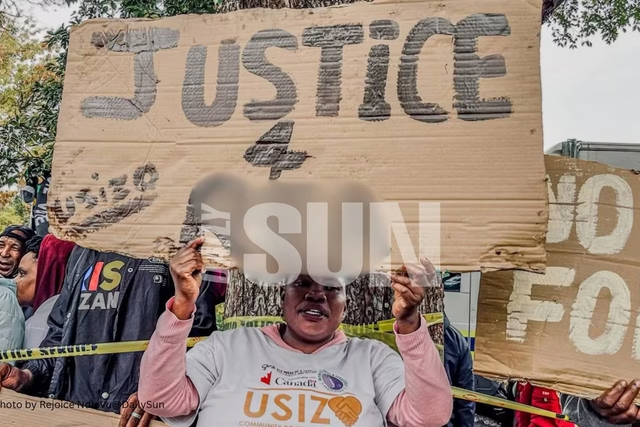
Photographs from community events capture moments of service delivery, awareness campaigns, and crisis interventions. Video testimony from a GBV Brigade leader speaks to the value of the organisation’s presence and the difference it has made from the perspective of a trusted local leader.
Perhaps most importantly, the organisation has seen a shift in trust. Where there was once deep disconnection and silence, there is now growing openness. More cases of GBV are being reported. More people are seeking help. More residents understand their rights and how to access them.
Strengthening systems for lasting change
The grant received by Sizolwethu helped lay a stronger foundation for this work. Internal systems were strengthened, enabling the organisation to operate more effectively and reach communities that were previously inaccessible. Structured programmes allowed for more consistent support to women and vulnerable groups.
As one team member reflected, “Since receiving the funding, we have been able to grow in ways that felt impossible before. We have strengthened our internal systems, reached communities we could not access before, and supported more women through consistent, structured programmes. It has brought much‑needed stability and clarity to our work.”
The organisation’s team has grown not only in numbers, but in skills, confidence, and collaboration. Volunteers and community leaders are more involved, sharing responsibility and helping sustain the work beyond individual interventions.
Looking ahead with commitment
Looking forward, Sizolwethu is focused on ensuring that this change continues to grow. The organisation is exploring additional funding opportunities and partnerships that align with its values. It is also developing income‑generating skills projects to support women economically and reduce reliance on grants alone.
Plans are underway to deepen advocacy work, strengthen referral systems, and expand healing and empowerment spaces into other communities facing similar challenges.
Whatever comes next, the organisation remains committed to working with care, integrity, and a clear focus on women and girls who are too often left behind. In Soul City, empowerment has begun not with grand promises, but with access, awareness, and the steady work of restoring dignity — one person at a time.
Comments
Related Stories Of Change