South Africa: Creating a safe space for men and boys

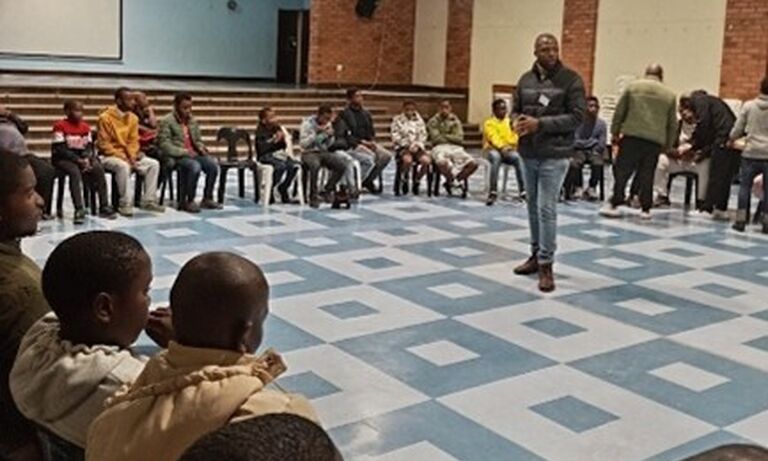
In uMgungundlovu District in KwaZulu-Natal, Incema has long been known for its work with men and boys, challenging harmful norms and encouraging positive behavioural change. Through its annual Men and Boys Behavioural Change Camp, the organisation creates spaces where boys and men can reflect, learn, and redefine what it means to be responsible, respectful members of their communities. In 2026, an unexpected challenge threatened the continuity of this important work – but it ultimately became an opportunity to deepen inclusion and expand impact.
In previous years, Incema hosted the camp at a familiar venue. When this venue suddenly became unavailable, the organisation was faced with a pressing problem: how to ensure the programme could continue without disruption. Rather than cancelling or scaling down the camp, Incema acted swiftly, drawing on the strong relationships it had built with partners across the district. One of these partners was Arthur Blaxall School, a long‑standing collaborator that supports learners with intellectual disabilities.
The school agreed to open its doors and host the camp. This decision ensured that the programme went ahead as planned, but it also transformed the nature of the intervention. For the first time, boys with intellectual disabilities from Arthur Blaxall School were included as participants in the Men and Boys Behavioural Change Camp alongside boys from other communities. What began as a logistical solution became a powerful shift towards greater inclusivity.
Hosting the camp at Arthur Blaxall School allowed Incema to engage a more diverse group of boys, reflecting the realities of the communities it serves. The learners at the school became direct beneficiaries of a programme that promotes respectful relationships, cultural understanding, and positive masculinity. At the same time, Incema gained firsthand experience in adapting its facilitation approaches to respond to the specific needs and abilities of boys with intellectual disabilities.
This shift strengthened the programme in multiple ways. It expanded Incema’s understanding of inclusion, challenged assumptions about who can participate meaningfully in behaviour‑change initiatives, and reinforced the principle that conversations about gender equality and violence prevention must leave no one behind. Engagement with teachers and school staff further enriched the camp, creating space for shared learning and deeper insight into the lived realities of the learners.
The success of the camp was evident through strong attendance, active participation, and overwhelmingly positive feedback from those involved. Qualitative evidence collected during and after the programme included post‑camp evaluations, direct reflections from participating boys, and inputs from men in leadership and traditional structures who supported and facilitated sessions.
Induna Mshengu from Willowfontein, who led the cultural component of the camp, expressed his excitement at the opportunity to share knowledge and traditions with boys from different backgrounds across the uMgungundlovu District. For him, the camp was not only about teaching cultural values, but also about building bridges between communities and generations.
Induna Ngcobo from the KwaMafunze Traditional Council reflected on his long‑term involvement with Incema’s work. Having been part of the Men and Boys Camp since its inception in 2016, he spoke with pride about the organisation’s growth and the lasting impact of the programme. He noted that many of the boys who attended the camp in earlier years are now doing well in life, crediting the programme for inspiring positive behavioural change and encouraging them to pursue better futures.
For young participants, the experience was equally meaningful. Ayanda Mthembu, a foster child from the Department of Social Development in Howick, described the camp as life‑changing. Attending for the first time, Ayanda shared that he found the sessions extremely valuable and expressed a strong desire to participate regularly in future. He also committed to sharing what he had learned with others in his community, extending the impact of the programme beyond the camp itself.
Looking ahead, Incema is committed to sustaining and scaling this positive change. The organisation plans to strengthen the Men and Boys Behavioural Change Camp by introducing additional life‑guiding topics that support ongoing personal growth and responsible behaviour. Particular attention will be given to nurturing boys who demonstrate commitment to change and leadership potential.
These young participants will be supported as role models within their communities, encouraged to share their experiences and lessons with peers. By building a network of informed, motivated young leaders, Incema aims to ensure that the camp’s messages ripple outward, contributing to long‑term shifts in attitudes and behaviour across communities.
What started as a challenge has become a turning point. By embracing flexibility, partnership, and inclusion, Incema has not only safeguarded a vital programme but also expanded its reach in a meaningful and sustainable way – creating safer, more inclusive spaces for all boys to grow, learn, and lead.
Comments
Related Stories Of Change