South Africa: Climbing for change

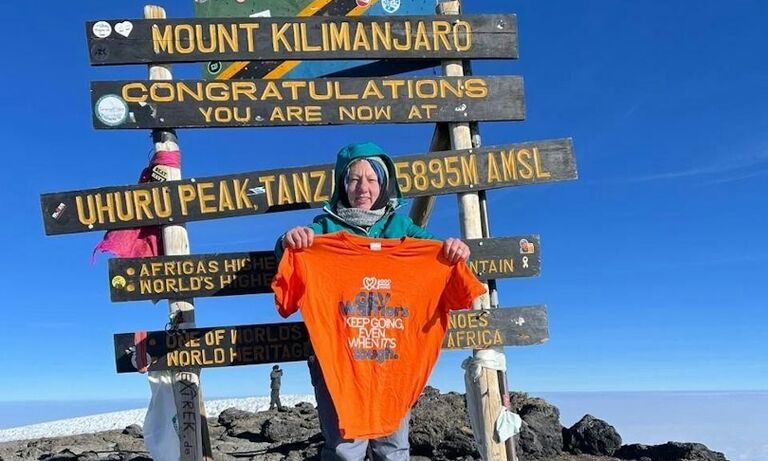
For many survivors of gender-based violence (GBV), healing is a long and difficult journey. It is a path marked by pain, resilience, and the courage to reclaim one's voice. For wellness coach Leonie Viljoen from Boston, Bellville, that journey has become something much bigger: a mission to inspire hope, raise awareness, and support other survivors.
Leonie is a survivor of abuse whose life has been shaped not by what happened to her, but by how she chose to respond. Having survived abuse on two separate occasions, she understands the fear, isolation, and uncertainty that many women experience when facing violence. Through her own healing process, she recognised that countless survivors continue to suffer in silence, often unaware of their rights or where they can turn for help.
She also came to appreciate the vital role organisations such as 1000 Women Trust play in supporting survivors. Through trauma support, training, safe spaces, and community networks, the organisation helps women rebuild their lives and regain their confidence. Inspired by this work, Leonie decided to transform her personal experience into a public call for change.
In June, Leonie committed to climbing Mount Kilimanjaro, Africa's highest peak. The climb was never about personal achievement. Instead, it became a fundraising and awareness campaign supporting 1000 Women Trust and its efforts to combat gender-based violence. With every step up the mountain, she carried the stories of survivors and amplified the message that no woman should have to face violence alone.
"I do it for the women who've endured pain deeper than any crevasse on that mountain," says Leonie. "I climb for women subjected to gender-based violence whose fight is steeper, their endurance greater and their courage unlimited."
Through her campaign, Leonie has used her voice and platform to encourage women to seek support and to remind communities that ending GBV requires collective action. Her advocacy has drawn attention to the work of 1000 Women Trust, including initiatives that provide trauma support training, strengthen survivor networks, and create safe pathways for reporting violence.
The impact has extended beyond the fundraising effort itself. Leonie's story has helped increase the visibility of survivor-centred services while demonstrating that survivors can become powerful leaders and advocates for change. By speaking openly about her experiences, she has challenged stigma and opened conversations that encourage healing, accountability, and action.
"Each step I take is for the woman silenced by fear," Leonie says. "For the girl told her pain is private. For the survivor who wakes up every day and chooses to keep going."
Her journey highlights an important truth: survivors are not only beneficiaries of programmes and services. They can also become the driving force behind social change. By sharing her story, Leonie has shown how lived experience can be transformed into leadership that inspires others to seek help, speak out, and stand against violence.
The awareness generated through her Kilimanjaro climb continues to support the broader work of 1000 Women Trust. It encourages women to access support services, participate in community programmes, and become involved in initiatives such as the GBV Warriors network. It also serves as a reminder that the fight against gender-based violence requires sustained action from individuals, organisations, and communities alike.
Looking ahead, Leonie plans to continue using storytelling, community engagement, and advocacy to support the movement for gender justice. Her campaign has already demonstrated how one person's courage can create ripples of change that extend far beyond a single event or fundraiser.
"Help me turn every meter I ascend into a step toward justice, dignity, and healing," she says. "Join me. Support 1000 Women Trust. And together, let's rise higher than we ever thought possible."
Leonie's climb may have taken her to the summit of Africa's highest mountain, but its true significance lies elsewhere. It stands as a symbol of resilience, hope, and the power of survivors to lead the way towards a future free from violence. Through courage, advocacy, and solidarity, she is helping to build that future one step at a time.
Comments
Related Stories Of Change