South Africa: Changing the mindsets of stereotyped males and community leaders

Orlando East in Soweto is a community shaped by deeply entrenched cultural norms that place men firmly at the centre of decision-making, while women are expected to remain silent and compliant. For generations, these norms have dictated that women do not speak openly to men, reinforcing the belief that men are the unquestioned heads of households and communities. Challenging this order often comes at a high personal cost.
When Usizo Community Development Projects first began working in Orlando East, these realities were immediately visible. Many women were reluctant to engage. Some had to ask their husbands for permission simply to speak to programme staff. Others avoided contact altogether, fearful of the consequences. Men in the community viewed the organisation with suspicion and hostility, accusing staff of being “witches” who had come to corrupt women by teaching them ideas that threatened traditional power structures.
Orlando East is surrounded by informal settlements where life is already shaped by poverty, overcrowding and insecurity. In this context, traditional authority figures, known as izinduna, hold significant influence. Their views reinforce the belief that women have little place or voice in public life. Masculinity dominates social spaces, leaving women isolated and marginalised, expected to agree with men in both community forums and their own homes.
For women, speaking out has never been simple. Raising concerns as a woman is often seen as deeply disrespectful. Even in cases of sexual violence against children, women are commonly encouraged to keep quiet to protect family and community reputation. Reporting abuse to the South African Police Service can result in being ostracised or labelled as a troublemaker, making everyday life in the community even more precarious.
Against this backdrop, change has been slow but significant.
Over time, Usizo began to notice a shift. More women started to visit the centre, not only to report incidents of violence but also to seek support, counselling and healing. These visits marked an important step: women were choosing to break silence in a context where silence had long been enforced.
One of the most striking developments has been the growing involvement of men. Men are no longer only present as bystanders or critics. Some now participate actively in dialogues and community activities, engaging honestly with issues of gender-based violence and power. For an area long dominated by rigid masculinity, this shift signals an important opening.
As conversations deepened, some men began to reflect on their own behaviour. They acknowledged the harm caused by unequal power relations and expressed a willingness to change. This has had a direct impact on women and children, many of whom now report feeling safer and more valued within their homes and the wider community.
These changes did not happen overnight. They are the result of sustained, deliberate engagement. Usizo Community Development Projects committed itself to working consistently within the community, prioritising early detection of gender-based violence against women and young girls living in informal settlements. The organisation focused on prevention, aiming to stop violence before it occurs rather than responding only after harm has already been done.
Central to this work are community dialogues that create space for difficult conversations. Through these dialogues, long-held cultural beliefs are questioned, and alternative ways of relating are explored. Information, education and communication materials reinforce key messages about rights, respect and safety. By strengthening coalitions with other civil society organisations, Usizo has expanded its reach and ensured that survivors are not left to navigate support systems alone.
A core focus has been addressing intimate partner violence and challenging the idea of male superiority. By promoting positive forms of masculinity, the organisation encourages men to see equality not as a loss of power, but as a way to build healthier families and stronger communities. These efforts are grounded in the understanding that lasting change requires the involvement of everyone.
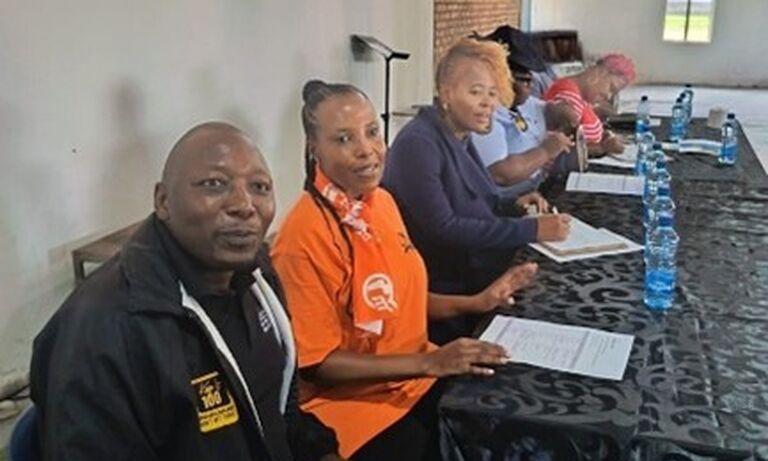
Partnerships with local structures have also been crucial. The presence of SAPS, Community Policing Forums and Green Bombers representatives at community forums has helped to reduce fear around reporting abuse. Their involvement signals that survivors will be taken seriously and that safety is a shared responsibility.
The impact of this work is reflected in the voices of those directly affected.
“I received assistance when I had least expected it,” says Fezile Maduna. “I’m glad that my three-year-old daughter and I feel much safer in the comfort of my parents’ house. Usizo helped me to move away from a very toxic relationship.” Her experience highlights the importance of timely support and safe alternatives for women trying to escape violence.
Change is also evident among men. Nonhlanhla, who participated in community dialogues, reflects on his own journey: “As a man that had been blinded by culture, I’m glad to say that through the dialogues we’ve been attending, I’m now a changed man. I love and respect my wife. My house has turned into a happy place.” His words point to the potential for transformation when space is created for honest reflection.
While progress is clear, the work is far from complete. Continued community engagement, awareness-raising and survivor support remain essential. Fear of reporting abuse has not disappeared, and cultural pressure still silences many women. Sustained involvement from law enforcement, community structures and civil society is critical to ensuring that gains are not lost.
Looking ahead, Usizo’s experience shows that change is possible, even in deeply patriarchal settings. By building on the momentum created through dialogues, partnerships and survivor-centred support, future initiatives can contribute to safer and more supportive environments for survivors of gender-based and domestic violence in Orlando East and surrounding informal settlements. The gradual shift in mindsets among both women and men offers a powerful reminder that challenging stereotypes can open the door to dignity, safety and shared responsibility.
Comments
Related Stories Of Change