South Africa : Abuse, alcohol dependency and a journey towards healing

As her alcohol use increased, Lenah struggled to fulfil her responsibilities as a caregiver. She is a mother of four, and her dependency led to neglect, leaving her children without consistent care, protection and emotional support. The cycle of violence, substance abuse and neglect created an unsafe and unstable environment for the entire family. The impact of abuse extended beyond Lenah herself, affecting the well‑being and development of her children.
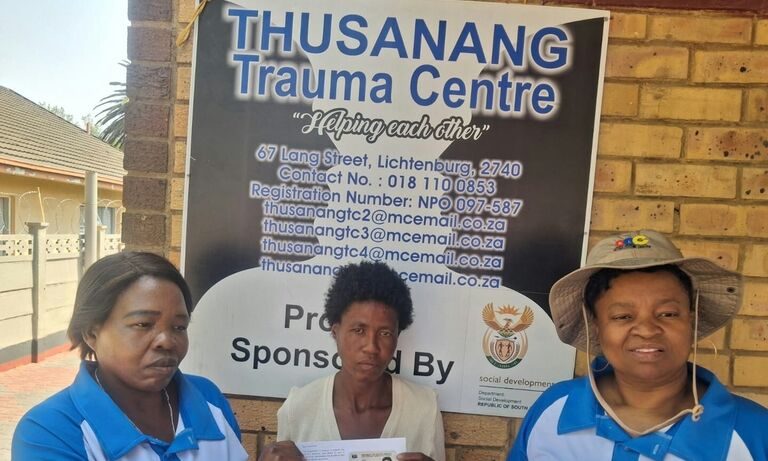
Recognising the seriousness of her situation, Lenah was accommodated at Thusanang Trauma Centre, where she began a journey of recovery supported by structured intervention and psychosocial care. The Centre provided her with a safe space removed from immediate violence, allowing her to begin addressing both the trauma she had endured and the patterns that had taken hold of her life. This support marked the first step towards regaining stability.
Through ongoing counselling and guidance, Lenah received psychosocial support that helped her confront the emotional effects of abuse and rebuild her sense of self‑worth. She began learning healthier ways to cope with stress and trauma, reducing her reliance on alcohol. This was not an instant transformation, but a gradual process supported through monitoring, encouragement and practical assistance.
One of the key interventions that enabled change was support through the Thusanang Trauma Centre ID Project. Lenah did not previously have an identity document, which limited her access to essential services and opportunities. With the Centre’s assistance, she obtained her Identity Document, restoring her ability to access social services and exercise her rights. This was a critical step in rebuilding her independence and dignity.
The Centre also closely monitored her children’s grants to ensure that the funds were used appropriately and directly for the benefit of the children. This oversight helped prevent misuse and ensured that basic needs were met. Lenah received assistance with groceries, school uniforms and clothing for her children, contributing to improved household stability and routine. These practical measures eased immediate pressures and reinforced responsible caregiving.
Importantly, action was taken to strengthen Lenah’s safety. Her abusive boyfriend was formally warned against further assault or abuse, sending a clear message that violence would not be tolerated. This intervention contributed to creating a safer environment in which Lenah could focus on healing and on her role as a parent.
Today, Lenah’s life reflects meaningful and positive change. She is no longer trapped in a violent relationship and has begun rebuilding a sense of safety and control. Her alcohol use has significantly reduced, and she continues to learn healthier coping mechanisms. With support, she has re‑engaged fully in her role as a mother, demonstrating renewed commitment to caring for her four children and creating a stable family environment.
The impact of this change is visible in everyday life. Her children’s basic needs are consistently met, and they now live in a more structured and supportive home. The proper use of children’s grants, improved access to services through her identity document, and ongoing psychosocial support all provide clear evidence of progress. These changes show that intervention, when holistic and sustained, can help break cycles of abuse and neglect.
Sustaining this progress remains essential. Continued psychosocial support will help Lenah maintain resilience and prevent relapse into alcohol dependency. Ongoing monitoring of children’s grants will ensure that resources continue to prioritise their well‑being. Support for skills development or employment opportunities can promote economic independence, while community‑based support groups can reduce isolation. Ensuring access to education and healthcare for the children will help break the cycle of harm and secure long‑term stability.
Lenah’s story demonstrates that with the right support, survivors of gender‑based violence can reclaim their lives, strengthen their families and create safer futures for themselves and their children.
Reflecting on her journey, Lenah says:
“I feel stronger now, and I can take care of my children without relying on alcohol. The support I received has given me hope for a better future.”
An official from Thusanang Trauma Centre confirms this transformation:
“We have seen remarkable progress in her journey—she is using her children’s grants responsibly, has secured her identity document, and is committed to raising her children in a stable environment.”
A community observer also noted the change:
“Her children look happier and healthier, and it’s clear she is more present in their lives. The changes are visible in the way she interacts with them now.”
Comments
Related Stories Of Change