South Africa: Gender and climate justice cohort - Building a safe space for learning, belonging and collective action

The Gender and Climate Justice Cohort (GCJC) was established to create a space where people passionate about gender and climate justice could come together to learn, connect and support one another. Recognising that many activists, young people and community members work in isolation, the cohort set out to build an inclusive platform where participants could freely share their experiences, exchange ideas and strengthen their understanding of the links between gender justice and climate justice.
From the beginning, the cohort prioritised meaningful participation and peer learning. Through regular dialogues, Gender Friday Talks, webinars, workshops and panel discussions, participants were encouraged to engage in open conversations about complex and often challenging issues. The intention was not only to build knowledge, but also to cultivate a community grounded in respect, trust and mutual support.
Over time, the cohort has evolved into much more than a learning platform. It has become a space where participants feel genuinely comfortable being themselves and expressing vulnerability. Members have developed a strong sense of belonging and trust, enabling them to share personal experiences, ask questions and communicate their needs without fear of judgement. This shift reflects one of the cohort's most significant achievements: creating an environment where participants feel seen, heard and valued.
A powerful example of this culture of inclusion emerged when a participant shared that they would feel more comfortable attending cohort events if accompanied by a parent. Rather than viewing this as an obstacle, the cohort responded positively and accommodated the request.
This simple but meaningful action demonstrated that participants' individual needs matter and that accessibility and care are central to the cohort's approach. It reinforced the participant's sense of belonging while sending a clear message to others that the space is responsive, welcoming and inclusive.
The change did not happen overnight. It was built through consistent engagement and a deliberate commitment to creating a participant-centred environment. Regular opportunities to connect, exchange perspectives and support one another helped foster trust among members. By encouraging respectful dialogue and recognising the value of diverse experiences, the cohort created the conditions for participants to contribute confidently and authentically.
Evidence of this change can be seen in the continued participation of cohort members. Participants regularly attend dialogues, Gender Friday Talks, webinars and workshops, demonstrating that they value both the learning opportunities and the relationships being developed. Their growing confidence is also evident in the way they engage during discussions, contribute ideas and encourage others to participate.
Participants have increasingly shared personal reflections and experiences, highlighting the sense of safety that has been cultivated. One young Muslim participant openly reflected on navigating feminist values and inclusive spaces, illustrating how the cohort has become a trusted environment for exploring identity, beliefs and social justice issues. Such conversations demonstrate a level of openness that is only possible when participants feel respected and supported.
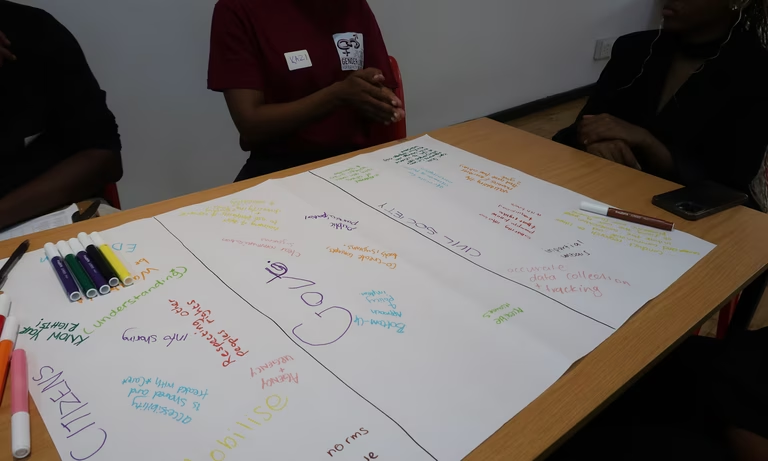
Members have also become more engaged in discussions around governance, participation and social accountability. Through conversations on local government and public participation, participants have reflected on the importance of educating communities about their rights and responsibilities. These discussions have strengthened understanding of how citizens can engage with decision-making processes and advocate for change in their communities.
As participant Aa-ishah Williams reflected:
“I think something I found really lovely is the reframing of rest as a revolutionary act and one that aids the fight, since you come back ready to engage more readily and healthily. There is often a lot of guilt attached to taking time for yourself when the issues we are facing are so urgent, but the idea that not only is rest needed but ultimately helps you fight for the cause harder is very needed and important.”
Participant Onikwa Kolosa highlighted the importance of civic education:
“Education and awareness was one of the suggestions that was brought up in the podcast. Educating people about their rights, how the municipality works, and how to engage in the IDP. All these are important factors in making it easier for communities to be more aware and combat the challenge of limited public participation.”
Similarly, Masase Mulaudzi emphasised the role of knowledge in strengthening accountability:
“It is imperative that South African people in poor communities or at a disadvantage get educated on municipalities and local government procedures. Local government is significant and impactful to every life in every community, and accountability is never fully realised when people are not aware of the processes that affect them.”
Looking ahead, the cohort is committed to sustaining and expanding this work. Regular dialogues, workshops and webinars will continue to provide opportunities for learning, reflection and peer support. As membership grows, the cohort aims to welcome new participants and strengthen networks across communities. A key next step is empowering participants with the skills, knowledge and resources needed to facilitate dialogues within their own communities, helping to extend the impact of the programme beyond the cohort itself.
By nurturing trust, encouraging participation and centring care, the Gender and Climate Justice Cohort is helping to build a new generation of informed and connected advocates. The cohort's story demonstrates that when people are provided with safe and inclusive spaces, they do more than learn. They build relationships, develop confidence and become active contributors to social and environmental justice in their communities.
Comments
Related Stories Of Change