South Africa: From feminist political education to systemic change - The leadership journey of Thabsie Mabezane

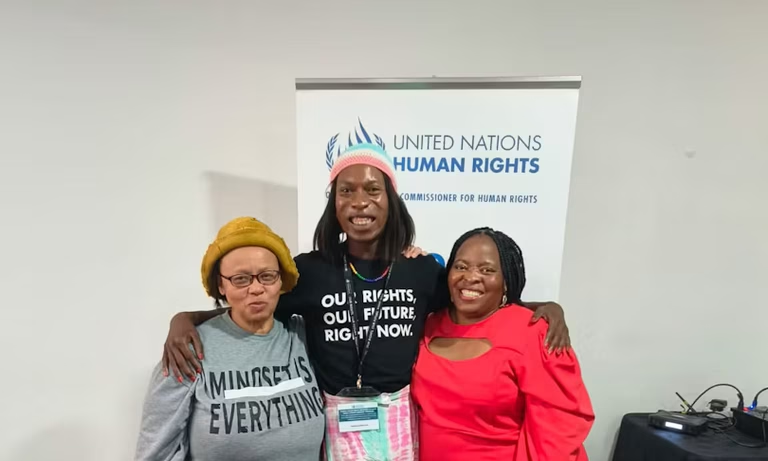
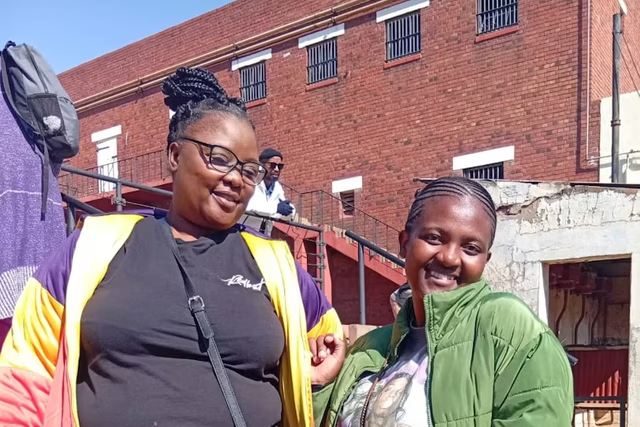
Thabsie Mabezane's journey demonstrates how feminist political education can move beyond personal transformation to drive systemic change. A young trans woman from the East Rand, currently based in Evaton, Thabsie is a feminist activist and advocate working to address the displacement and marginalisation of women and LGBTIQ+ people. Her story illustrates the power of combining political education, leadership development, healing and collective action to create lasting change at individual, organisational and societal levels.
Before joining the One in Nine Campaign's programmes, Thabsie was already active in advocating for gender equality and sexual orientation, gender identity and expression (SOGIE) rights. However, like many activists working within marginalised communities, she faced significant barriers. Black trans women and LGBTIQ+ people in South Africa continue to experience discrimination, exclusion and limited access to services intended to support vulnerable populations.
These challenges were particularly evident within shelter systems and social development services, where displaced LGBTIQ+ individuals often struggled to access safe and inclusive support. At the same time, trans women frequently encountered barriers within broader feminist and civil society spaces, limiting opportunities for meaningful participation and leadership. While passionate and committed, Thabsie had limited access to sustained feminist political education, structured movement-building opportunities and healing-centred leadership support that could strengthen her impact.
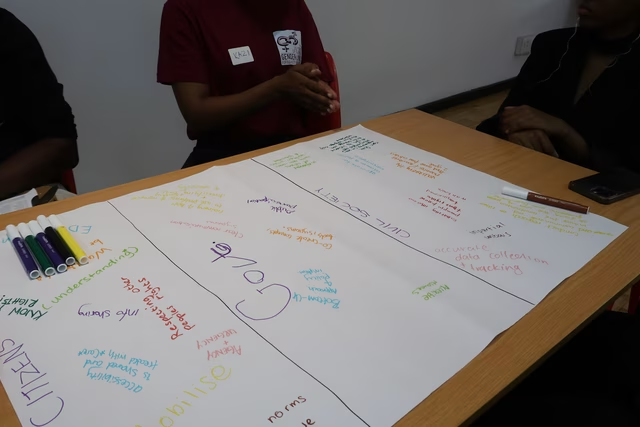
Recognising these gaps, the One in Nine Campaign provided a space where political learning, personal growth and collective action could come together. Through feminist political education and leadership development programmes, healing-centred facilitation, arts-based activism and community organising initiatives, Thabsie was able to deepen her understanding of the systems that shape inequality and exclusion.
The change that followed was significant. Rather than focusing solely on identity-based advocacy, Thabsie developed a broader structural analysis of the forces that affect women's and LGBTIQ+ lives. She gained a deeper understanding of patriarchy, displacement, inequality and cis-hetero-patriarchal systems, enabling her to approach activism through an intersectional feminist lens.
This shift strengthened her leadership and expanded her influence across multiple spaces. Equipped with political analysis and practical organising tools, she became better positioned to engage with institutions, challenge exclusionary practices and advocate for change. Mentorship and ongoing engagement within the One in Nine Campaign further reinforced her confidence, accountability and commitment to applying feminist principles in her work.
The impact of this transformation can be seen in both tangible achievements and broader social influence. Thabsie's leadership role within the Lebo Basadi Foundation has grown, allowing her to contribute more effectively to programmes supporting displaced women and vulnerable communities. She has also engaged directly with the Department of Social Development on discussions around more inclusive shelter policies, helping to bring the experiences of trans and displaced people into policy conversations.
Beyond institutional engagement, Thabsie has become an important voice within feminist and civil society spaces, advancing conversations on trans-inclusive leadership and intersectional approaches to social justice. Her growing influence is reflected in national recognition for her community service and social justice work, as well as her participation in the UN Women Human Rights Defenders Project.
Her journey also highlights the importance of creativity as a tool for social transformation. Drawing on lessons from feminist political education, she has contributed to the development of AfroPride Arts, an emerging platform that combines artistic expression, healing and activism. The initiative aims to create new spaces for feminist knowledge production, storytelling and liberation.
Reflecting on her own transformation, Thabsie explains:
“My political understanding, leadership role, and responsibility within communities have transformed. Through 1in9’s feminist political education, I moved from focusing only on identity to understanding the political systems that shape our lives. This enabled me to strengthen Lebo Basadi Foundation, qualify for the UN Women Human Rights Defenders Project, and establish AfroPride Arts as a platform for liberation.”
The impact of this growth extends beyond Thabsie herself. According to Kamogelo Mokobe, who participated alongside her:
“Participating in 1in9 programmes together shifted how we navigate family and community spaces. We have become co-creators of change, using feminist political tools to challenge patriarchy and cis-hetero-patriarchal norms in everyday life.”
Staff members at the One in Nine Campaign have also witnessed the significance of her contribution:
“Thabsie Mabezane’s advocacy has contributed to critical discussions on inclusive shelter policies and has strengthened trans-inclusive feminist leadership within civil society spaces. Her recognition reflects both credibility and sustained impact. She has also been a key source of information within the project on trans women's lived experiences, displacement because of homophobia and SOGIESC knowledge sharing.”
The sustainability of this change lies in Thabsie's continued application of feminist political education in her leadership, advocacy and organising work. Ongoing mentorship, peer learning and collaboration with feminist movements ensure that the knowledge and skills she has acquired continue to grow and evolve. Through workshops, artistic platforms and policy engagement, she is sharing this learning with others and helping to build more inclusive and equitable communities.
Looking ahead, Thabsie aims to expand the use of art as a tool for liberation across African contexts, strengthen collaboration between feminist, queer and human rights movements, and build a wider network of activists grounded in intersectional feminist leadership.
Her story demonstrates that feminist political education is not only about individual empowerment. It is also about building leaders who can transform institutions, influence policy, challenge exclusion and create new pathways for collective liberation. Through her leadership, advocacy and commitment to social justice, Thabsie Mabezane is helping to shape a more inclusive future for women, trans people and all those seeking dignity, equality and belonging.
Comments
Related Stories Of Change