South Africa: Finding their voice through sectoral training and dialogue

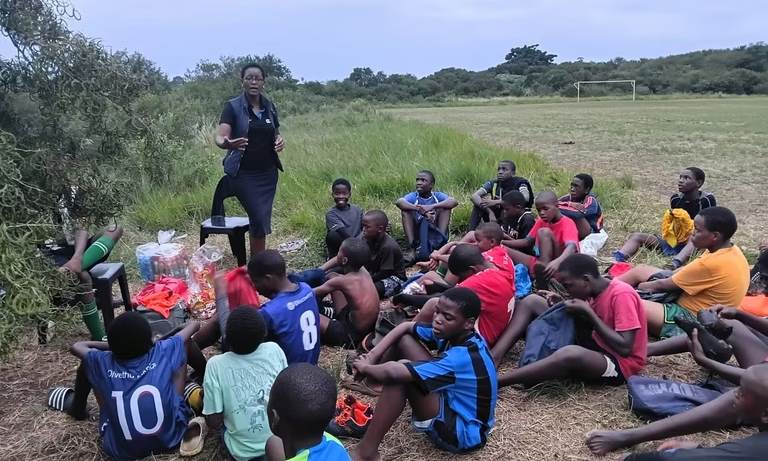
At Black Chiefs Soccer Club in KwaZulu-Natal, a series of conversations is helping young men rethink what it means to be respectful, responsible, and accountable. Through sectoral training sessions facilitated by Nonhlanhla Mthethwa between January and June 2026, young participants have been given the opportunity to discuss issues that affect their lives, including gender-based violence (GBV), bullying, emotional well-being, and positive masculinity.
The programme created a safe space where young men could speak openly, reflect on their experiences, and learn from one another. Using dialogue, practical examples, and interactive training modules, participants explored how their attitudes and behaviour influence their relationships, education, and future opportunities.
Young people are often exposed to harmful stereotypes about masculinity, alongside social pressures that can make it difficult to discuss emotions, respect, or equality. The training sought to challenge these norms by equipping participants with tools to understand GBV, promote gender equality, strengthen communication skills, and become positive role models in their communities.
For Phelele Mthiyane, a player at Black Chiefs Soccer Club, the programme changed the way he thinks about respect. Through the discussions, he realised that respect is more than simply following rules. It is a value that shapes how people relate to one another and influences personal growth and success.
The sessions also highlighted the importance of self-discipline and time management. Phelele learned that respecting time is closely linked to responsibility, helping individuals avoid unnecessary consequences and build habits that support long-term goals. These lessons connected respect, discipline, and self-worth in a way that resonated deeply with him.
Reflecting on his experience, Phelele said:
“I have learned that respect is important, so that if you respect others, others will respect you, and if you respect yourself, you can be successful in many things.”
His words demonstrate a shift in attitude and a growing understanding that personal success is rooted not only in talent or achievement, but also in character. The programme encouraged him to view respect as the foundation for healthy relationships and positive decision-making.
The training also helped participants consider the impact of their actions on others. Through discussions about bullying and social behaviour, young people were encouraged to think critically about how harmful actions can affect the well-being of their peers.
One participant, Simphiwe, reflected on the consequences of bullying and the effect it can have on a young person's education.
“I have learnt that if you bully someone, it could lead up to them not coming to school.”
This insight shows a growing awareness of how seemingly ordinary behaviour can have far-reaching consequences. By recognising the connection between bullying and school attendance, participants began to understand the importance of creating supportive environments where everyone feels safe and respected.
The programme also encouraged accountability and personal responsibility. Rather than focusing only on identifying harmful behaviour, the sessions challenged participants to consider what actions they could take to make amends and repair relationships.
As Simphiwe explained:
“If you bully someone, you must go and apologize.”
While simple, this statement reflects a meaningful change in understanding. It demonstrates that participants are not only developing awareness of harmful behaviour but are also learning practical ways to take responsibility for their actions and contribute to positive relationships.
Evidence of these changes can be found in participant testimonies, photographs, and video interviews captured during the training sessions. Young people openly shared how the programme had influenced their thinking about respect, bullying, accountability, and gender equality. Their reflections show how dialogue can help transform attitudes and encourage positive behavioural change.
The success of the initiative also highlights the value of engaging young people in spaces where they already feel comfortable. By hosting discussions within soccer clubs, the programme used sport as a platform for learning and personal development. This approach enabled facilitators to build trust and encourage honest conversations about topics that are often difficult to discuss.
Importantly, the training contributes to broader efforts to prevent GBV by addressing attitudes before they become entrenched. Promoting respect, empathy, and positive masculinity among young men is an essential part of building communities where women, girls, and all community members can live free from violence and discrimination.
The journey does not end with these training sessions. Facilitators plan to continue engaging young men and boys, helping them understand the consequences of misogyny, harmful speech, bullying, and violence. Through ongoing dialogue and mentorship, the programme aims to nurture a new generation of young leaders who value equality, respect, and human dignity.
The experience at Black Chiefs Soccer Club demonstrates that meaningful change often begins with a conversation. By creating space for young people to reflect, learn, and challenge harmful attitudes, the programme is helping participants find their voices and use them to build healthier relationships and stronger communities. For young men like Phelele and Simphiwe, the lessons learned through dialogue are becoming lessons for life.
Comments
Related Stories Of Change