South Africa: Deaf first responders shape more accessible survivor support

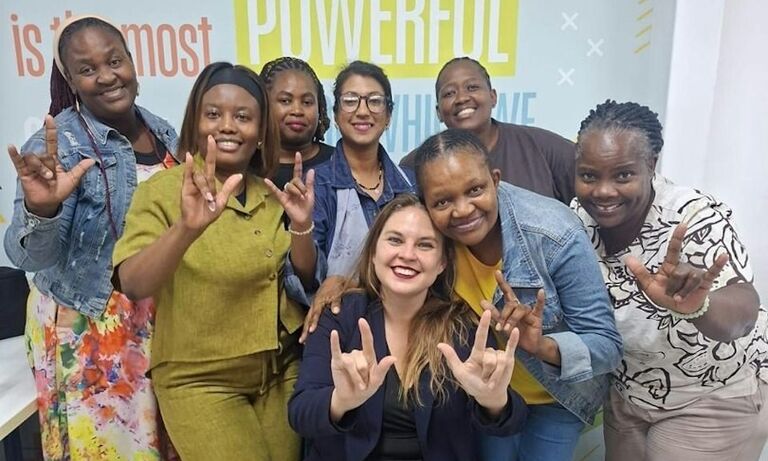
For many survivors of gender-based violence (GBV), seeking help is already a challenging process. For Deaf survivors, accessing support can be even more difficult when services rely on telephone helplines, spoken communication or hearing intermediaries. These barriers can compromise privacy, limit independence and, in some cases, place survivors at greater risk.
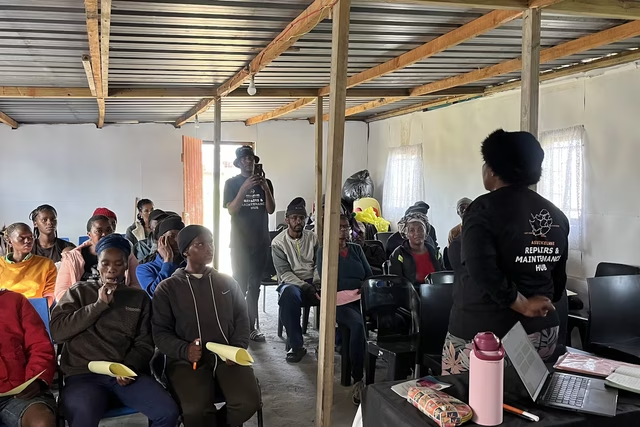
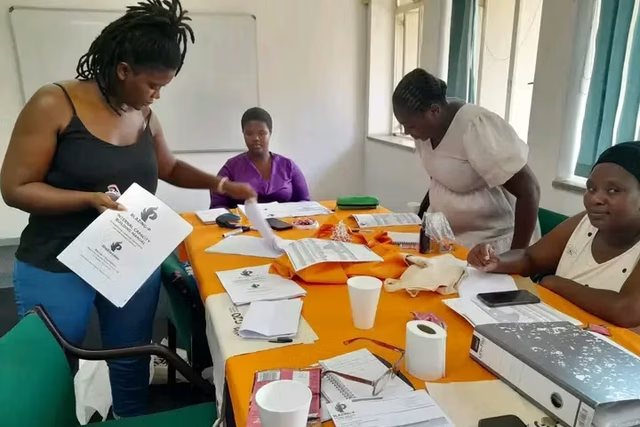
Recognising these challenges, GRIT partnered with the KwaZulu-Natal Deaf Association in June and July 2026 to deliver Tech-Facilitated Gender-Based Violence (TFGBV) First Responder Training for Deaf first responders across KwaZulu-Natal. The initiative aimed to strengthen participants' knowledge and practical skills so they could better support Deaf people experiencing online and technology-facilitated abuse.
At the same time, it created an opportunity for Deaf first responders to provide direct feedback on GRIT's digital tools and services. The training highlighted a reality that many Deaf people face when seeking support. Participants shared examples of how inaccessible communication systems can prevent Deaf survivors from making informed decisions about their own lives. One first responder described a case involving a Deaf survivor attending a healthcare facility with a hearing partner. The survivor wanted to communicate that she wished to terminate her pregnancy, but her partner did not pass this information on to healthcare providers. The survivor was left believing she had no option but to continue the pregnancy.
This example illustrated how communication barriers can affect far more than convenience. They can influence safety, autonomy and the ability of survivors to exercise their rights.
Participants also emphasised that Deaf people are often viewed only through the lens of disability, while the complexity of their lived experiences is overlooked. Like hearing people, Deaf individuals experience GBV, sexual and reproductive health concerns, relationship challenges, substance use issues and online harms. However, these realities are often not adequately considered when support services are designed. The training created change in two important ways.
First, Deaf first responders gained new information, practical resources and digital tools that can strengthen their ability to support survivors of TFGBV. Participants were introduced to the GRIT app and other resources designed to provide safety information and support without relying entirely on voice-based communication. These tools have the potential to increase access to information and support while promoting greater privacy and independence for Deaf survivors.
Second, the workshops transformed GRIT's own understanding of accessibility. Rather than approaching participants simply as recipients of training, GRIT engaged them as co-creators. Their lived experience and professional expertise became central to discussions about how technology and survivor-support services can become more inclusive.
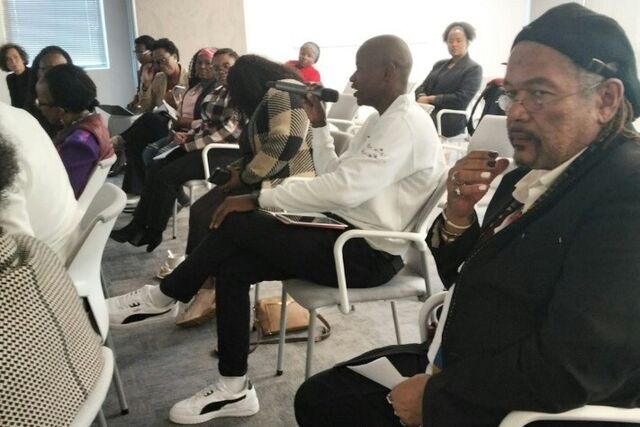
Through facilitated discussions on accessibility, survivor-centred support and digital abuse, participants openly shared what works and what does not work for Deaf communities. These conversations shifted the relationship from one-way knowledge sharing to genuine collaboration.
As one Deaf first responder explained, many GBV services remain inaccessible because they depend on telephone helplines, forcing Deaf survivors to rely on hearing individuals to access support. Another participant highlighted that Deaf people are frequently treated as though deafness is their only concern, despite facing the same social, health and safety challenges as everyone else.
Participants also noted that GRIT's willingness to listen and incorporate their recommendations demonstrated a genuine commitment to inclusion. They reflected that being involved in shaping technology and services made them feel their experiences and accessibility needs were being taken seriously.
Evidence of this change can be seen in both the immediate outcomes of the training and the organisational learning that followed. Deaf first responders left the workshops with greater knowledge of TFGBV and additional tools to support survivors. At the same time, GRIT gained practical recommendations that will inform future improvements to the GRIT app, Zuzi and wider survivor-support initiatives.
The workshops also reinforced an important lesson: accessibility cannot be treated as an additional feature added at the end of a design process. It must be integrated from the beginning and developed in partnership with the people who will use the service. Feedback from participants demonstrated that inclusive design is most effective when communities are actively involved in identifying barriers and developing solutions.
Looking ahead, GRIT is committed to ensuring that the insights gained from the training continue to shape its work. The organisation will use recommendations from Deaf first responders to improve the accessibility of its digital tools and support services. It also plans to maintain partnerships with Deaf individuals and Deaf-led organisations through ongoing testing, consultation and co-creation processes.
The long-term vision extends beyond improving a single application or programme. GRIT aims to demonstrate how digital survivor-support services can provide Deaf people with greater privacy, choice and independence when seeking help.
This initiative shows the power of designing solutions with communities rather than for them. By recognising Deaf first responders as experts in their own experiences, the programme strengthened support for survivors while helping create more inclusive systems for the future. The result is a model of collaboration that not only improves services today but also lays the foundation for safer, more accessible survivor support for years to come.
Comments
Related Stories Of Change