Zimbabwe: Don't judge a book by its cover

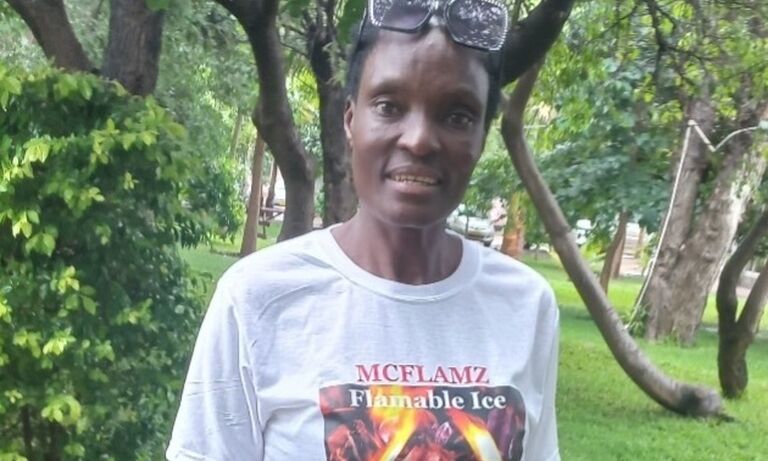
The story of Muchaneta, a member of Kadoma Waste Management Cooperative, Zimbabwe
Background
Muchaneta had been a full-time housewife, caring for her three children (two sons and one daughter), and dependent on her husband’s income, who worked as a uniformed officer in the army at the Mbalabala barracks. She suffered gender-based violence, which was largely driven by her husband’s mental health challenges. Due to her lack of awareness about the condition, she only sought help when his condition had worsened and become unmanageable without medication and confinement.
“I noticed that we would have arguments more often, which at times would turn violent, but I never suspected that my husband was having a mental breakdown,” said Muchaneta.
In 2016, she separated from her husband on medical grounds, and in 2018, Muchaneta and the children had to relocate to Kadoma to live with her brother. “When I separated from my husband and moved to Kadoma, I was heartbroken. Not only did I lose my marriage but also a residential stand that we were in the process of acquiring and had started building in Esigodini through a women’s cooperative. Looking back, I feel this loss was due to a lack of knowledge and financial insecurity,” she lamented.
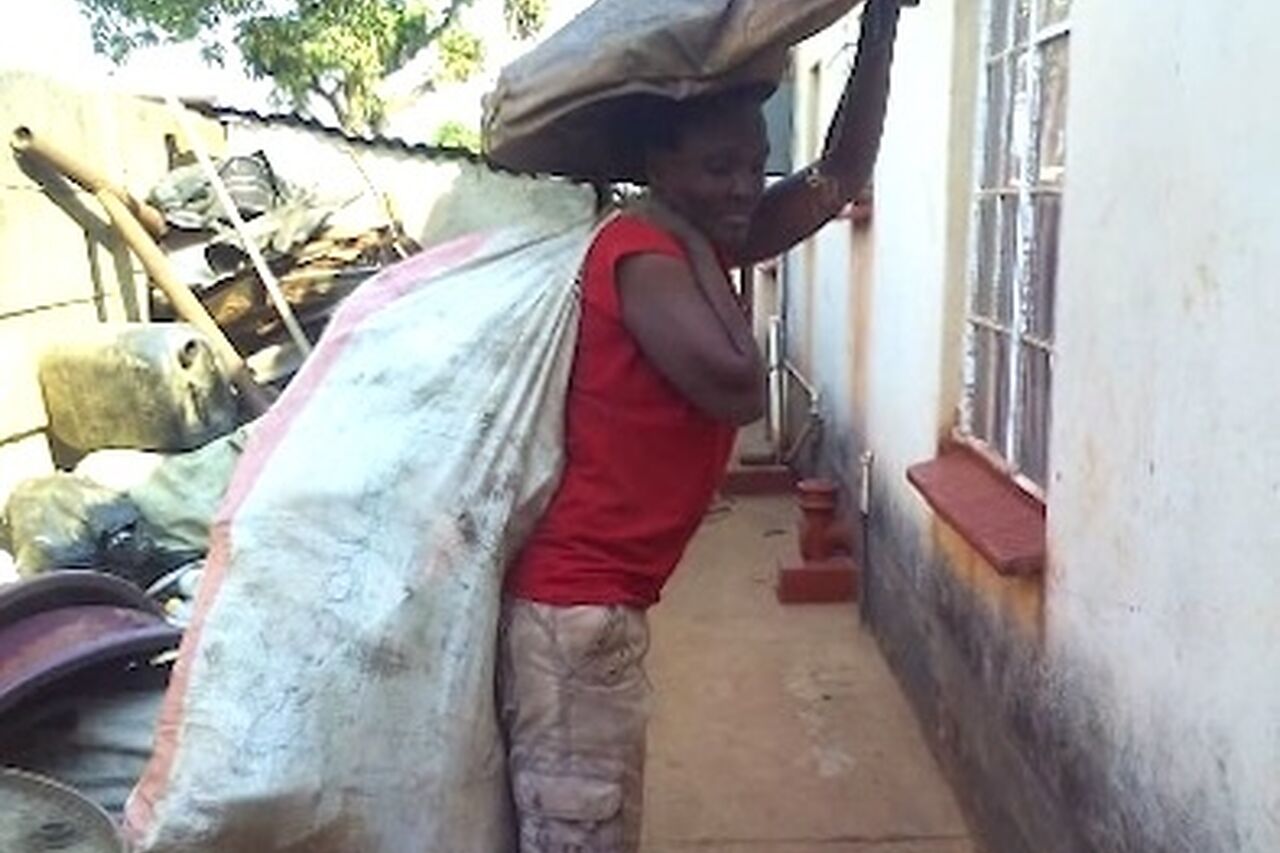
“Having limited options to earn a living, I would accept any amount offered by people when I worked for them as a part-time domestic worker or casual labourer. Intimidated to approach recycling companies directly, I would sell recovered PET bottles for recycling through makoronyera (literally – middle-men), who would offer very low amounts,” she said.
“The money I was earning would hardly cover a quarter of my household financial needs per month. This made me powerless to voice any concerns or challenge the financial offers I was getting from makoronyera or my part-time employers,” she remarked.
“I have been labelled Mai Marara (literally – Garbage Mother) for aggregating dirty PET bottles recovered from the dump-site at my place of residence, where I am a tenant. I was often accused of being a carrier of rodents and diseases such as cholera,” she said.
Turning point
Muchaneta recalls her turning point was when she was called by Sekuru Gomba a member of the council while rummaging through a waste bin. “I had my head down a garbage bin at Rimuka Market when Sekuru Gomba approached me with an offer to become a member of a waste management cooperative that would be registered through the Local Economic Development (LED) project. At that time, the offer sounded too good to be true; as such, some of my fellow waste pickers refused to come on board,” she indicated.
She is currently the vice chairperson of the Kadoma Waste Management Cooperative and has been appointed by the Environmental Management Agency (EMA) as a Community Environmental Monitor. “Achieving this social status has earned me respect - something I never anticipated through waste picking. I now carry the Mai Marara title as a proud influencer, equipped with knowledge, protective clothing, and access to a waste management facility with all the public health amenities and storage space.”
Every first Friday of the month, she participates in the National Clean-up Campaigns and uses the platform to promote waste management and encourage the community not to litter the environment. Using the jingle ‘Musarasa marara pese-pese’ (literally meaning, ‘do not throw litter everywhere’), she continues to spread the ecofriendly habits.
New horizons unlocked
Apart from the waste recovering for recycling, Muchaneta is also running a number of business ventures under the McFlamz brand. This is her personal enterprise. Her products include Ageless Vaseline, Fresh & Tasty Cakes, and Flammable Ice. “I am now financially secure, and I have opened a SmartSave account with POSB. My most recent acquisition is a residential stand under Phase 3 Destiny House, and construction of my first house is expected to be completed before the end of 2026,” said Muchaneta excitedly.
“My daughter, who just turned 18 years old, is also part of the youth under the Kadoma Waste Management Cooperative. Being part of my journey, she has developed a great appreciation for the value of waste management and the opportunities it has opened for our family. She is currently a Youth Coordinator and Trainer, promoting youth engagement in the waste management sector and providing education to youth on the negative impacts of drug and substance abuse,” explained Muchaneta, making reference to how waste management has influenced her own family.
Future opportunities
Muchaneta remains optimistic about the future. “I believe there is money in waste recycling, and my story is testament to this. If I can own a seven-tonne truck to carry waste materials, and be able to process these into valuable products locally, then waste recycling will be a long-term venture for me. Currently I get 45 cents per kilogramme of waste PET bottles I sell, yet the same quantity can be processed into products that can be sold for up to USD30”, said Muchaneta.
As parting shots, Muchaneta added, “Don’t judge a book by its cover. Foraging at dump sites to recover materials does not mean insanity or being a carrier of rodents and diseases. On the contrary, for me, it means making money, influencing others, and living a better life.”