Herstory: Phumzile Mlambo-Ngcuka’s powerful brand of African feminism

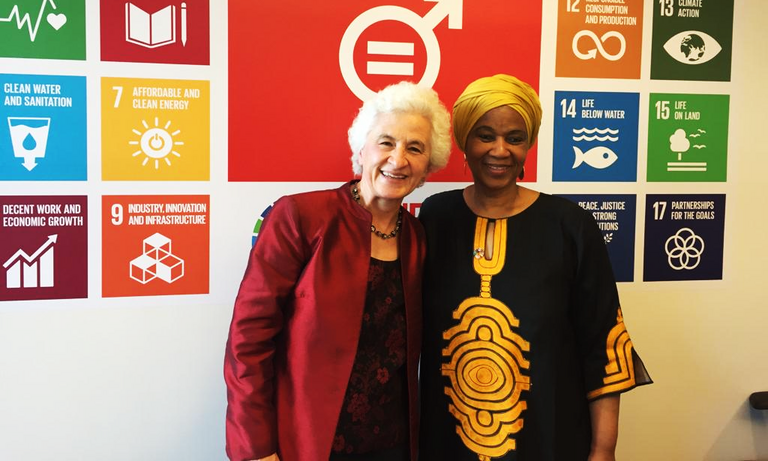
Johannesburg 22 November: A virtual bullet went straight to my heart on learning of the passing of Dr Phumzile Mlambo-Ngcuka, to all of us in the women’s movement, Sis Phum, on 20 November 2026. In our many encounters over the years we would part with this high five: “when you have the power use it” – one of her favourite sayings.
In her varied roles from activist to the highest levels of political power, to the United Nations, she had the power. And she used it – to model a different kind of leadership. Delivery oriented for sure. Visionary, curious, bold, and always pushing boundaries, absolutely. Consummate learner? Education was in her DNA! She pursued a PHD in the UK as she served as Deputy President, security detail in tow.
But intertwined in that fabric of power and leadership, lay kindness, love, laughter, and a profound care for every individual around her. As South African journalist and editor Ferial Haffajee put it on learning the news of her passing: “Phumzile Mlambo-Ngcuka showed us the ambient possibilities of a powerful yet gentle African feminism. May she rest in the power that she imparted to so many.”
Sis Phum championed women’s rights, blazing the trail in non-traditional ministries from trade and industry to mining, to Deputy President of South Africa, on to being the Executive Director of UNWomen. She also famously used a window as acting president of South Africa in 2006 to sign into law the Civil Union Act legalizing same sex marriage – a brilliant example of having the power and using it!
Despite the constraints of UN “lowest common denominator” politics, she boldly opened the door to LGBTIQ persons in all spaces in the UN, always referring to her deep belief in the Southern African philosophy of “ubuntu” (I am who I am because of you). Through years of struggle and exile in the anti-apartheid movement, based mostly in civil society, Sis Phum framed her values around human rights: indivisible, non-negotiable.
I first interviewed this icon for Gender Links’ seminal study, Ringing up the Changes, Women in Southern African politics, in 2000. She headlined our chapter on “Cleaning the Streams: Malestream or Mainstream?” – going beyond numbers for women in political participation. Characteristically, she arrived on time, lived up to her reputation of “dial a quote”, and did so in such a way that we hardly felt the hours slipping well beyond the agreed time.
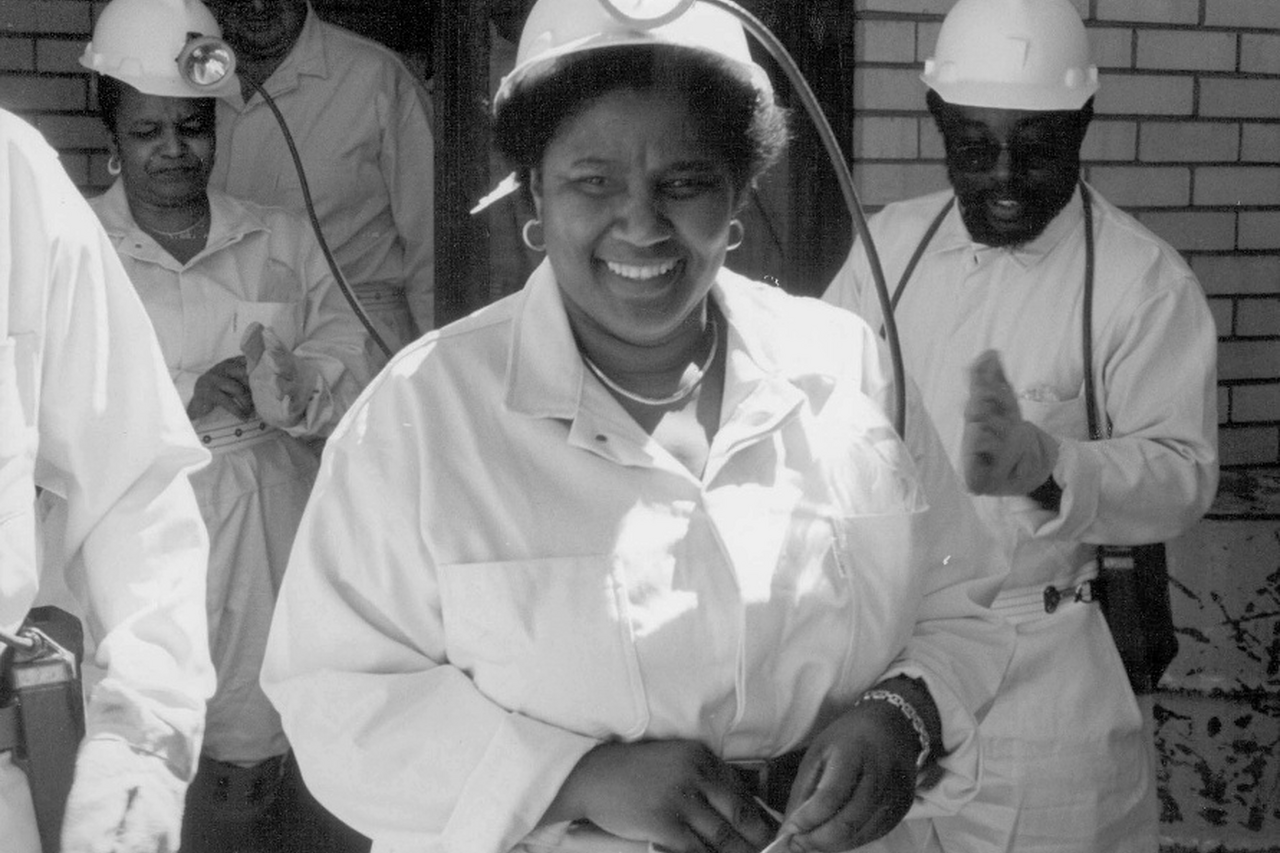
My enduring memory of that meeting is how she literally jumped fearlessly but with humility and humour into any role she occupied. When Sis Phum served as Minister of Minerals and Energy, a large portrait of a woman miner, complete with white overalls and head gear hung above her desk. On closer examination you realise the miner is Mlambo-Ngcuka herself. “I always believe in (literally) getting into whatever I am doing,” she laughed.
Then there is the night-time game drive on the back of a bakkie in the Kruger National Park after a meeting of the President’s Business Advisory Council. “If I get mauled,” she asked a former aide, “what would I tell my mother in Kwa Zulu/Natal? That a lion attacked Phumzile as she wandered around in the middle of the night!” There are enough lions in politics, reasoned South Africa’s then Deputy President, without having to go to the Kruger Park to look for more!
But she soon appropriated the lion metaphor. When she arrived in London to address the financial community there, one newspaper said she had arrived in the lion’s den. “I told the journalist: I am a lion myself - I was so convinced that our cause is just.” The headline the next day read: “The minister, armed with charm, disarms the gloomiest banker.”
Mlambo-Ngcuka’s first shock in politics came soon after the advent of democracy in 1994 when the then President Nelson Mandela appointed her deputy minister of trade and industry. “I said: I don’t know anything about that! I asked him to give me a day to gather my thoughts. I believed that much as we should make ourselves available to govern, we should also not be reckless and risk the reputation of the institution you are supposed to advance. I did not want to be overconfident. I have never regarded myself as being capable of being a token. So, I had to ask myself honestly: can I do this? I said, I don’t think I know enough about this, but what I do know is that I have the capacity to learn and learn fast.”
In addition to the tasks that came with her job description, Mlambo-Ngcuka voluntarily added another one to her portfolio: taking forward the Beijing Platform for Action for the advancement of women “because for me it’s not a soft issue; it’s absolutely integral to what we are trying to achieve.”
She confessed: “Of all the jobs I have ever done in my life, trade and industry was the most painful. As a woman the institution was so hard to relate to. The economy was so masculine, and I was not an expert. I could not hold my own. I resorted to defining a niche for myself, to make connections with those we intended to empower."
“I thought the big boys had enough people worrying about their issues, so I blocked off and focused on women and trade. I made a choice and said this is a trade-off: the choice between asserting shaky authority, and hand holding people I can relate to with my heart and my soul and making some difference. There I could be an authority, and I did not have much competition! Not many officials in the (white, male dominated department) were interested in black women in small and medium scale enterprises. It’s moved quite a lot since then.”
Among legacies that Mlambo-Ngcuka left in the department is one of the strongest gender units in any of the government ministries, housed in the deputy minister’s office; a gender policy and the South African Women Entrepreneurs Network. Mlambo- Ngcuka instituted the annual Technology for Women in Business (TWIB) award, “not because women are rocket scientists, but because they are innovative in using technologies in ways that make business sense. Women who struggle with appropriate technologies should have role models to look up to.”
The then deputy minister also ensured that women were included on trade delegations as a matter of course. “I said to (then Minister of Trade and Industry) Alec (Erwin): no trip leaves this ministry without my signature. That means if I don’t see women, if I don’t see blacks, I’m sorry, the trip is off. Of course there is always the danger of tokenism. Sometimes, in some sectors, it became difficult because there simply are no women entrepreneurs in those areas, like in the auto sector. But it helped that officials knew that the whole trip they wanted to do could be off if they did not find a woman. We probably made mistakes, but I would say that forty percent of those we took became entrepreneurs. They were not just tourists.”
Mlambo-Ngcuka also became active in regional forums, hosting a workshop with the SADC Gender Unit on women and the SADC trade protocol then being negotiated. “In all the forums I looked for an opportunity, and I looked for allies. Even SADC men have now been conditioned not to argue against gender equality when they meet. At times I would say to myself, ‘I’m just bullying here, but so what’. At the global level, it was the same thing. I just took whatever opportunity arose with the attitude, nothing ventured, nothing gained.” When President Thabo Mbeki took over and appointed her Minister of Minerals and Energy in 1999, mining came as a challenge rather than a shock. The sector is regarded one of the toughest transformation challenges in South Africa.
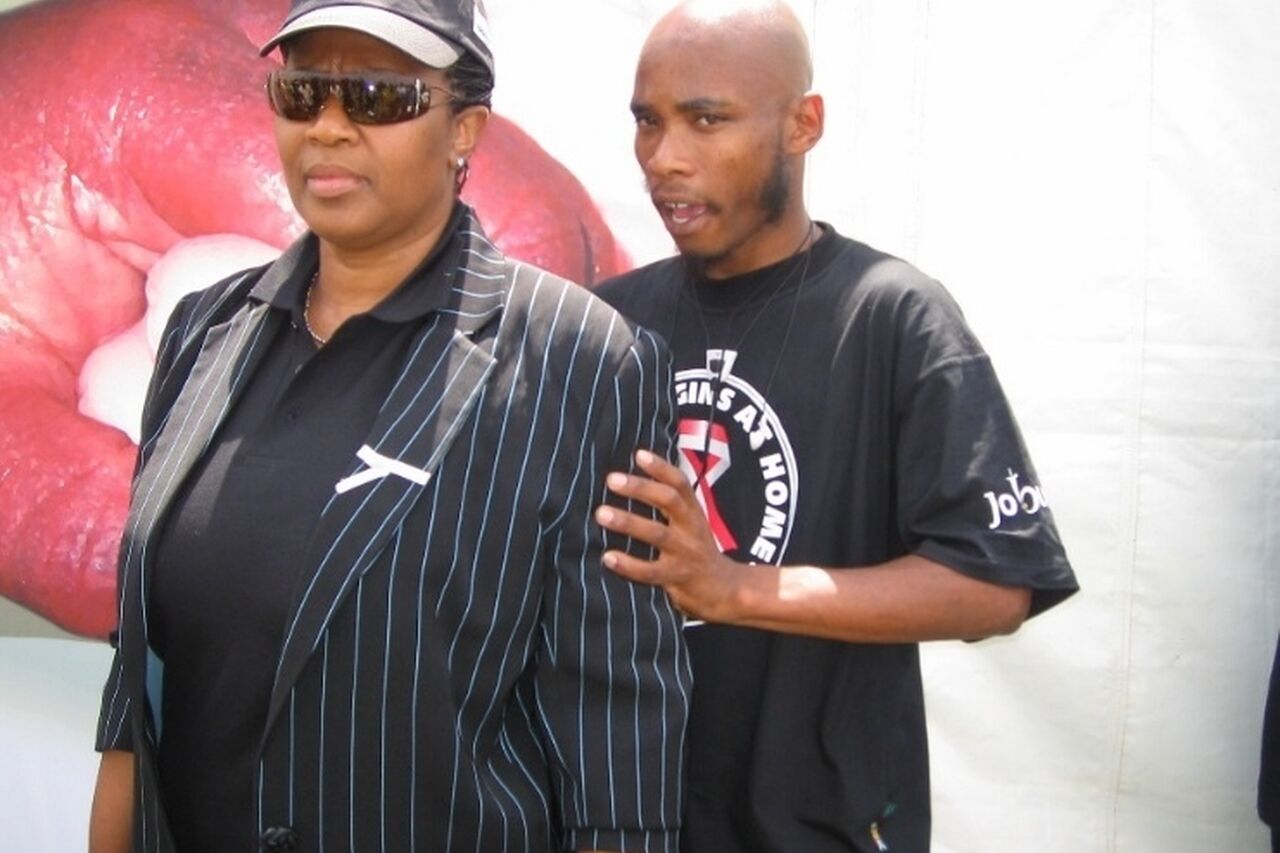
Mlambo-Ngcuka was clear that “I would have to use my position to alter the institutional makeup of the industry.” She began by defining her key performance indicators: “human indicators that had to do with race, class and gender.” Given the overwhelmingly male face of the industry, “I had to be realistic that I will not turn this into a woman-dominated industry overnight. I needed to convince women also; it’s been such a hostile history. Between being a minister at the pinnacle of an industry that requires skills that you don’t acquire overnight and needing to push the transformation agenda, I needed room to manoeuvre.”
Mlambo-Ngcuka saw as her “teeth” building equity requirements into licensing conditions. “One thing I have learned on this job is that when you make changes, you must have the necessary tools. The only way to do this was to have some form of sanction. I built the whole strategy around the licence.”
She proceeded to design the “Broad-Based Socio-Economic Empowerment Charter for the South African Mining Industry” now commonly referred to as simply the mining charter and a careful strategy for marketing it. ”I was prepared to bring people along, because that is better than to bring people kicking and screaming. But they had to realise that there is no going back. It’s good to win people over, but in a position of power you must exercise power.”
The Mining Charter, which the minister navigated through stormy waters at home and abroad, begins by recognising the gender and race disparities in South Africa. It states that the government does not intend to nationalise mining (as happened in many newly independent African countries.) It covers joint obligations of government and the industry towards human resource development. It sets various targets for achieving equity over time, including meaningful ownership by women.
She recalled a case in which a businessman asked the then minister what she expected him to do: bring a busload of women, with no skills and experience, and add them to his company? Looking back at him with a straight face but exuding her usual charm Mlambo-Ngcuka responded: “I am sure we can make a plan!”
As in DTI, Mlambo Ngcuka established women’s associations both in mining and energy. In energy, the size and cost of investment is so prohibitive that this is a barrier for women entrants and “it gave me sleepless nights.”
Mlambo-Ngcuka recalled how, when she first addressed the energy branch, she told them: “The girl child is your first priority.” Asked by a predominantly white male audience to explain what she meant, she said: “If a girl child can’t play because she has to go and fetch wood; if she can’t study because there are no lights and she spends all her time fetching firewood to cook, then where is our future? You have to work for universal access, because that is your unique contribution to the liberation of the girl child. Their name is today. If you don’t do it fast enough, then you will have missed the boat. You will be measured in your performance on this basis.”
As in the case of mining, “I said to all the men (potential investors in the energy sector) that came to see me that ‘if you don’t bring women you are going to fundraise with, I’m not talking to you.’ You should see how everyone found women!”
She reflects: “One of the things for me that has been very grounding, that I learned when I worked for an NGO is that if it works for women, then it will work for everyone else. So if you want a perfect yardstick for measuring the depths of democracy then just check what difference it makes for women.”
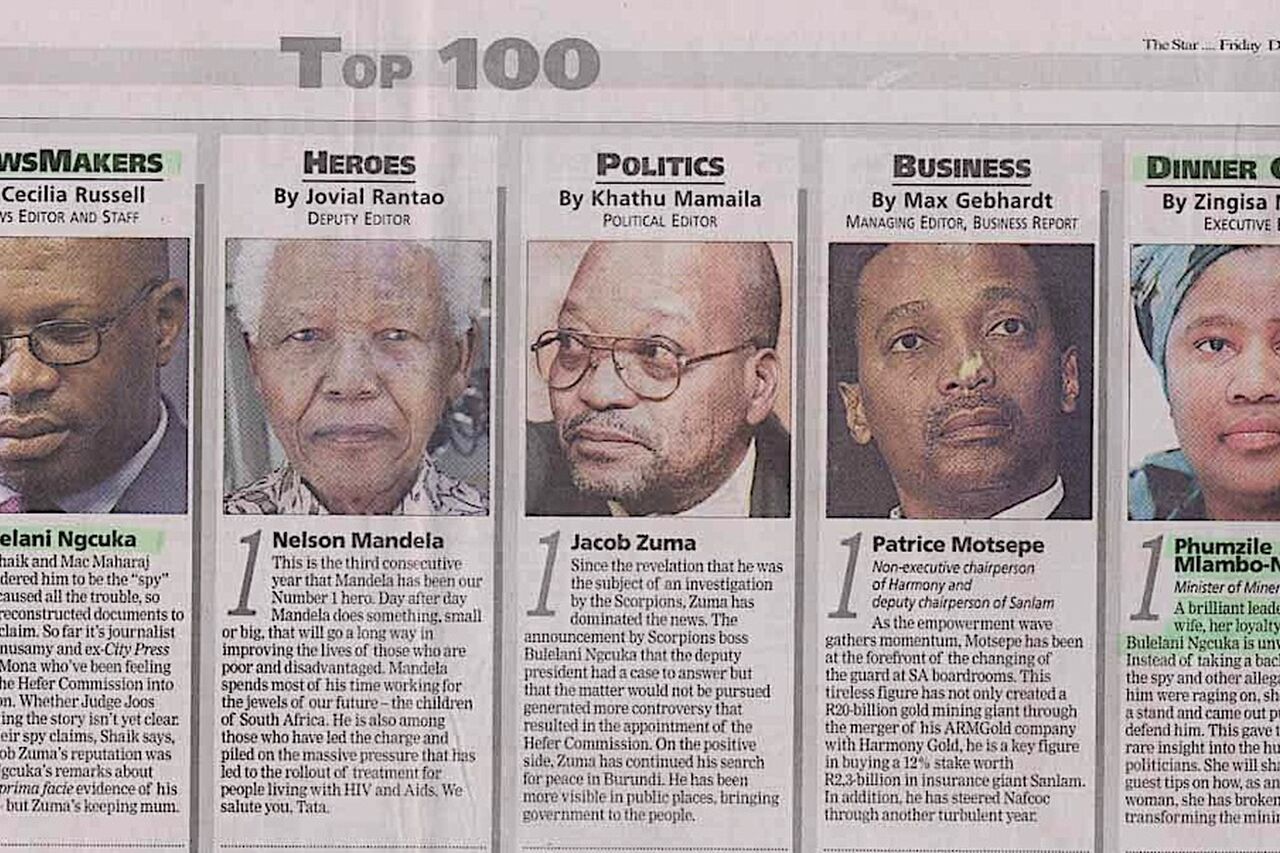
In 2004, when the Star Newspaper named its 100 most influential persons in South African politics, it ranked Mlambo-Ngcuka’s huband, Bulelani (then Director of Public Prosecutions) newsmaker of the year, while naming his wife Phumzile as the person you would most like to have dinner with. Charming dinner company for sure, but an appendage to her husband? The woman who championed the Mining Charter! The analysis begged the question of how far the South African media still needed to go in its transformation journey! !” In her subsequent role as Deputy President Sis Phum confided that “it would be nice to have a wife”, to help worry about which tablecloth and cutlery to use for the several functions she had to host. Although her husband had been “supportive”, she said, he was “hell of a confused about what he has to do!”
When President Thabo Mbeki appointed her to be his deputy in June 2005 following the dismissal of former Deputy President Jacob Zuma, Mlambo-Ngcuka stepped into the inner lion’s den of South African politics. Conspiracy theories hung heavily in the air, with some alleging that this formed part of a game plan that began with Mlambo-Nquka’s husband Bulelani, then Director of the National Prosecuting Authority (NPA) investigating a case of corruption that eventually led to Zuma being charged. The truth, as time revealed, was much simpler. Mbeki had staked his last term on delivery. The African Renaissance president had also made it clear that advancing the rights of women was one of the legacies he wanted to leave behind.
Whatever her “baggage” (the term Mlambo-Ngcuka used with a laugh to describe herself) the former minister of minerals and energy fitted the bill rather well. A homely and easy-going style, good relations with a broad cross section of South African society including the Congress of South African Trade Unions, big business, youth and women’s groups as well as developing a politically neutral image fast won the most powerful woman in South Africa respect and admiration.
As leader of government business, she faced the danger that her male colleagues will happily hand over all the “women’s issues” to her. “It’s a risk I am willing to take,” she said. “There are things you rebel against because they stereotype you, but you do them anyway because they are too important to leave to chance. It’s like as a mother I don’t want to be stereotyped as the one who looks after the babies, but that does not mean I am going to neglect the babies!”
Sure, there were painful moments, like being booed by Zuma supporters at rallies. “Obviously, these are the kinds of things one would prefer not to have to face, but they come with the terrain. They are inconveniences; not the kind of thing that gets me down,” she said. “How many people,” she added, with her infectious laugh, “can add to their CV that they have been booed at rallies? You don’t get that if you are irrelevant; if you are a footnote of history.”
When the ANC unceremoniously unseated Mbeki in 2008, and instated Jacob Zuma as president, Mlambo-Ngcuka, together with a slew of women ministers resigned. After a period setting up a foundation for women and girls, The UN recruited her to serve as Under Secretary General and Executive Director of UN Women from 2013 to 2021. I recall being called by the UN as part of their reference checks with civil society, one of those moments when you simply have no hesitation in saying, “yes, yes, and yes again!”
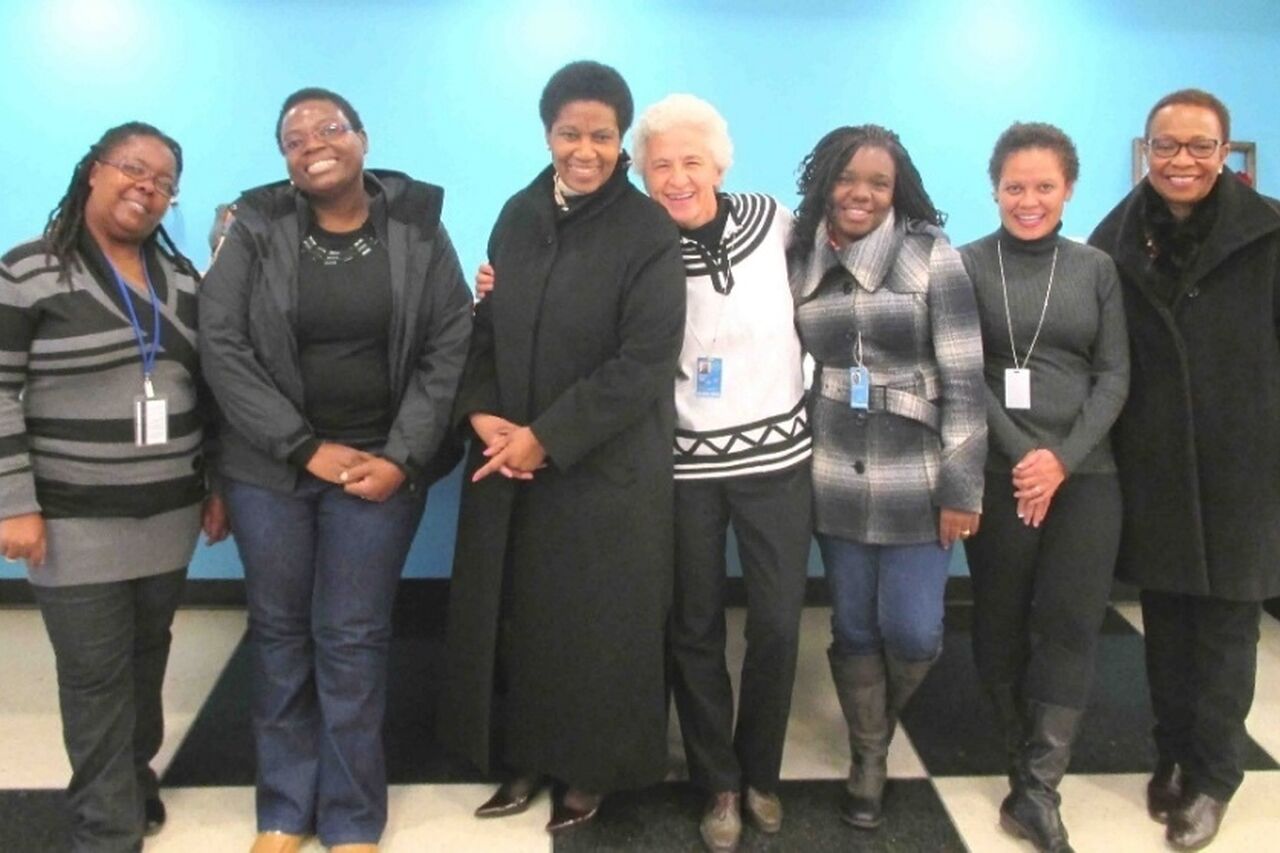
Even as she moved to New York joking about the wintry weather, Mlambo-Ngcuka maintained a close link with the women’s movement in South Africa and the region. The Southern African Gender Protocol Alliance joined the women’s movement in South Africa in organizing a send-off for her to New York, and a welcome back when she came. She authored the foreword to the annual Southern Africa Gender Protocol Barometer, exhibiting a passion for data driven advocacy, and giving prominence to African feminism on global platforms. But, in this global position, her vision expanded, opening many doors, visiting Afghanistan, and giving prominence to the worst violation of women’s rights.
“Some leaders occupy positions; others transform them. Some attend international platforms; others change the very purpose for which those platforms exist. Dr Phumzile Mlambo-Ngcuka belongs to the latter,” writes a former aide Pumeza Mafani, currently Executive Manager, Complaints and Stakeholder Management at the Office of the Public Protector South Africa. “My encounters with her leadership, particularly during the United Nations Commission on the Status of Women (CSW), left a lasting impression on me. She gave CSW a different meaning. It was no longer simply an annual gathering in New York, a diplomatic calendar event, or an opportunity for delegates to travel, attend meetings and deliver statements. Under her leadership, it increasingly became a well of knowledge, a space for consequential decision-making and a machinery for advancing women’s rights and gender equality.”
Many would agree with Mafani that: “What particularly stood out was her appreciation of civil society. She paid attention not only to the formal proceedings at the United Nations but also to the Church Center, where civil society organisations and women’s movements gathered. She understood that these were not peripheral activities or merely side events running alongside the official CSW programme. They were integral to gender mainstreaming, shaping the Sustainable Development Goals (SDGs), generating solutions and ensuring that the voices of women, particularly those whose experiences are often absent from formal decision-making spaces, informed the global agenda.”
In her personal interactions Mlambo-Ngcuka balanced being firm with creating a caring environment. “People bring their personal problems to me. I used to call my office indaba ze bantu (the people's issues). When staff has problems, they prefer to come to me rather than go to the Director General; they see my office as a more homely environment. It’s quite amazing. You find the older white men coming to me with their problems, and then the DG says ‘minister why did you do this’ and I’m the one saying, ‘ag, shame man.”
Among the terms used to describe her by staff and close associates are hardworking; clever; a fast-learner; straightforward; results driven; demanding high performance; decisive and not afraid to call people to order. But she is also described as caring; genuinely interested in the people around her no matter what their rank; inclusive; a good listener and empowering.
Take the case of her former PA in mining and energy Khetiwe McClain who, during a high-level debriefing on diamonds and conflict at the South African embassy in New York got unexpectedly asked by the then minister: “and what do you think Khetiwe?” After stumbling through a response, McClain made it her business from then on to do more than just carry the minister’s handbag to meetings. Today, she is an accomplished businesswoman and executive director of an empowerment company with interests in, amongst others, the property and coal mining businesses.
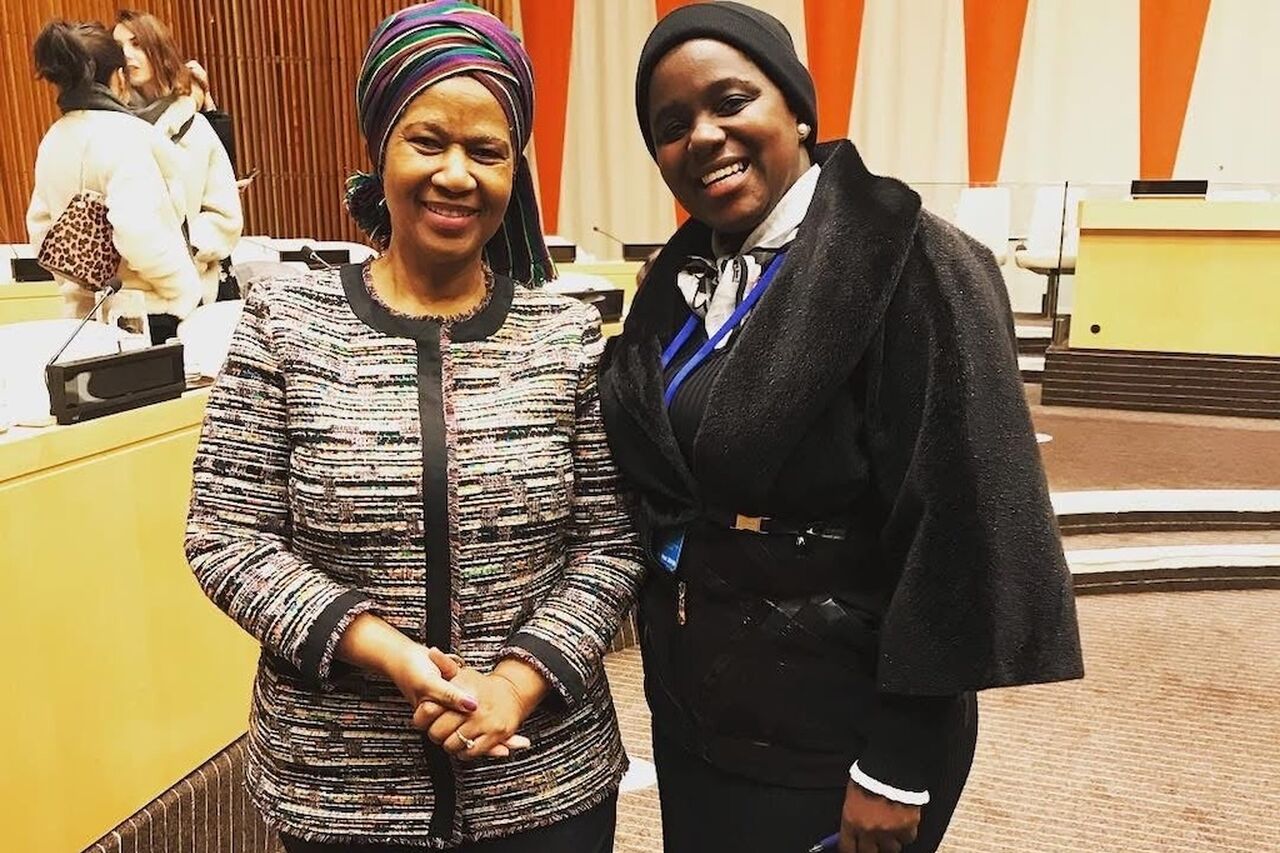
Mafani reflects: “There was also something deeply refreshing about her personal approach to leadership. Despite the stature of her office, she remained approachable and humble. She could pause for a photograph, take selfies with delegates and engage with people without the distance that often accompanies high office. When hosting her country’s delegates, she did not make the space exclusive or reserve her warmth for a select few. Her hospitality and accessibility reflected a leadership style that recognised and valued all women. She also brought a different meaning to the work of UN Women itself. The institution was not simply about advocating for women; it had to be about influencing decisions, mobilising resources, building partnerships and translating commitments into tangible change. She demonstrated that international leadership can be both diplomatic and accessible, institutional and people-centred, strategic and deeply human.”
“Her legacy is not only that she broke the glass ceiling, but that she challenged us to reconsider what should happen once a woman gets into the room. What I take away from sis Phumzile’s leadership is the importance of understanding that representation is not enough. It matters who occupies the room, but it matters even more what they do with the opportunity, whose voices they bring into the room, and whether they leave the door open for others. For that, and for the doors she opened, the voices she amplified and the meaning she gave to leadership, I remain deeply appreciative.”

Sis Phum had a special place at her table for young women, and they gravitated towards her like bees to a honey pot. Following her retirement from the UN, she served on many boards, including as chair of the global Women Deliver. My last interaction with her was in April this year, when a young staff member at GL asked to be connected to key contacts at the Women Deliver conference in Australia. She indicated that she would not be travelling for health reasons, a cue none of us took seriously enough at the time. Nonetheless, she opened her address book, ever keen to empower young women leaders.
I once asked Sis Phum if she felt disadvantaged at any time as a woman in a man’s world. “I haven’t given them the opportunity to disadvantage me,” she said with her characteristic chuckle. “I think that I know the powers I have, and I don’t hesitate to use them.”
Hambani kahle, go well, Sis Phum. You had the power. And you used it, for the good of women and girls in all their diversity. We grieve, we celebrate, and we vow to push forward with your vision.
(Colleen Lowe Morna is Special Advisor to Gender Links. This article is written in her personal capacity).
Also read the Statement by the Beijing+30 African Women's Movement on the passing of Dr. Phumzile Mlambo-Ngcuka