16 Days: From screens to scars, digital GBV

Jane’s dreams of a bright future were nearly destroyed the day her ex-boyfriend betrayed her trust through leaking her intimate photos on social media.
He subjected her to a cruel act of digital gender-based violence (DGBV) that stripped away her dignity and left her fighting depression. She recalls the fallout was devastating relentless cyberbullying, whispers that followed her everywhere, and the unbearable weight of public humiliation.
Unable to cope, she withdrew from one of the country’s most reputable public colleges, taking a year and a half away from her studies. What began as a violation of her privacy became a painful reminder of how online abuse can derail the lives and aspirations of young women.
“It took me a lot of therapy and counselling to get back to myself and resume my studies after the leakage of my nude photos,” Jane. Explains.
After a painful breakup in 2021, her ex-boyfriend retaliated by leaking intimate photos she had once shared with him in confidence.
According to Jane, this was the cruellest ordeal she has ever endured in her 25 years of life. Beyond the psychological scars, the inhumane act robbed her of precious time she will never reclaim. Instead of proudly graduating with her peers in 2023, she now faces the reality of completing her undergraduate studies three years later, in 2026.
“The shame was immense, not only for me but my family too,” the visibly emotional young woman recalls, “I will never forget how my mom cried and questioned why I did it.”
For Jane, the pain affected her entire household, leaving her parents and siblings struggling to cope with the stigma. The betrayal not only scarred Jane’s mental health but also fractured the trust and peace within her home, a reminder that DGBV devastates far beyond its immediate victim.
Even though the social media community said Jane was partly to blame for sending her intimate photos to her boyfriend when all was well, DGBV violence goes far beyond that. Victims are not responsible for the abuse inflicted upon them.
DGBV has not spared female journalists as they execute their duties. Prominent TV journalist and content creator Priscilla Kayira cements this truth. Since rising to prominence over eight years ago, Kayira has repeatedly been targeted online; her personal choices and opinions twisted into fodder for harassment. Most recently, when she openly shared that she was not interested in having children, the internet erupted with insults and defamatory attacks against her character.
“Cowards is what I call perpetrators of digital violence,” Kayira declared. “They are people that most times you are doing better than them and have nothing better to offer.” Her words echo the lived reality of women whose voices and dignity are undermined by online abuse.
Speaking to YONECO, Kayira emphasized that perpetrators of online abuse should never be allowed to win, “We should stand up to the trolls and ensure that we excel despite the vicious attitudes experienced online,” she encouraged. Her words reflect not only defiance but also a call to action for victims and society at large.
Kayira has demonstrated remarkable resilience, refusing to let years of chronic digital abuse define her. Instead of retreating, she has continued to flourish in her career, building a strong presence as a journalist and content creator. Her persistence stands in stark contrast to the expectations of those who sought to silence her, proving that courage and determination can outshine cruelty.
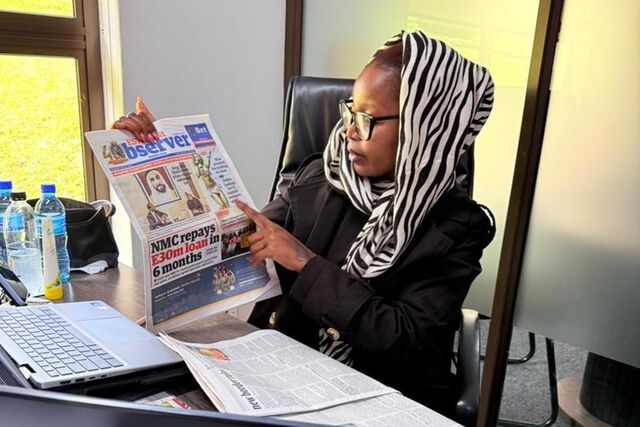
Edith Gondwe, a renowned columnist for one of the country’s leading newspapers has also endured her share of online bullying. After publishing a column entry urging women to avoid dependency, she was met with insults targeting her character and false narratives about her family. Yet, much like Kayira, she transformed the negativity into strength and advanced her career: “I used the same column entry people insulted me for to apply for a study fellowship in America,” Gondwe reveals. She further shares that the very humiliation intended to break her opened doors to endorsements and private gigs.
Gondwe believes that women and indeed all online users must stand up for themselves and pursue every available legal avenue to combat online abuse.
“Don’t just let things slide when you are being bullied online,” she cautions. “People should know that for everything they do online, there’s a price to pay. Let’s report and engage the courts.” She further urges celebrities and influencers with large digital followings to remain vigilant and take proactive steps to shield their audiences from harmful behaviour. As she emphasizes, “It is possible to create a safer and healthier digital space if we are all intentional in protecting ourselves from perpetrators.”
The NGO-GCN has revealed that at least 73 percent of women in Malawi have experienced some form of DGBV, showing the scale of the crisis.
According to the organization’s Executive Director, Maggie Kathewera Banda, the situation could worsen if urgent action is not taken. “If nothing more is done, there is a possibility the numbers of those abused online may rise,” she warned.
Her words highlight the pressing need for stronger interventions, from legal frameworks to community awareness, to protect women from the growing tide of online abuse. The statistics not only validate Jane’s painful experience but also show that she is far from alone; digital violence has become a widespread reality threatening the dignity, mental health, and futures of countless women across Malawi.
“There is need for the IT companies in Malawi to put in place mechanisms on how to achieve safety for online users,” she advises. Most importantly, Kathewera stresses the urgency of awareness, ensuring that women, girls, and all online users understand how to navigate digital platforms while staying protected from abuse.
She further points to the Cyber Security Act, noting that while the legislation exists, its enforcement remains weak. “Laws are there to prevent society’s ills; it’s high time we saw the Cyber Security Act, acting,” she insists.
For Kathewera, the fight against digital gender-based violence requires not only resilience from victims but also accountability from perpetrators, proactive measures from technology companies, and a society willing to confront the realities of online abuse.
Marcel Chisi, Executive Director of Men for Gender Equality Now, echoes Kathewera’s views. While acknowledging that men can also fall victim to digital gender-based violence, he concedes that they are most often the perpetrators.
“Most of the time, men hold skewed ideas about relationships. They think and act as though they own their partners, which fuels online outbursts and abuse,” he explains. Chisi stresses that raising awareness is critical, noting that education and dialogue will play a vital role in addressing cases of online abuse.
With the rise of social media and digital communication, technology has become a powerful tool for empowerment, but also a dangerous platform for violence and abuse. Many online users, especially women and girls, face harassment, threats, exploitation, and humiliation online, with recent findings showing that one in three children in Malawi has experienced cyberbullying, with girls being the most affected. Women’s voices are being silenced through online threats and defamation
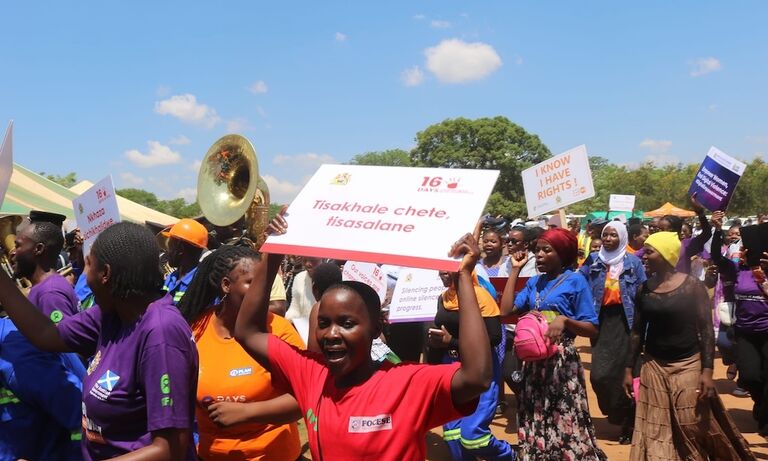
Malawi is currently observing the 16 Days of Activism Against Gender-Based Violence under the theme “Unite to End Digital Gender-Based Violence in Malawi.” The campaign, launched on Tuesday, 25 November 2025, will run through 10 December.
Speaking at the launch, Minister of Gender, Children, Disability and Social Welfare, Mary Navicha, emphasized that her ministry is strengthening coordination with law enforcement agencies, the judiciary, and ICT stakeholders to ensure that online abuse is treated with the same seriousness as other forms of violence.
“This calls for collective efforts, and I urge technology companies to build safer digital spaces, community leaders to speak out against harmful practices, and young people to use technology for innovation, not intimidation,” she emphasized. Minister Navicha was firm in her stance, declaring, “DGBV has no space in Malawi. We will not tolerate it! it must stop!”
The Electronic Transactions and Cyber Security Act criminalizes cyberbullying, child pornography, and other forms of online abuse, establishing a clear legal framework to safeguard all online users.
Limbani Nsapato, Head of International Relations and Corporate Communications at the Malawi Communications Regulatory Authority (MACRA), explained that the authority has intensified awareness campaigns to promote responsible use of digital platforms.
“We are committed to ensuring the safety of all online users, including girls and women. As part of this effort, we will soon roll out a campaign on SIM card registration and verification in collaboration with mobile network operators,” Nsapato revealed.
DGBV is not just about cruel words or leaked images, it is about stolen futures, broken families, and silenced voices. Yet the resilience of survivors like Jane, the defiance of voices like Kayira and Gondwe, and the commitment of leaders and activists show that change is possible. Ending online abuse requires courage, solidarity, and accountability. If Malawi unites, laws enforced, perpetrators held to account, communities speaking out, and technology companies building safer platforms; then the digital world can become a space of empowerment rather than intimidation.
Written by Chimwemwe Mikwala. This article, first published by YONECO FM, is part of the Media Parity Capacity Building Programme and republished as part of the programme series.
Comments
Related news