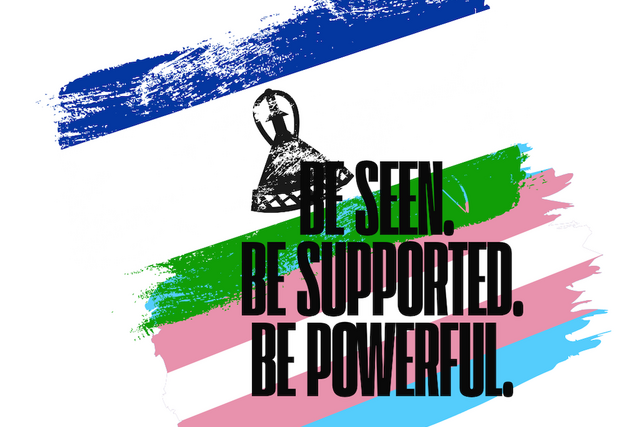
16 Days: Speak up, violence has no gender

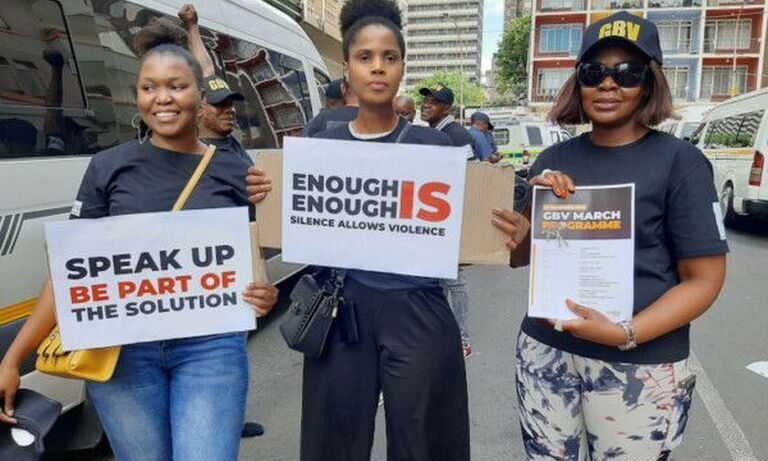
We have set aside 16 days to talk about gender-based violence.
But honestly, should it ever take 16 days to say that abuse is wrong?
Sixteen days to remind the world that dignity is a right, not a luxury.
Sixteen days to scream what should have always been obvious: Stop violating people.
Because respect for human rights is not seasonal.
It is not a campaign.
It is not a calendar event.
It is supposed to be an everyday reality.
So I ask again, should it really take 16 days?
Does anyone deserve to be mistreated simply because they behave “sheish” or “heish”?
I don’t even know if those terms exist ,but somehow that is the basis of gender. Society looks at how you act, how you speak, how you exist… and suddenly decides what kind of harm you deserve or don’t deserve. Imagine that.
She was raped by her uncle and his son. A child. A little girl whose only crime was that she trusted the people meant to protect her.
Five years later, we chant #JusticeForOchanya.
But even justice came too late. She is not here to witness it. Her justice is written on papers she will never read.
Must we always wait until we lose lives before we rise for justice?
Must we wait until the worst headlines come before we scream?
Do we want to keep counting survivors, or do we finally want the number of victims to drop?
We count the survivors. But how many never survived it?
How many stories died with the victims whose names never trended?
How many cases stayed in shadows because communities decided silence was easier?
Sometimes I ask myself, is this even supposed to be a topic for activism?
Should we even be debating whether hitting someone, violating someone, or humiliating someone is wrong?
The fact that we still need activism proves that something is fundamentally broken.
Maybe, just maybe, we are not even humane anymore.
“It’s just a family issue,” they say.
But since when did degrading a human life become a “family matter”?
Since when did assault become something to hide between four walls?
And then some men ask, “Why must it always be women?”
But I ask, why is it mostly men?
Why do the ones silent in boardrooms suddenly become dictators at home?
Why do the ones who tremble before their bosses suddenly become lions in their living rooms?
Why do those too timid to challenge their peers now feel bold enough to assault the women in their homes?
Why must it be women?
Many women remain stuck in their homes, some by choice, others by circumstance, and many by fear.
Rape is not a domestic issue.
Sexual harassment is not a domestic issue.
Emotional violence is not “marital misunderstanding.”
Bruises are not “normal.”
Silence is not peace.
How many girls and women are violated in schools?
How many in workplaces?
How many in their own homes?
How many while walking on the street, minding their business, breathing?
We have normalized what we are supposed to shun.
Must it happen to your sister before you care?
Must it happen to your daughter before you understand?
Must it happen to you before you can empathize?
Before you judge a story of violence, remember this:
There is no justifiable reason. None. Ever.
“She dressed provocatively,” they’ll say.
But what of pedophiles?
Did those little children dress provocatively too?
What of the girl fully covered in her hijab, is she provoking anyone?
What of the woman living with disability, did she ask for this?
What of the woman in oversized clothes, the elderly woman, the pregnant woman?
No. They did not.
Yet it happened anyway. And somehow society still finds a way to question the victim instead of the perpetrator.
Some women have chosen not to show up offline because the streets don’t feel safe.
Yet behind the screens, the harassment becomes worse.
The digital world has made bullying global and constant.
Don’t women deserve dignity, both on every street and on every screen?
He posts a shirtless picture and receives praise, “strong,” “manly,” “handsome.”
She wears a bikini and the comments turn toxic, lewd, judgemental.
She posts a picture with her slim body, she’s accused of using weight-gain products.
She gains weight, she’s called lazy, unattractive, undisciplined.
At the end of the day, there is no “perfect image” that will spare you from criticism.
There is no street, online or offline, that is fully safe.
There is no justice for the victims who never lived long enough to become survivors.
And this is not just emotion, the numbers confirm it.
When I read the numbers, I shiver. Nearly 1 in 3 women has experienced physical and/or sexual violence at least once in her lifetime globally.
Yet we see it as a minor issue and have to advocate against it. How?
Over 370 million girls and women, about 1 in 8 worldwide, were raped or sexually assaulted before they turned 18.
This means , many women are violated before they fully become adults? Just think, it’s scary.
Sub-Saharan Africa alone accounts for 79 million of those violated as children.
In many African countries, over 70% of women report experiencing at least one form of violence, physical, emotional, sexual, or economic, in their lifetime.
Yet, the most common cases we hear of are the physical ones.
These are not numbers. They are human beings.
They are sisters, daughters, classmates, neighbours.
They are lives reshaped by trauma they did not choose.
This is why we speak.
This is why we refuse silence.
As long as violence continues, 16 days is not enough, but 16 days is necessary.
Violence thrives where silence lives, where culture excuses it and where power is abused. When gender based violence was declared a national disaster in South Africa in November 2025. It showed one thing, speaking up is not just talk and it’s not cheap.
We cannot fix what we refuse to confront nor heal what we refuse to name.
We cannot be free in societies that punish victims for surviving.
Yet we cry when they do not survive. Tcchk, ironical or hypocritical?
We must stop telling girls to shrink themselves to survive.
Stop teaching girls how not to be raped instead of teaching boys not to rape.
This is our collective responsibility.
We must stop acting like women must endure pain for families to stay together.
Humility is not silence and submission is not suffering and never was.
Respect is not fear.
Education is that one slayer we can use. Violence is not just physical, it is a mindset, a culture, a belief system.
And nothing destroys harmful beliefs faster than education.
Educate to empower.
Educate to raise awareness.
Educate to break cultural norms that harm more than they protect.
Educate to change behaviours.
When we educate, we reduce ignorance, break silence and save lives.
We cannot end violence without unlearning the cultures that sustain it.
And we cannot unlearn those cultures without intentional, consistent, unapologetic education.
We are speaking up because silence has never saved anyone.
We speak because staying quiet only protects the perpetrator.
We speak because every human being deserves dignity.
We speak because our voices are warnings to those who dare to harm.
We speak because the cycle must end with us and not continue through us.
We speak because “Violence has no gender, but justice has no excuse.”
“Our bodies are not battlegrounds; our dignity is non-negotiable.”
We speak because we must.
We speak because 16 Days is not a ritual but a responsibility.
We speak because lives depend on it.
And we will keep speaking until the numbers drop and the fear fades.
We will speak till safety becomes normal and no child grows up carrying trauma instead of toys.
Until dignity stops needing hashtags.
We speak until violence ends.
(Written by Akem Njang, a WOSSO Fellow)
Comments
Related news