When the bottles break us: South Africa's alcohol crisis laid bare

Every festive season, South Africa tells itself a comforting lie. We call it a time of joy, family, rest and celebration.
We decorate, we travel, we gather. But beneath the music and laughter, another reality repeats itself year after year — one that leaves families broken, women unsafe, children traumatised, and communities drowning in grief.
This festive season was no different. In fact, it was worse. It exposed a national crisis we have normalised for far too long: alcohol abuse as a driver of violence, neglect, ill-health and social collapse.
South Africa has one of the highest rates of harmful alcohol consumption in the world. While not everyone drinks, those who do often drink in extreme and dangerous ways. The consequences are written into our emergency rooms, police dockets, mortuaries and living rooms. Alcohol is not a side issue in our social problems — it is a central fuel.
During the festive season, hospitals report spikes in trauma admissions. Police stations record surges in domestic violence complaints. Roads become killing fields. And behind closed doors, women and children brace themselves for nights they hope to survive.
Alcohol lowers inhibitions, heightens aggression and turns unresolved pain into violence. For many families, celebrations end not in rest, but in bruises, sirens and funerals.
Research has consistently shown a strong link between alcohol abuse and gender-based violence. In countless cases of intimate partner violence, alcohol is present — not as an excuse, but as an accelerant. It magnifies entitlement, cruelty and control.
Women are beaten, threatened and sometimes killed by people who claim love but are emboldened by intoxication. Children grow up watching this violence, learning early that harm is normal and silence is survival.
But this festive season revealed something even more disturbing — our children are no longer just witnessing alcohol abuse; they are being pulled directly into it.
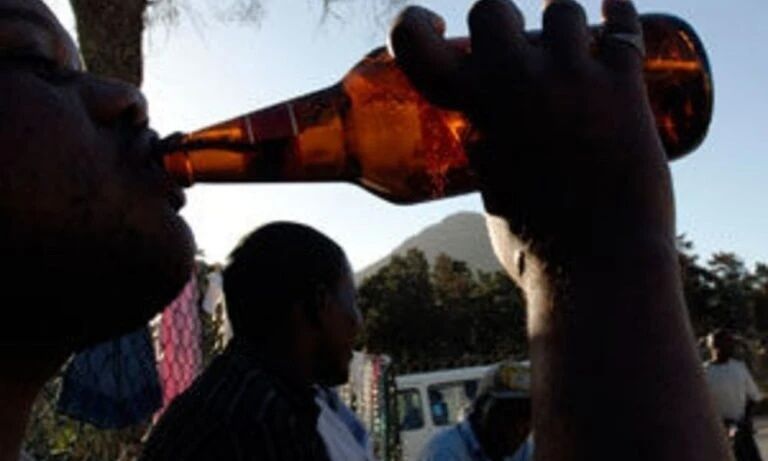
In the Eastern Cape, videos circulated widely on social media showing young children and teenagers openly drinking alcohol. Some were handed bottles by adults. Others were encouraged, laughed at, filmed and paraded online as entertainment.
Children who could barely stand were turned into viral content. Their vulnerability was consumed for likes, shares and jokes.
What we witnessed was not just irresponsible behaviour. It was child endangerment in plain sight.
Alcohol culture has now crossed a line where children are exposed, initiated and humiliated publicly — while the adults who should protect them become complicit. Social media platforms became silent witnesses as childhood was stripped of dignity. These children were not choosing; they were being groomed into a culture that teaches them early that intoxication is normal, boundaries do not matter, and harm can be laughed away.
This is not only a parenting failure. It is a community failure, a policy failure, and a state failure.
Where were the child protection services? Where was law enforcement? Where was the urgency to intervene before these videos spread? The silence that followed was deafening — as if we have accepted that this is who we are now.
Alcohol abuse does not begin in adulthood. It is normalised early, modelled often, and excused constantly. When children are exposed to alcohol this way, we are not only harming them in the moment — we are laying the groundwork for future addiction, violence, mental health crises and cycles of abuse that will haunt our communities for generations.
Alcohol is also deeply linked to mental health deterioration. Depression, anxiety, suicide and substance dependency feed into one another. Many people drink to cope with poverty, unemployment, grief and trauma — only to find that alcohol deepens the very pain they are trying to escape. What begins as numbness often ends in destruction.
The economic cost is staggering. Billions are lost every year through healthcare expenses, lost productivity, law enforcement strain and social services. But the human cost is immeasurable. It is carried by widows, orphaned children, traumatised survivors, and communities left to clean up the wreckage while systems remain overwhelmed or indifferent.
What makes this crisis even harder to bear is how predictable it is. We know the patterns. We know the statistics. We know the warning signs. Yet every festive season, we act surprised — as if violence, death and neglect fell from the sky instead of flowing from policies left unenforced and behaviours long excused.
Alcohol is marketed aggressively. Taverns multiply in poor communities. Regulation is weak. Enforcement is inconsistent. And accountability is rare. In the meantime, families bury their loved ones and children learn that danger is normal.
This is not about demonising everyone who drinks. It is about confronting a national culture of harm that we have allowed to grow unchecked. It is about refusing to accept that women must live in fear, that children must be exposed to abuse, and that violence is an inevitable side-effect of celebration.
If this festive season taught us anything, it is this: South Africa is not only facing an alcohol abuse problem — we are facing a protection crisis.
Protection for women in their homes.
Protection for children in their communities.
Protection for families who deserve peace, not terror disguised as tradition.
We cannot keep raising glasses while burying the consequences. We cannot keep laughing while children are harmed. And we cannot keep calling this normal.
Every bottle opened carries a cost. Every video shared leaves a scar. Every silence enables the next tragedy.
If we want a different future, we must be brave enough to name the pain — and bold enough to change what we have normalised.
Comments
Related news