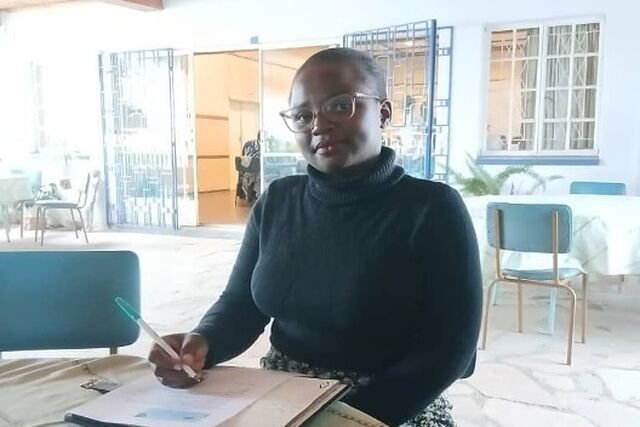
Zimbabwe: Good design is good business

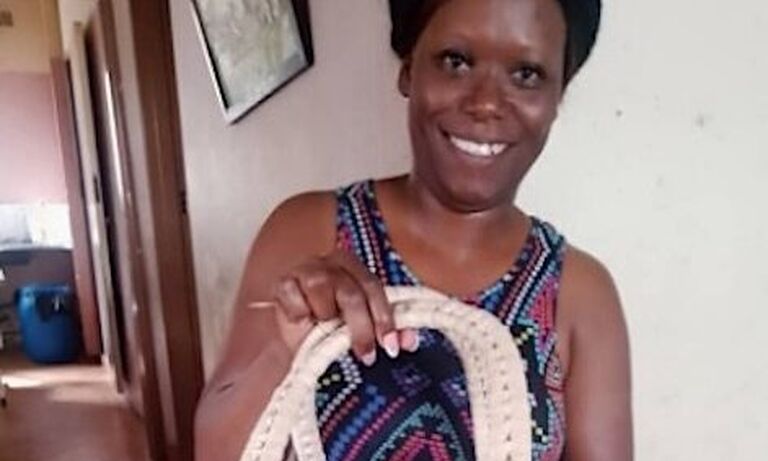
The Story of Ncamusile Ngwenya, a member of The LED Arts & Crafts Cooperative in Bulawayo, Zimbabwe
Background
When a gender-responsive Local Economic Development (LED) project was rolled out by Gender Links Zimbabwe in 2022 through the city’s Bulawayo Home Industry (BHI), Ncamusile Ngwenya seized the opportunity and became a member of the LED Arts and Crafts Cooperative — determined to transform her livelihood.
Growing up, Ncamusile turned to hairdressing as a teenager after her father sustained life-changing injuries in an accident, forcing him into early retirement. What began as a coping strategy to support her family later became her primary source of income.
“My monthly earnings of between USD 50 and USD 100 were manageable at first,” she explains. “But once I had my own family with two school-going children, while still supporting my extended family, the income was no longer sufficient.”
Turning point:
She soon found herself trapped in a relentless cycle of debt, struggling to keep up with school fees and household expenses. Her breakthrough moment came unexpectedly when a client walked into her salon carrying a beautifully woven ilala handcraft basket.
“Not only was the artistic weaving captivating, but the price was even more striking. For that single basket, the client had paid more than double what I earned from braiding hair in an entire week,” Ncamusile recalls.
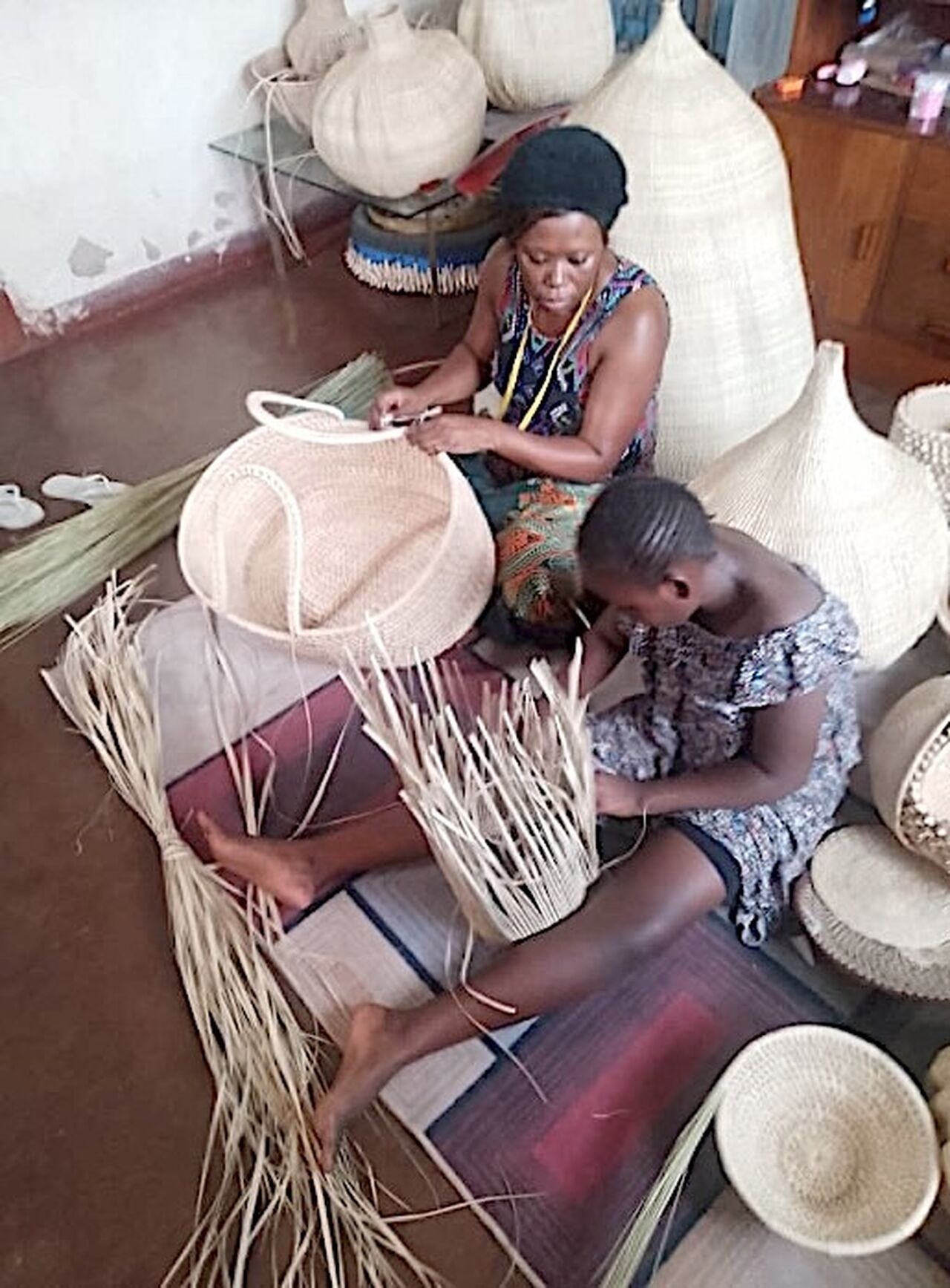
In that moment, she saw possibility where she had once seen limitation. She began to view ilala basket weaving through the same lens as hairstyling — both demanded patience, precision, creativity, and skill. If she could master hair, she reasoned, she could master weaving too.
Inspired by this realization, she enrolled at Bulawayo Home Industry (BHI) to refine her craft, determined to transform what started as curiosity into a sustainable source of income.
Opportunities Unlocked
“I have been equipped through the gender-responsive LED project to become an entrepreneur in my own right. I did not hesitate to launch my own brand, Amal Handcraft Creations, to diversify my income streams,” said Ncamusile, who was awarded the 2025 Entrepreneur of the Year under the GLZ LED project.
Her confidence and creativity quickly translated into tangible success.
“My distinctive designs and ability to produce high-quality products have enabled me to penetrate high-value markets — particularly Durban and Cape Town in South Africa, and even as far as Spain in Europe. On average, I receive orders ranging between USD 700 and USD 1,200 per month during peak marketing seasons from March to November,” she explains.
“With the increase in my income, I was able to graduate with a Diploma in Psychological Counselling from the Centre for Development Studies in 2025. Considering where I started, being able to pursue and complete my tertiary education — and to do so without going into debt — is something that humbles me deeply,” said Ncamusile, radiating joy and contentment.
Future Opportunities
Ncamusile recognizes that creativity and quality design are powerful entry points to unlocking the full economic potential of the arts and crafts sector.
“I strongly believe that good quality design is good business. These skills must be shared to increase production capacity and ensure we can meet growing orders on time,” she explains.
What began as her personal journey has now evolved into a family enterprise. “My husband and children are now involved in basket weaving after watching me work from home. As our family business grows, I believe more people can be recruited and trained, creating opportunities for others as well,” she adds.
While basket weaving has been a stepping stone toward financial security, Ncamusile has strategically diversified her income streams to strengthen her resilience. She has invested in livestock production as a deliberate risk mitigation measure.
“I am running a broiler production venture here in Bulawayo. The turnaround period is only six weeks, which allows me to generate returns on investment quickly,” she explains. “For long-term security, my family has also started building a herd of cattle for beef production at our rural home in Tsholotsho.”
Through diversification, Ncamusile is not only expanding her income base but also building a sustainable and resilient livelihood system capable of withstanding economic uncertainties.