South Africa: If academia had a festival season, ICA would be it


The 76th International Communication Association (ICA) Conference, held in Cape Town, brought together global scholars and practitioners to examine the theme “Communication and Inequalities in Context.” As the first ICA conference hosted on the African continent, it provided a critical opportunity to reflect on how knowledge, voice, and power are produced, distributed, and contested within communication systems.
Beyond academic exchange, the conference created space to interrogate how these dynamics shape real-world movements, particularly those advancing social justice, gender equity, and inclusion. For organisations like the Marang Fund, these discussions are not theoretical; they speak directly to how we design, support, and amplify the work of grassroots movements across the region.
My introduction to the International Communication Association (ICA) came through a panel curated by Dr Irene Awino, titled “Gender and Media in Africa Beyond Beijing+30: Confronting Challenges, Expanding Conversations, and Elevating New Voices.” I had the opportunity to present my work on resisting exclusion in media practices, where I explore how intersectional feminist and queer frameworks can transform newsroom ethics in Southern Africa, drawing directly from the work we continue to advance through the Marang Southern Africa LGBTIQ Fund.
What I did not fully anticipate was how much of ICA would sit beyond the presentation itself. The conference became a space of reflection, dialogue, and sometimes discomfort, where ideas were not only presented but interrogated in relation to the realities they seek to explain. Much of what I encountered in the conference rooms was deeply theoretical, as it should be. Scholars were unpacking concepts like protest, visibility, and power through rigorous intellectual frameworks, asking questions such as, "Whose protest matters?" What sustains movements? And what happens when they are silenced? Listening to these engagements, I was constantly reminded of the richness of theory, how it allows us to step back, analyse patterns, and name structures that are not always immediately visible.
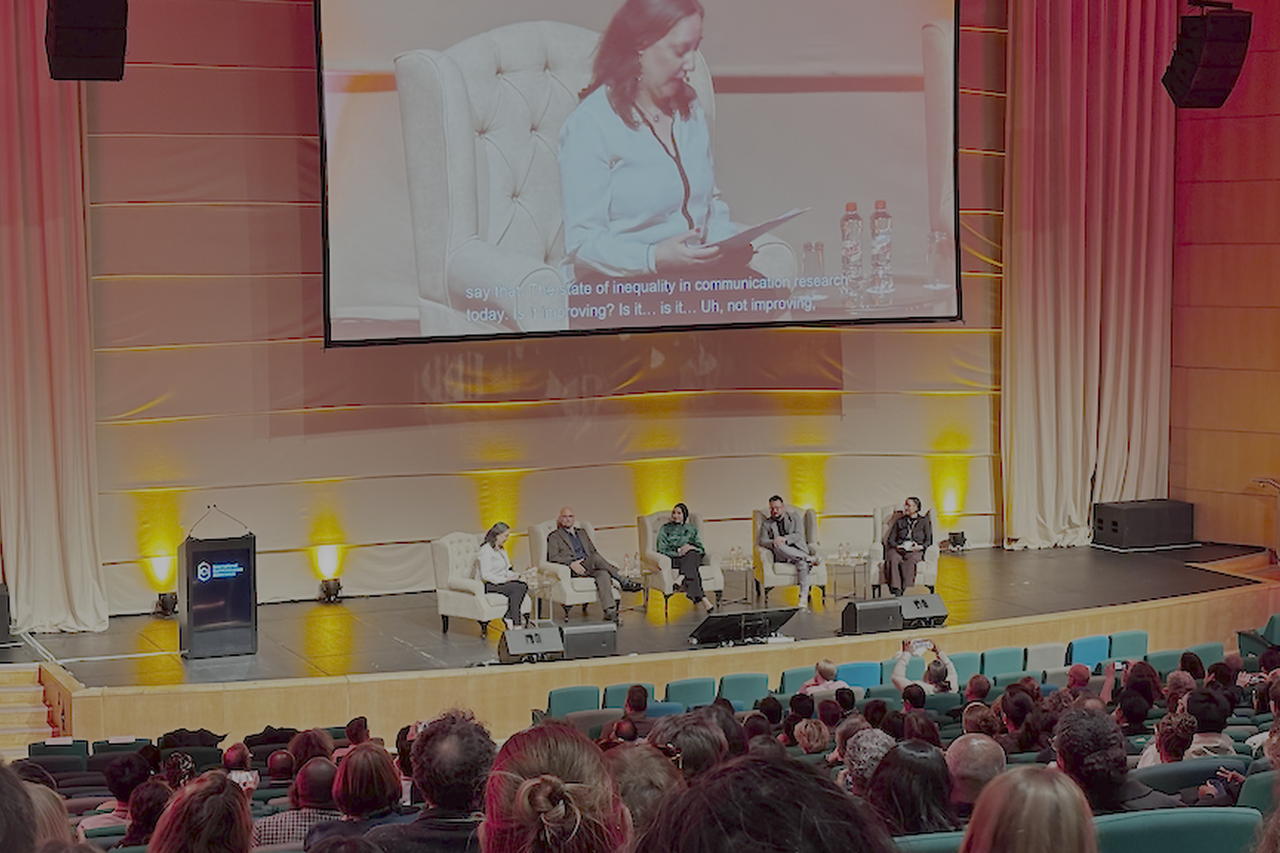
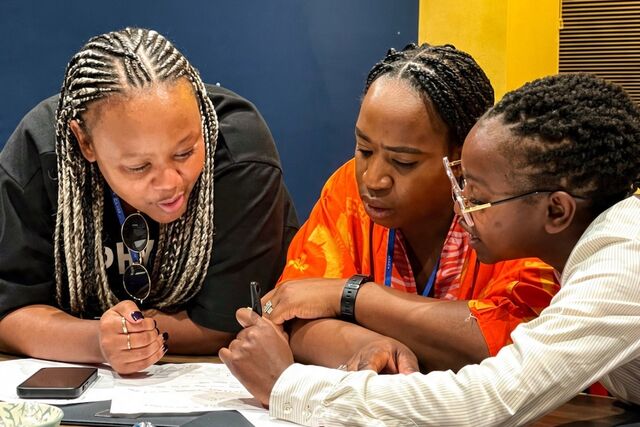
At the same time, I found myself placed differently in many of these conversations; everyone had theoretical solutions, and I was standing outside looking through the glass. In some instances, it was easy to step in, and not so much for others. Coming from on-the-ground advocacy work through Marang Fund, my engagement with these questions is often less abstract and more immediate, shaped by the lived realities of the communities we work with. This created a space that felt both rare and deeply fulfilling: the opportunity to engage scholars from a practical standpoint, to bring in the messiness, limitations, triumphs, and contradictions that exist beyond theory through lived experiences, whether our very own as the Marang Fund team or our grantee partners’ where permissible.
It was not about positioning practice against theory but about allowing the two to meet. In these exchanges, we were able to collectively interrogate what kinds of interventions might only hold theoretically, and which ones might translate into real, tangible change. We did not necessarily arrive at clear solutions, nor was that the expectation, but what emerged instead was something equally valuable: a deepened understanding of each other’s work and a shared commitment to continue asking better, more grounded questions.
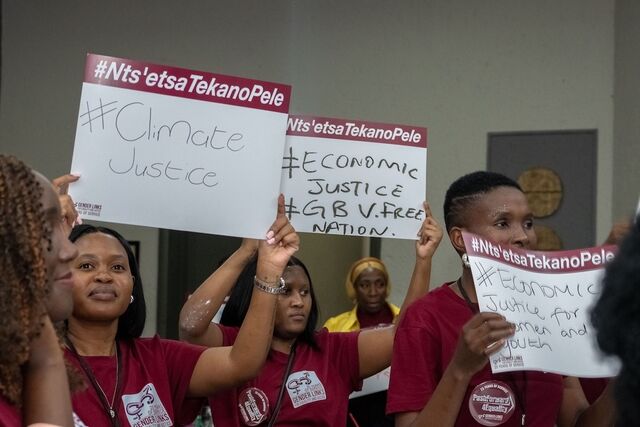
One of the most moving moments of the conference unfolded outside the presentation rooms. On Saturday afternoon, there was a demonstration of solidarity with Palestine that brought many of us together in a quiet but powerful act of resistance. It began with a moment of silence, heavy, collective, and grounding, before moving into chants that echoed across the space. It was a reminder that communication, activism, and embodiment are deeply intertwined; that sometimes the most powerful statements are not delivered through papers or presentations but through presence.
This moment flowed directly into the Between Repression and Backlash panel, where discussions focused on activism, communication, and social justice in contexts shaped by ongoing constraint. Experiencing the demonstration and then entering that space of dialogue made the conversations feel more immediate and grounded. It highlighted what it means to exist between repression and backlash, a reality not unfamiliar to many of the communities we work with. In that moment, theory and lived experience were not separate; they were in conversation with each other in a deeply tangible way.
Themes around protest and movement-building took on new meaning throughout the conference. Questions of intersectionality, gender, race, age, accessibility, and media literacy revealed how uneven movements can organise and sustain themselves across contexts. Reflecting on Madagascar, for example, underscored how under-resourcing, political restrictions, and fragmentation can limit not only protest itself but also the ability to frame and communicate collective struggle. In such settings, silence is not merely absence; it is produced through structural conditions that constrain voice, visibility, and organisation.
Discussions on visibility were particularly resonant. One line that stayed with me, “there is a great consequence sometimes of your visibility,” continues to echo. In advocacy work, visibility is often framed as a goal, something to be achieved. But in many contexts, visibility can expose individuals and communities to risk without guaranteeing protection. This raises ongoing questions about when visibility is necessary and when it becomes unsafe. The conference also prompted deeper reflection on knowledge production. How do we produce knowledge responsibly? How do we protect it? And how do we ensure that it actually serves the communities it seeks to represent? These are not abstract concerns, particularly in histories where research and data have been used to harm marginalised groups. They demand a level of reflexivity that extends beyond academic rigour into ethical responsibility.
Perhaps one of the most important takeaways for me was the recognition that academia and activism often feel like parallel worlds, but they do not have to be. Both are invested in understanding and challenging inequality. Both are asking questions about power, representation, and justice. And yet, meaningful engagement between the two remains limited. For the Marang Fund, these reflections have clear and practical implications. The movements we support operate within the same uneven communication ecosystems highlighted throughout the conference, where broader systems of power access shape broader visibility and credibility. A key takeaway is the importance of amplifying marginalised voices by ensuring that grassroots actors, particularly women, young people, and LGBTQ+ communities, are not only represented but are actively shaping narratives and influencing decision-making spaces. At the same time, the insights on digital activism point to the need to strengthen movement communication strategies by going beyond visibility towards more intentional and strategic engagement that can translate into tangible outcomes and policy influence. Equally important is the need to support locally grounded knowledge production through investing in evidence generation, storytelling, and research that reflect lived experiences, allowing movements to define their realities on their own terms rather than through externally imposed frameworks. These lessons reinforce the importance of aligning communication work with broader goals of equity, inclusion, and systemic change.
Across the sessions I attended, several interconnected themes emerged. First, inequalities in communication are not only about access but about visibility and influence, who is heard, whose narratives are legitimised, and whose knowledge is acknowledged. Second, there is a persistent imbalance in knowledge production, with Global South perspectives often marginalised within global academic and policy spaces. Finally, the conference underscored the importance of movement-building, particularly in digital and platform-based contexts, where visibility does not automatically translate into power or change. There is a need for a more intentional approach to communication, one that centers marginalised voices while also addressing the structural barriers that limit their reach and impact.
Spaces like ICA offer a glimpse of what becomes possible when those worlds intersect. When theory meets practice, not as competing perspectives, but as complementary ways of understanding and transforming the same realities. I left the ICA without neat conclusions but with something more valuable: a wider lens, a deeper appreciation for the work happening within academic spaces, and a renewed commitment to ensuring that the work we do on the ground continues to engage with broader scholarship. Because ultimately, both are working toward the same goal: imagining and building more just, inclusive ways of being and finding ways to make those possibilities real.
The ICA 2026 conference highlighted that communication is not a neutral tool; it is a site of power that shapes whose voices are heard, whose experiences are validated, and whose realities are prioritised. For organisations committed to social justice, this presents both a challenge and an opportunity. For the Marang Fund, the task ahead is to continue strengthening the communication capacities of the movements we support while actively working to shift the structures that limit their visibility and influence. By investing in inclusive narratives, locally grounded knowledge, and strategic advocacy, we can contribute to a communication ecosystem that better reflects and serves the communities at the center of our work.
(Written by Neo B. Nthepha Kitso, Programme Officer – Marang LGBTIQ Fund, Gender Links, Botswana)