SADC: Who holds the power? Lesbians, money and movement

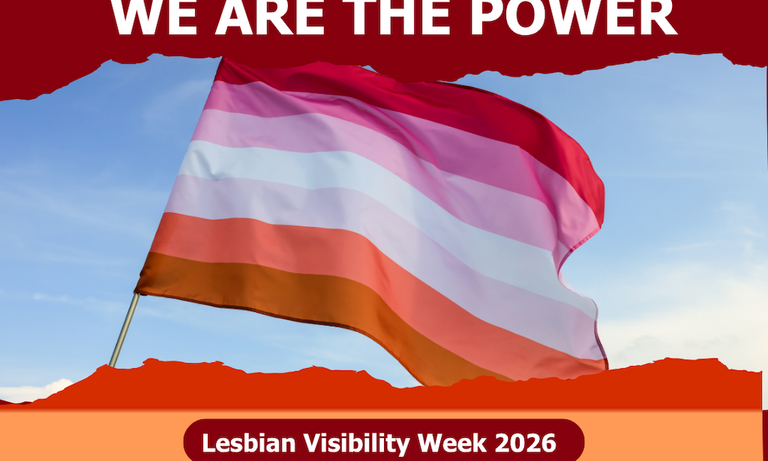
As Lesbian Visibility Week 2026 unfolded under the bold campaign theme “We Are the Power,” the Marang Fund and RWVL hosted a powerful Virtual Learning Exchange titled “Who Holds the Power? Lesbians, Money, and Movement in Southern Africa.” Moderated by Sarafina Molapisi from BONELA, the conversation brought together activists, storytellers, organisers, and movement builders from across the region to examine what power truly looks like for lesbian and queer women and who gets to define it.
Far too often, lesbian visibility is reduced to recognition or representation. This conversation challenged that framing. It asked a deeper question: beyond being seen, what does it mean for lesbian and queer women to hold power in our communities, in our movements, and within the funding systems that shape our work?
Bringing together voices from Lesotho, Madagascar, and Namibia, the panel created a rich and deeply personal conversation around movement-building, narrative power, economic justice, healing, and the urgent need to rethink how power is distributed and resourced across Southern Africa.
Power beyond visibility
The session opened with an invitation to each panelist to introduce themselves and reflect on one form of power they bring into movement spaces. The answers immediately shifted the conversation away from traditional ideas of power like money or institutional authority.
For Irene, from Lesotho, power is found in community care and the ability to create spaces where people feel seen and safe. Through her work with Love Unlocked, she uses storytelling to document queer love and affirm LGBTQI people navigating higher learning spaces and broader society.
For Anonymous, from Madagascar, power lies in survival and the courage to organise under conditions where visibility is often dangerous. Through their queer-led organisation, they continue to create safe spaces for queer communities despite political repression, social hostility, and the constant need for anonymity and protection.
For Ndiilokelwa Nthengwe from Namibia, narrative power and self-understanding are central. As a writer, Mandela Rhodes scholar, and filmmaker, they reflected on how storytelling can shift public consciousness and preserve truth where systems try to erase it.
For Toshi Haifiku and Nadia April from Namibia’s Women’s Leadership Centre, power is creative and infrastructural. Through poetry, music, visual art, and film, they work with women and queer communities, even in hard-to-reach areas, to create healing spaces where people can reclaim their voices and imagine life beyond survival. The collective message was clear: lesbian power is not waiting to be recognised, it already exists in how communities care, organise, create, and survive.
Safe spaces are movement infrastructure
A major thread throughout the conversation was the role of safe spaces, not as optional support, but as essential movement infrastructure. Anonymous spoke candidly about what safety means in Madagascar, where even attending an event can come with risk. Their organisation often relies on anonymity, word of mouth, and undisclosed locations to protect participants. Even well-meaning allies, they noted, can unintentionally create harm by sharing photos online or exposing identities without consent. Safety, in this context, is not symbolic; it is survival.
Irene reflected on similar realities in Lesotho, particularly through work in universities where LGBTQI students are often exploring identity in isolation. Creating intentional spaces for support means being present, setting boundaries, and allowing people to be vulnerable without fear. Through Love Unlocked, queer love itself becomes a form of healing and resistance. The panel reminded us that community is not supplementary to movement work. Community is the movement.
Storytelling as resistance
Throughout the discussion, storytelling emerged as one of the most powerful forms of resistance. Ndiilokelwa shared the deeply personal story behind their book and upcoming film project, The Wrong Generation. The project was born from tragedy following the disappearance and later discovery of their cousin Shannon’s body in 2020, which helped spark Namibia’s Shut It All Down movement against gender-based violence. Their work transforms grief into political memory, ensuring that stories of violence, injustice, and queer existence are documented and cannot be erased.
Toshi echoed this through art activism, explaining how poetry, music, and performance create opportunities for healing and leadership development. Creative work helps communities move from silence into expression and from survival into transformation.
These reflections challenged the idea that art is “soft work.” Instead, the panel positioned storytelling, documentation, and creativity as critical political tools, ways of preserving history, shifting narratives, and building power.
Who controls the money?
The conversation also turned honestly toward funding and the uncomfortable realities of who gets resourced and who remains excluded. Panelists spoke openly about the difficulty of securing funding for lesbian and queer women’s narratives, especially when work does not fit neatly into donor expectations. Irene shared the challenges of building a storytelling-based organisation that is still establishing its reputation. Ndiilokelwa reflected on how they had to leverage community institutions and partnerships to fund publishing and now film production, including support through the Marang Fund. The question was not simply about access to funding but about power within funding systems.
What would an equitable funding ecosystem actually look like?
Ndiilokelwa proposed a collective fund for queer movements in Namibia, one rooted in shared decision-making, sustainability, and trust rather than hierarchy. The conversation challenged donor-grantee dynamics and called for funding models that recognise community knowledge, long-term healing, and movement-building as legitimate investments.
Visibility without resources, the panel agreed, is not liberation.
Perhaps the strongest takeaway from the conversation was the reminder that power is often most visible in places systems overlook.
It lives in chosen family.
In community care.
In queer love stories. |
In poems written in resistance.
In the courage to show up.
In the decision to keep building, even when no one is watching.
As the discussion closed, panelists reflected on the overlooked forms of power in their communities. Self-understanding, collective healing, and relational care emerged as recurring truths. Lusanda Mamba, the Marang Fund Programme Manager, reminded participants that movement work begins with lived experience and asked us to rethink power beyond hierarchy, to see it in relationships, in solidarity, and in shared responsibility.
Lesbian Visibility Week is often framed around recognition. But this conversation made something much clearer:
Lesbians are not asking to be seen.
Lesbians are already building movements, sustaining communities, shaping economies, and transforming futures.
Because visibility is not the goal. Power is.
And as this conversation affirmed: We Are the Power.
The proposed action builds on the complementary strengths and established programming of Gender Links and PACHEDU, ensuring strong alignment with existing initiatives while addressing a critical gap at the intersection of migration and LGBTIQ inclusion.
Gender Links brings a comprehensive ecosystem of LGBTIQ programming under the EU-funded Marang Southern Africa LGBTIQ Fund, including strategic litigation, policy briefs, and safeguarding through DICE centres (safe spaces), alongside structured capacity strengthening via the GL Academy. This is complemented by evidence generation through the Diversity and Inclusion baseline survey and narrative change work such as I-Stories, as well as media transformation initiatives that train journalists on ethical LGBTIQ reporting.
This work is reinforced by Gender Links’ longstanding engagement with local governance systems through the Sunrise Campaign, which works with local authorities, including SALGA, to strengthen inclusive service delivery, skills development, and economic empowerment. In parallel, the SADC Gender Protocol Barometer provides a regional evidence base, including sexual diversity chapters, that informs policy advocacy and accountability.
Importantly, Gender Links anchors this programming within the Southern Africa Gender Protocol Alliance, engaging regional platforms such as SADC Heads of State processes, Parliamentary Forums, and global civil society spaces (G20 and the establishment of the Q20), ensuring that LGBTIQ rights are mainstreamed within broader governance and development agendas.
PACHEDU complements this through its expertise in migration governance, established networks with migrant communities, and partnerships with research and policy institutions, enabling direct engagement with migration systems and actors.
The action adds value by connecting these ecosystems and focusing specifically on LGBTIQ migrants, ensuring alignment with EU and donor initiatives while avoiding duplication and maximising impact.
Comments
Related news