South Africa: Beyond the ballot, women's growing presence in the democratic process

Reflections from the Sasolburg Region
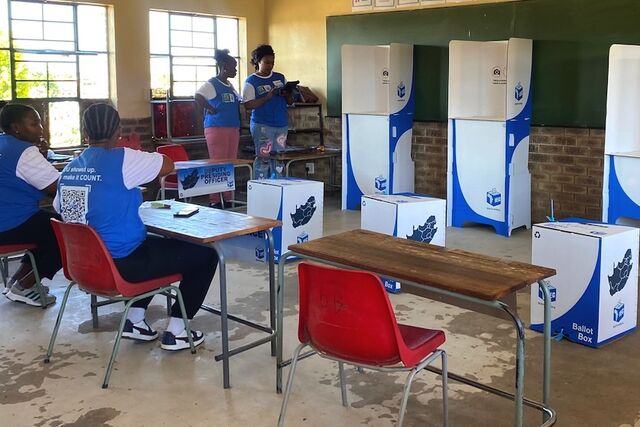
Democracy is often measured by voter turnout, electoral competition, and citizens' ability to exercise their constitutional right to vote. However, meaningful democratic participation extends beyond the ballot. It also concerns those who occupy political spaces, who contest leadership positions, and who contribute to the institutions that sustain democracy. Having served as an Independent Electoral Commission (IEC) official in the Sasolburg region, I gained first-hand insight into democratic participation at the grassroots level. One of my most striking observations was how many people came out to exercise their democratic right to vote. From as early as 07:00, when the voting station opened, voters were already making their way through to cast their ballots.
What stood out to me most was women's participation. More than 40% of the voters who came through our voting station were women. While this observation is specific to our voting station and should not be generalised to the broader electorate, it offers an interesting reflection on women’s involvement in democratic processes. Equally significant was the representation of women as political candidates. In our ward and neighbouring wards, three women were contesting for councillor positions, one of whom was a young woman. This highlights an important dimension of women’s political participation: women are not only exercising their democratic rights as voters but are also positioning themselves as political actors seeking to represent and lead their communities.
It is important not to underestimate the significance of women as voters. Voting is a fundamental way citizens influence political representation and hold elected leadership accountable. However, women’s participation should not be confined to the ballot. Their presence as candidates, political leaders and decision-makers is equally important in building an inclusive democratic society.
Another interesting observation was the gender composition of the IEC workforce at our voting station. Out of the officials working at the station, only two were men, while the rest were women. Because serving as an IEC official requires being a registered voter, this also offered an opportunity to reflect on women’s involvement in the institutions that facilitate democratic participation.
These observations raise a broader question about how we understand women’s political empowerment. Is it enough to measure women’s participation through voter turnout, or should we also consider their representation in political leadership, electoral institutions and other decision-making structures?
South Africa’s democratic journey has created opportunities for women to participate in political processes in different capacities. Nevertheless, the conversation must continue beyond numerical representation. We must also consider whether women have meaningful opportunities to influence decisions, shape policies and contribute to the governance of their communities.
My experience in the Sasolburg region reminded me that women are not passive observers of democracy. They are voters, candidates, electoral officials and community leaders. They are part of the machinery that sustains democratic participation. Perhaps the conversation should no longer be limited to whether women are participating in democracy, but also to how their participation translates into meaningful representation, influence and leadership.
Comments
Related news