Southern Africa: Marang Fund calls for decolonization of laws

Johannesburg 5 May: The Marang Southern Africa LGBTIQ Fund applauds the government of Botswana for upholding the High Court ruling on same sex marriages and calls on all Southern African governments to dismantle colonial laws that undermine human rights.
“This move is a clear affirmation that criminal law must never be used as a tool of persecution against people on the basis of who they are or whom they love,” noted Gender Links Director of Programmes, Tabetha Kanengoni. “The reform strengthens legal clarity, protects vulnerable communities, and advances Botswana’s alignment with regional and international human rights standards.”
On 26 March the Attorney General of Botswana published a notice deleting the reference to “unnatural offices” in the Penal Code. This follows a 2019 high court ruling that found these references unconstitutional in the Motshidiemang vs Attorney General case that followed decades of organising, advocacy, and resistance led by LGBTIQ communities, civil society actors, legal practitioners and allies.
The High Court decision found that laws criminalising consensual same-sex intimacy violated constitutional protections, including the rights to dignity, privacy, liberty and equality. The Court of Appeal upheld the decision in 2021. The high court ruling still had to be instituted into law.
“This moment represents more than legal reform; it is an act of historical correction,” noted Cindy Kelemi–Baeletsi, the Executive Director of the Botswana Network on Ethics, Law, HIV and AIDS BONELA, which manages the EU supported Marang Fund in partnership with Gender Links.
Most member states of the Southern African Development Community (SADC) inherited penal codes derived from colonial legislation. For former British colonies this often-included clauses which criminalized same sex relationships (“unnatural carnal knowledge”) derived from the 1861 Offences Against the Person Act. The former colonial powers have changed their own legislation quite drastically and some SADC member states have also acted to protect privacy, dignity, liberty and equality.
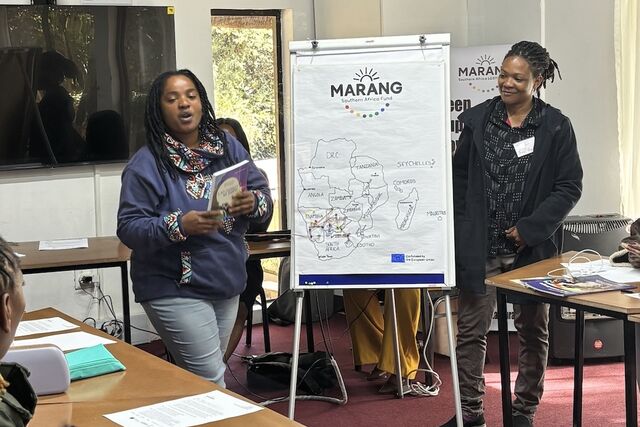
“These laws, rooted in colonial legal systems have long shaped exclusion and systemic injustice exposing lesbian, gay, bisexual, transgender, queer and intersex persons to stigma, fear, discrimination and the risk of arbitrary enforcement,” noted Lusanda Mamba, manager of the fund, that operates in Botswana, Namibia, Lesotho, Madagascar and Mauritius. “Their removal signals a reclaiming of dignity, sovereignty, and the fundamental principle that human rights are not inherited from colonial frameworks but affirmed through lived realities and constitutional values.”
South Africa is the first country in the world to prohibit unfair discrimination on the grounds of sexual orientation as a constitutional right. Other countries which have decriminalized same sex relationships are Angola, Lesotho, Mauritius, Mozambique, Namibia, Madagascar, and Seychelles. However, Comoros, Eswatini, Malawi, Tanzania, Zambia and Zimbabwe still criminalise these. We applaud the move by Botswana and call on all member states of SADC to take forward the decolonization of their penal codes to promote liberty and dignity for all their citizens.
While laws alone do not eliminate the social stigma, discrimination and exclusion still faced by LGBTIQ persons, they create a stronger foundation for continued public education, inclusion, access to justice and meaningful protection for all.
The Marang Fund is committed to strategic litigation, evidence-based advocacy, and sustained movement-building to translate legal victories into lived equality across institutions and everyday life. The Fund calls upon all sectors of society, including public institutions, civil society, faith communities, traditional leaders and communities at large within Southern Africa, to embrace the spirit of equality, dignity and non-discrimination reflected in regional and international human rights standards. We honour this moment and movement, ka Pula!
For more information, please contact:
Lusanda Mamba, Programme Manager, Marang Southern Africa LGBTIQ Fund, Gender Links
Email: marangprogmanager@genderlinks.org.za
Sarafina Molapisi, Project Lead, Marang Southern Africa LGBTIQ Fund, BONELA
Email: sarafina@bonela.org
Comments
Related news