Lesotho: Access to justice for women

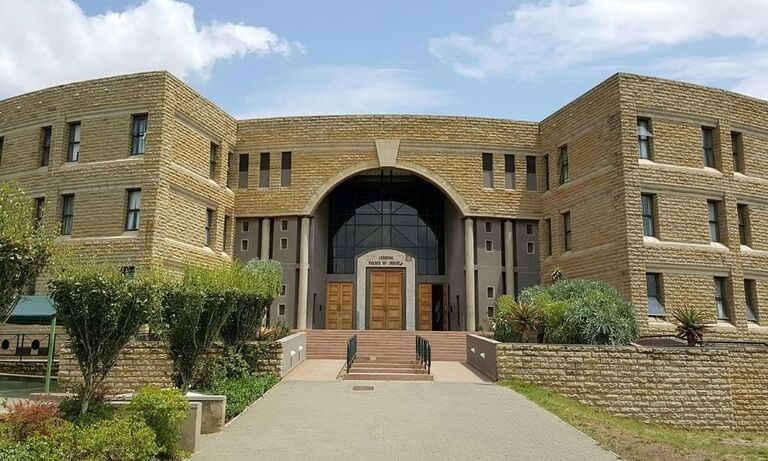
Knowing what steps to take in seeking justice and not experiencing any difficulty in trying to access it, has brought hope to women in Lesotho especially those who thought that access to justice was for the elite, favoured and the well-connected or that it was time wasting to take action against injustices.
Several initiatives by the judiciary of Lesotho, working together with its partners to ensure easy access to justice for all, as well as making laws by the Parliament, have enhanced realisation of the rights of women and improved their access to justice at all times.
Speaking to one of the women who can attest to easy access to justice, Mrs. ‘Mamorero Moreboli stated that approaching the office of the Master of The High Court after the death of her husband and when she wanted to remarry, was the best decision she ever made.
“I wish every woman can seek and have legal guidance before they get married,” she said, adding that when one remarries, they have to ensure that the rights of the children from the previous marriages are protected. She further said children often experience problems in the future especially on issues relating to properties and inheritance.
She stated that the information she received from the office of the Master of the High Court helped her to make the right choices for herself and the child she has from the previous marriage. She pointed out that the office makes an emphasis on the prioritisation of the protection of children’s rights.
Mrs. Morero acknowledged the existence of offices such as that of the Master of the High Court which safeguard the rights of women and children. She remarked that it is one of the notable achievements for Lesotho which she is proud of.
For people with disabilities, the enactment of Persons with Disability Equity Act 2021 which through section 32 influenced the introduction of Disability Equity (Procedure) Rules 2023, has changed the landscape regarding access to justice for women and girls with disabilities.
According to Section 32 (1) “The Chief Justice shall make rules for the provision of accessible methods and any other legal services and procedures which take into account the needs of a person with disability who attends court proceedings.”
Subsection (2) of the same section provides thus: “A person with disability, who is denied bail shall be held in custody in a facility which is modified in accordance with the rules made by the Chief Justice or any other relevant law,” while subsection (3) states: “A person with disability shall be competent and compellable to give evidence in a criminal and civil case in any court in Lesotho or before a magistrate on a preparatory examination.
Subsection (4) indicates thus, “A person with disability shall be assisted in every possible manner to effectively, directly and indirectly participate in all legal proceedings and other preliminary stages of administration of the judicial justice process.
Speaking in an interview, Programmes Coordinator at the Lesotho National Federation of Organisations of the Disabled (LNFOD), Ms. ‘Masenono Letsie stated that the introduction of the Rules is a milestone for Lesotho. She pointed out that they do not only provide for recognition of victims but also for the offenders with disabilities. She added that they have paved the way for women and girls with disabilities inclusive of all persons with disabilities.
She pointed out that there is progress in the application of the Rules, though slow. She emphasised that LNFOD working together with stakeholders comprising community leaders and politicians should make sure that the Rules are known and implemented.
“Popularisation of the Rules within the justice system is critical,” she said. “Prosecutors and Magistrate still need to be sensitised about the rules. Some are still not aware of them and still rely on their discretion in deciding cases involving persons with disabilities,” she added.
She emphasised a need for all necessary measures to be put in place for persons with disabilities to effectively participate in a case. She remarked that court setting can be intimidating at times adding that victims of Gender Based Violence (GBV) or sexual assault may forget information. She emphasised that communication barriers must be addressed adding that proceedings can be in camera or any other informal setting.
Ms. Letsie commended Lesotho for doing away with section 219 of the Criminal Procedure and Evidence Act and repealing it as a bad law. She said the section did not recognise persons with disabilities saying they could not testify.
The section provided that individuals deemed ‘idiots’, ‘lunatics’ or ‘imbeciles’ were not competent to give evidence in court.
It was challenged in a case of Koali Moshoeshoe and others versus the Director of Public Prosecutions. The Constitutional Court declared the section unconstitutional, indicating that it violated the rights to equality and freedom from discrimination.
Meanwhile, the recently refurbished Children’s Courts in five districts including Maseru, do not only provide a friendly environment for child offenders or victims, but also provide a safe space for women seeking a fair and easy access to justice on child maintenance, custody and access to their children.
This was attested to by Magistrate ‘Makopano Rantso of the Children’s Court in Maseru who stated that women now make use of the services provided by the court. She indicated that they are no longer ignorant of their rights. She said although they are usually emotional, they often freely open up about issues relating to their cases without withholding information.
She highlighted that the conduct makes it easy for a judicial officer to administer justice to the interest of all parties involved. She added that the majority of them comply with court orders thus making administration of justice be seen to be done.
The Magistrate pointed out that there are women who still believe that parents who have a child outside marriage do not have equal rights to access the child involved whereas that is not the case. She indicated that the Court comes in during such situations as men now also sue for custody, maintenance and access relating to their children. She added that elderly women who are often left looking after children while parents neglect their responsibilities, have a right to approach the court in order to protect the welfare of the children.
Although easy access to justice is celebrated, for Ms. Lireko Mosoang, having access to justice during her divorce which was instituted by her then husband, was not a walk in the park. She stressed that the emotional burden and financial implications throughout the whole process were too heavy for her.
“My encounter with the courts was short and efficient. The divorce matter had to go through the court so it could be legalised, and I was satisfied with the process,” she remarked.
“However, my encounter with the lawyers left me with trust issues when it comes to the legal profession. My ex-husband’s lawyers did not follow procedure at the beginning of my divorce with the aim to sabotage me while another lawyer duped me.
She stated that it first started with her being served with divorce papers, eight days before the lapse of 14 days required for one to respond to a lawsuit. She pointed out that she was forced into a corner as she had limited time to answer the papers. She highlighted that she almost missed on a chance to respond which would have led to her losing the case.
Ms. Mosoang said she was forced to seek a lawyer whose legal fees were not affordable for her therefore she took out a loan. She indicated that out of the M15,000.00 that was required she and her lawyer had to negotiate a payment plan to ease the burden.
She stated that the matter was taken for mediation as the custody of their child had to be decided. She said the custody of the child ended up being granted to the father. She pointed out that it was concluded that it would not be in the best interest of the child if she was taken by the mother who was at that time working and staying out of town in the rural areas.
Ms. Mosoang also stated that some of the conditions which formed part of the divorce settlement were that both parents share responsibility on the child and that the mother be given visitation rights.
“My first request to have the child visit me was rejected by the father. I approached my lawyer for intervention who in turn communicated with my ex-husband’s lawyer but without success. I then stopped contributing towards the needs of the child, then my ex-husband instituted legal action against me for child support,” she said.
Ms. Mosoang said she learned from her employer about the new lawsuit when she was about to be garnished. She said she managed to challenge the process, and it was stopped. She added that the child ran away from the father, as a result, she reversed the lawsuit and demanded maintenance from the father. She indicated that when she approached the Children’s Court she was told that as the matter was already being handled by the lawyers, they had to continue with it to finality.
“I had to approach another law firm as I could not afford my previous lawyer. I was unfortunately scammed. One of the lawyers there told me that the fees would be M1,200.00 therefore I had to pay M600.00 upfront so that they could start drafting papers,” she indicated.
She lamented that she was not given any proof of payment adding that she did not demand it because she was told she would get a receipt later. She stated that nothing was ever done about her case until she lost interest and decided to save her mental and emotional wellbeing and raise her child on her own.
Secretary of the Law Society of Lesotho Advocate Ithabeleng Phamotse pointed out that unethical practices by legal practitioners are reported with the Law Society adding that following thorough investigations, actions are taken against such lawyers.
Meanwhile, Miss Jeanette Sehloho stated that approaching the office of the Lesotho Mounted Police Service (LMPS) Child Gender Protection Unit (CGPU) as a victim of domestic violence or sexual abuse is like meeting your oppressor all over again or a fresh oppressor altogether.
“One goes to the office of the CGPU hoping to get comfort and protection as it is about providing protection to victims. However, from the experience I had and from stories I have heard from other people, not ignoring the fact that experiences differ and that each case is unique, sometimes victims leave that office more wounded than when they came in,” she remarked.
She pointed out that the intimidation one goes through due to the type of questioning from the police officers and lack of privacy at some police stations leaves one with less hope to eventually get justice. She added that this at times may lead to one giving up and abandoning their case. She however said there are the tough ones who, with all the determination, hold on and pursue their cases to the end, as eventually the office will serve you.
Sub-Inspector Lebohang Sehlahla of the LMPS CGPU at the Maseru Central Charge Office stated that it often occurs that women come to the office with certain expectations which if not met, they feel let down by the office. She indicated that the office operates strictly based on the law, adding that they try their level best to guide people and help them to do away with misinformation.
She pointed out that infrastructure and resources are some of the challenges which often lead to those who receive services not getting what they expected. She added that the pressure under which they operate at times lead to misunderstandings.
Sub-Inspector Sehlahla emphasised that the office accommodates all types of people, women including those with disabilities. She added that everyone gets equal treatment and access to the services. She added that each person gets the attention they deserve regardless of the large number of people that come to the office for the service on a daily basis. She highlighted that it is the priority of the office to ensure that people get the help they need and that they do so timeously.
“Women know their rights. They are not ignorant of the law anymore,” she said, adding that they know how it should be applied. She also said there are however those with a tendency to misuse their knowledge of the law. She further added that there are also those who become blinded by their dependency on men and are reluctant to report domestic violence or when they do, they often withdraw cases resulting in wasted resources and time. She indicated that there are also those who know the law but feel that it does not affect them.
She pointed out that laws such as the Counter Domestic Violence Act and Children’s Protection and Welfare Act are some of the critical tools when it comes to dealing with issues affecting women. She pointed out that women are now getting the justice they deserve with ease.
Sub-Inspector Sehlahla discouraged Basotho from dealing with cases of domestic violence and sexual offences customarily where families intervene or cases are dealt with and solved by chiefs and crime prevention committees. She said the justice system is there to handle the matters.
In an article titled: ‘Women and access to justice in Africa: Women cannot wait another 100 years’, Professor Jarpa Dawuni said despite persisting gender gaps, women across Africa continue to play critical roles in their communities. Yet many women do not have equitable access to justice and leadership positions.”
She stated that expanding access to justice for women across Africa and achieving sustainable and equitable access to justice for women requires collective action and the inclusion of all actors comprising governments, civil society, women and men.
The link between women and justice does not only come into play when women seek justice, but also when they provide the same.
“Women have become judges, heads of judiciaries and have taken their seats in international courts and their impact is visible,” says the United Nations Development Programme (UNDP) in a study on Women in Justice in Africa.
They stated that the study shows that women judges are less susceptible to corruption adding that their effective representation in the judiciary increases trust in the system.
“The mere presence of women judges enhances the legitimacy of courts, sending a powerful signal that they are open and accessible to all who seek justice,” they said.
If things are to go by what the study has revealed, Lesotho is on the right track as currently, out of 20 judges of the High Court, comprising the Chief Justice, 13 permanent judges and 6 acting judges, 11 are women. The Magistrate Court Central Region is headed by Chief Magistrate Matankiso Nthunya who is a woman.
Furthermore, the Registrar of the High Court Adv. Mathato Sekoai is also a woman. The Director of Public Prosecution (DPP) Advocate Hlalefang Motinyane although currently challenging her suspension is a woman and acting in her place is Adv. Lehlanako Mofilikoane, also a woman.
In September 2014 Chief Justice Nthomeng Majara, now the Deputy Prime Minister and Minister of Parliamentary Affairs was appointed as the first female Chief Justice for Lesotho.
Written by Makhaba Masekonyela. This article, first published by Lesotho News Agency, is part of the Media Parity Capacity Building Programme and republished as part of the programme series.
Comments
Related news