Lesotho launches landmark GBV follow-up study

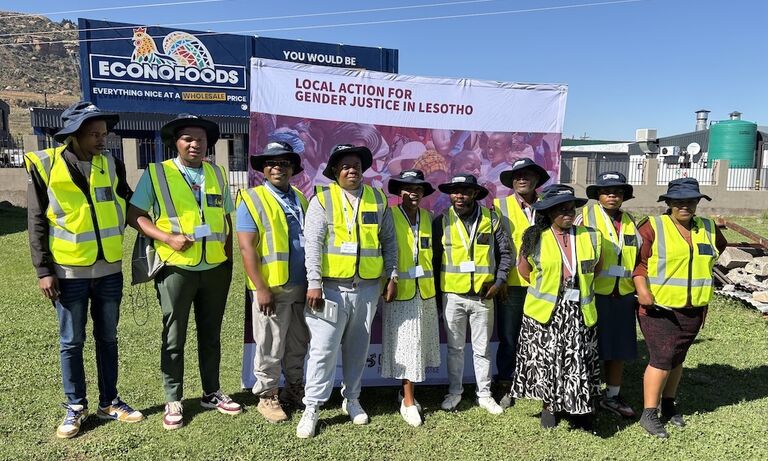
Maseru, 14 August 2026: GBV prevalence has fallen significantly since 2013, but the systems meant to protect survivors remain critically weak.
This is the key finding of the Lesotho Gender-Based Violence Follow-up study being launched by the Ministry of Gender, Youth and Social Development today. The nationally representative study surveyed 4,254 women and men across all ten districts.
Gender Links Lesotho conducted the study in collaboration with the Bureau of Statistics and the Ministry of Gender, with funding from the European Union. The research team surveyed 2,565 women and 1,689 men aged 15 and older, making it the most comprehensive GBV prevalence study ever undertaken in the country.
The study records significant progress. Lifetime GBV prevalence among women fell from 86% in 2013 to 66.7% in 2025. Intimate partner violence dropped from 62% to 45.7%. Past-year IPV nearly halved, from 28% to 14.8%. Gender attitudes shifted sharply. For example, agreement that a woman should obey her husband declined from 97% among women and 96% among men in 2013 to 33.9% and 49.2%, respectively. The Counter Domestic Violence Act, enacted in 2022, fills the legislative gap the first study identified.
The study also exposes deep structural failures. Nine in ten women who experience IPV do not report it to the police. Of those who do, only 15.6% see an arrest and fewer than 2% see any court outcome. Fewer than 2% of survivors access shelters, which exist only in Maseru. Two-thirds of women IPV survivors (65.8%) and men (60.2%) meet the clinical threshold for depression.
The study breaks new ground in several areas. For the first time, it measures men's experience of violence. Over one in four ever-partnered men (28.2%) have experienced IPV. It documents technology-facilitated GBV and finds that one in five internet users experienced online harassment, cyberstalking, or digital surveillance by a partner. It measures the intersection of disability and GBV, finding that women with disabilities report 50.9% lifetime IPV compared to 44.6% among women without disabilities. It also provides the first population-level data on LGBTIQ+ experiences of violence in Lesotho, finding that sexual and gender minorities report substantially higher rates of IPV and face compounding barriers to disclosure and service access.
The 2025 study identifies five interacting drivers of GBV in Lesotho. Adverse childhood experiences (ACEs) are the single strongest predictor. Women with four or more ACEs have an IPV prevalence of 66.7% compared with 23.4% among those with none, a nearly threefold increase, while men follow an identical gradient (46.4% versus 13.8%). Alcohol and substance use constitute the second major driver, with 33.3% of men who drink having perpetrated IPV compared to 12.9% of non-drinkers, and drug use showing a similar pattern (35.6% of male perpetrators versus 19.8% of non-perpetrators).
Gender attitudes rank third, with a quarter of men scoring high on the patriarchal attitudes scale, though the dramatic shifts since 2013 noted above confirm that attitude change is achievable at population scale. A community norms gap operates as a fourth driver, with individuals perceiving their communities as more conservative than they are, sustaining violence by making it appear normative. Relationship and structural factors, including marital separation (68.9% IPV among separated women) and employment status, suggest that economic independence may trigger controlling responses within relationships.
The report urges government to complete implementation of the CDV Act's family court rules, launch a national CDV Act awareness campaign targeting 25% of the population within 12 months, invest in the Anti-GBV Forum as a properly resourced coordination body, and expand GBV psychosocial support and shelter capacity to all ten districts. The Ministry of Health will integrate adverse childhood experience clinical inquiry into primary health care. The Parliamentary Women's Caucus will track implementation through a quarterly public reporting mechanism.
An accountability audit of the 22 recommendations made in 2013 found that only one, the enactment of domestic violence legislation, has been implemented, though steps are being taken to operationalise it. Eight were partially implemented, and seven were not implemented at all. The 2025 report structures its 26 new recommendations into three tiers with named institutions, specific timeframes, and measurable milestones.
The launch event brings together representatives of the European Union, the Lesotho Bureau of Statistics (LBOS), the Child and Gender Protection Unit (CGPU), civil society organisations, faith-based organisations, disabled persons' organisations, LGBTIQ organisations, and the media.
For more information on this press release, contact the Gender Links Lesotho Country Director, Advocate Thakane Sello, at lesmanager@genderlinks.org.za or call +266 63827817
Comments
Related news