Botswana: From incremental gains to institutional accountability for LGBTIQ rights

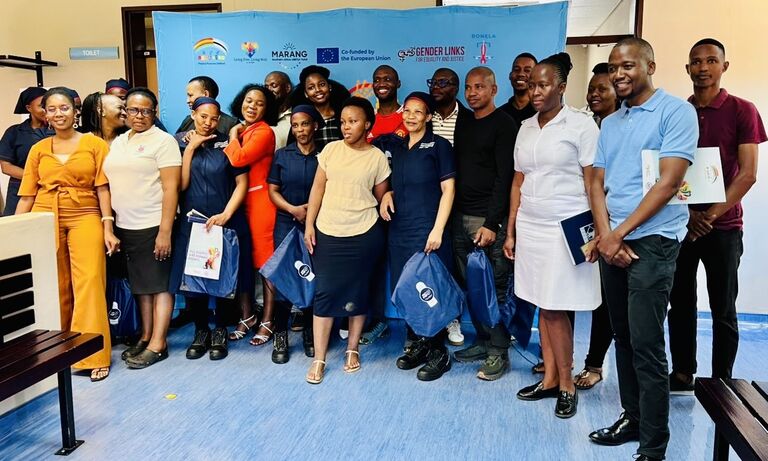
LEGABIBO’s change strategy addresses the ongoing gap between legal recognition and lived equality for LGBTIQ persons in Botswana. Although the courts have affirmed key rights, including decriminalisation of same-sex relations and access to gender marker changes, these gains have not created universal safety, inclusion or dignity. LGBTIQ people—particularly LBTQ women, intersex persons and gender-diverse communities—continue to face violence, discrimination and exclusion in healthcare, employment, and public life.
The strategy builds on more than a decade of incremental gains. Rather than pursuing high-risk litigation in isolation, LEGABIBO prioritised community readiness, legitimacy-building and constructive engagement with allies, parents, civil society, religious leaders and policymakers. This has shifted advocacy from survival and visibility towards systems change embedded in institutions, policy frameworks and national discourse.
Change emerged as communities began engaging the state not only as victims seeking redress but as organised actors shaping law and policy. Ongoing strategic litigation—including the same-sex marriage case—places equality and dignity at the centre of constitutional debate. Policy gains include the inclusion of intersex protections in Botswana’s 2024 Constitutional Review Committee recommendations, marking the first time intersex rights entered formal constitutional dialogue.
LEGABIBO’s engagement with CHRSNAP, CEDAW and ACHPR processes grounded LGBTIQ rights in national and regional accountability frameworks. As a member of the CHRSNAP technical working group, LEGABIBO contributed to ensuring that LGBTIQ rights are reflected within Botswana’s national human rights planning. Their Living Free, Living Well programme further strengthened access to justice, enabling community members to report violations, access psychosocial and legal support, and secure referrals for gender-affirming healthcare.
The significance of this change lies in shifting LGBTIQ rights from the margins of public debate into governance, law and policy. LGBTIQ equality is now recognised as a human rights and accountability issue rather than a donor-driven or isolated agenda. Incremental gains have accumulated into systemic influence, creating new entry points for advocacy even when legislation stalls.
Sustainability relies on institutional leadership, community trust and long-term engagement with human rights mechanisms. Documentation of violations feeds into advocacy, litigation and reporting. Coalition-building and replication of the incremental gains model across sectors strengthens the movement. As Botswana prepares to adopt its Comprehensive Human Rights Strategy and National Action Plan, LEGABIBO is positioned to ensure the future remains grounded in community realities and rights-based governance.
Quotes
Naledi (pseudonym): Before engaging with LEGABIBO, I did not know that what I was experiencing was a human rights violation...
Tebogo Mapodisi: The participation of LGBTIQ organisations in the CHRSNAP process has strengthened national human rights planning...
Trans Initiative: LEGABIBO’s approach has shifted LGBTIQ advocacy from isolated campaigns to sustained systems engagement...