16 Days: 4 Suggestions for addressing GBVF


While I join the global community to engage in the #16DaysofActivism against gender-based violence, I reflect on how action and solidarity can contribute to addressing global vicious cycle. The 16 Days of activism keeps reminding me that there is no sustainable development without addressing the root causes of violence. These are my thoughts about violence and how we can address it.
Acknowledge that GBV is a system of oppression:
First and foremost, I see GBVF as a system of oppression that has lived in the structures of communities for decades. GBV is not a once-off event. It happens in different communities and spreads like a pattern, now normalized. Occurring in both covert and overt ways, given different names and diluted using euphemism and justifications for originally ‘well meaning practices.” For example, I hear people justify that Female Genital Mutilation (FGM) was meant to keep girls safe from unhealthy sexual practices and preserve her for marriage. This sounds nice. But think about it again. FGM was not done for the girl. It was done for her potential husband. If it is so important, why is a similar practice not done on boys? Why is it the girls who go through child marriage? Why is it the girl that must be withdrawn from school? Why is it the women who must keep quiet to hold the peace? Why is it the women who must pray to keep the home together? Why is it the women who must forgive abuse and infidelity as opposed to the men? I could go on and on. You see. GBV is a system. Reinforced by patriarchy and marinated by culture and tradition, religion, politics, race, gender and other systems of oppression. What we can do is; challenge these systems, question the injustice and demand change. It will not happen overnight, so we must keep pressing on.
Individual conviction prior to collective action:
We must be individually convicted before we get to collective action and solidarity. A united force that is divided within cannot stand. We need people to personally say that GBVF is horrific and detrimental to victims and survivors. Everyone must first be willing to put their best foot forward and stand against GBV. Some of the reasons why collective action fails, is because we constantly have people with controversial belief systems infiltrating the space of activism. While some are deeply committed and have personally invested in the struggle, others are half-hearted, low-spirited and lack empathy for survivors. This, in the long run, waters down the good work being done by the intentional and invested ones. Notwithstanding, raising awareness and engaging in dialogue can help draw more hearts and give a soul to the advocacy against GBVF. Remember, everything else may die, but the soul never dies.
Use multiple approaches because violence is evolving:
The persistence of violence requires the use of multifaceted approaches. We need to attack the recurrence from all angles until it becomes a thing of the past. These approaches abound but suffice it to mention; research, to help in data gathering and evidence-based advocacy to shift mindsets; education through awareness raising and sensitization to help people understand the different forms of violence. Destigmatize people speaking up about abuse and normalize hearing their stories without being judgmental; reinforce the implementation of laws to duly punish perpetrators and accomplices; advocate for safer digital spaces and raise alarm about new technology’s role contributing to violence. Speak against harmful norms and cultural practices; advocate against the rising femicide and rape culture; fund human rights advocacy and grassroot interventions. Prioritize the fight against GBV and femicide in national, regional and global programs. Work with men, boys, faith leaders and multi-stakeholders as allies for equality. Localize and implement existing instruments like the African Union Convention on Ending Violence Against Women and Girls (AUCEVAWG), the Beijing declaration and platform for action, the Maputo Protocol, the convention for the elimination of all forms of discrimination against women and girls (CEDAW) and national gender plans
Solidarity and action over everything:
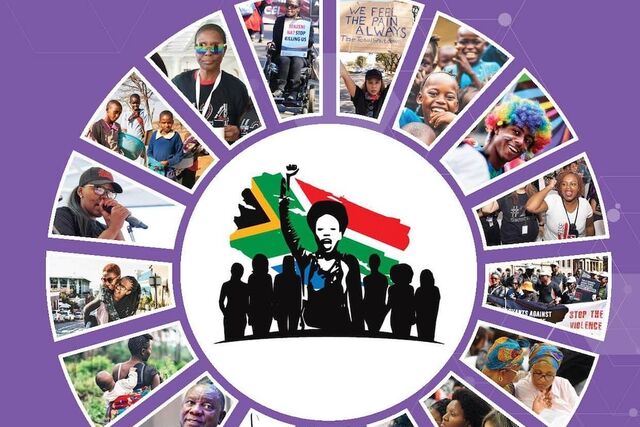
We have seen political regimes being crippled. We have witnessed global pandemics come and go. All this has been possible, thanks to collective action and momentum built over time. As GBVF statistics heighten globally, we need to, more than ever before, stand as one, despite our differences, and uproot the violence till it is extinct. The 21st of November G20 Women Shutdown led by Women for Change South Africa, stands as an example, where thousands of people in South Africa and the world took to the streets, peacefully protesting violence. Thousands changed their social media profiles to purple and popularized information regarding the women shutdown on digital and mainstream media. During the G20 social summit in South Africa, President Cyril Ramaphosa declared GBV a national disaster, calling for more intensified actions to eradicate violence against women and girls. Currently, the 16 Days of activism is being observed globally by individuals and organizations, raising awareness against violence.
Countering violence requires that we go beyond 16 days of activism and project implementation cycles. GBVF is a human rights violation with severe consequences including death, gender inequalities, loss of self-esteem, poverty, gender bias, unequal power relations and underdevelopment. We need to make it a concern for everyone everywhere to increase the likelihood of sustainability in our actions. I hope my four suggestions have contributed in giving clarity as we #BreakTheCycleOfViolence and #PushForward4Equality.
(By Eucharia Nkengafack, a WOSSO Fellow)
Comments
Related news