Empowering Mongolian youth through climate and gender advocacy


Saruul-Ukhaan Sodbaatar – Mongolia
When I began my journey as a WOSSO Fellow, I carried with me the vision of creating a safe, informed, and resilient space for young people in Mongolia to engage meaningfully with the intersecting challenges of climate change and gender inequality. What started as a modest plan to host a few educational sessions has evolved into a ripple of empowerment that has reached schools, authorities, civil society, and even global policy spaces.
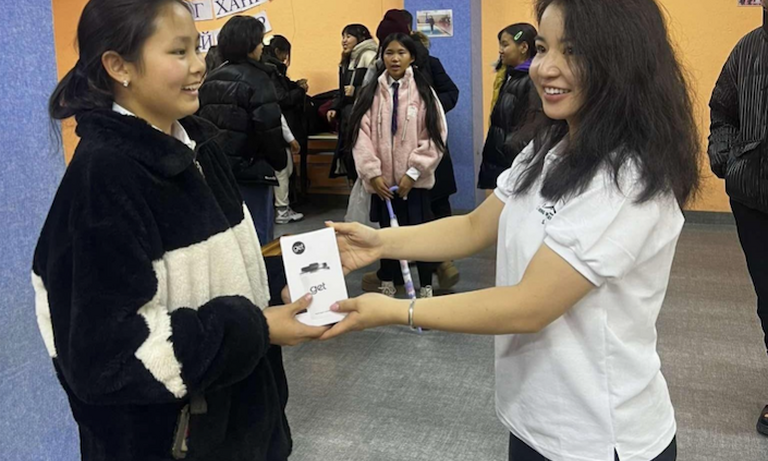
In the latest period of my advocacy, I successfully delivered Climate Change and Gender Equality Training to 150 teenagers across three public schools situated in climate migration zones of Ulaanbaatar. These sessions, co-developed with Dr. Altantuya, went beyond simply delivering information, they created transformative dialogue. Migrant children and their peers engaged with issues of environmental justice and gender equity, cultivating empathy, reducing discrimination, and nurturing new voices for activism. The sessions were intentionally teen-friendly, interactive, and inclusive, adjusting duration and content to suit their energy and comprehension levels.
The impact quickly outgrew the classroom. Collaborations with local government in the Khan-Uul District and a partnership with the National Center Against Violence strengthened institutional support for the intersectional approach I champion. I also gathered contact details from participating youth, establishing the foundation for a future youth-led network committed to climate and gender justice.
Regionally and globally, the ripple continued. I co-created and moderated the Young Feminist Forum for the Beijing+30 Asia-Pacific Regional Review, representing my sub-region at both the CSO Forum and Ministerial Conference. There, I advocated for gender-responsive climate financing and action, ensuring that the voices of young Mongolian activists were embedded in outcome documents. My participation in global webinars and the CSW69 Young Feminist Planning Meeting allowed me to amplify insights drawn directly from local training sessions into international discourse.
WOSSO has been instrumental in this growth. Through the fellowship, I connected with mentors, government representatives, UN officials, and fellow advocates across continents. The Linking and Learning event particularly broadened my perspective, learning from African and Middle Eastern fellows inspired me to strengthen my own content creation and digital advocacy skills. The experience deepened my confidence, resilience, and belief in the power of collective action.
From developing Mongolia’s first teen-friendly intersectional training materials to influencing global Beijing+30 processes, this journey has shown me that advocacy, when rooted in empathy and driven by youth, is unstoppable. My story is not just one of personal transformation but a testament to what becomes possible when we invest in the leadership of young feminists at the frontlines of climate and gender crises.