Amplifying Dalit Women’s Voices in Nepal’s Political Landscape

Kunjani Pariyar Pyasi – Nepal
In Nepal’s evolving democratic structure, Dalit women continue to face exclusion not just from power, but from the very conversations that shape the country’s future. Though the 2015 Constitution promises proportional representation, structural barriers and social prejudice have rendered this promise hollow. As a WOSSO Fellow and Dalit rights advocate, I knew that dismantling these barriers would take more than rhetoric, it would require strategic action and collective voice.
Through my fellowship, I launched a four-pronged advocacy initiative aimed at transforming how Dalit women are seen and supported in governance: a national dialogue with lawmakers, a local grassroots inclusion forum, a podcast series spotlighting Dalit women leaders, and a data-driven country report on the status of Dalit women in politics.
The first major success came through the Strengthening Inclusive Legislative Process (SILP) Dialogue, which was incorporated into a larger province-level conference on caste-based discrimination in Gandaki Province. It was a historic moment. The Chief Minister, Mr. Surendra Pandey, not only participated but publicly committed to passing the long-delayed Dalit Empowerment Bill. The conference concluded with a 17-point call to action, including one for increased direct election of Dalit representatives.
This wasn’t just symbolic. It was the first time a government-led event fully centred caste-based issues with clear follow-up commitments. Alongside this, I partnered with the Pokhara Research Center to plan a Grassroots Inclusion Sharing Forum, ensuring that local realities inform national reforms.
I also began working with media platforms like Boju Bajai, Lokantar, and Setopati to launch a podcast series profiling elected Dalit women leaders a crucial move to counter the narrative that Dalit women lack the capacity to lead. Simultaneously, I prepared a country report on the status of Dalit women in governance, now under review by the Global Forum on Community Discrimination (GFOD).
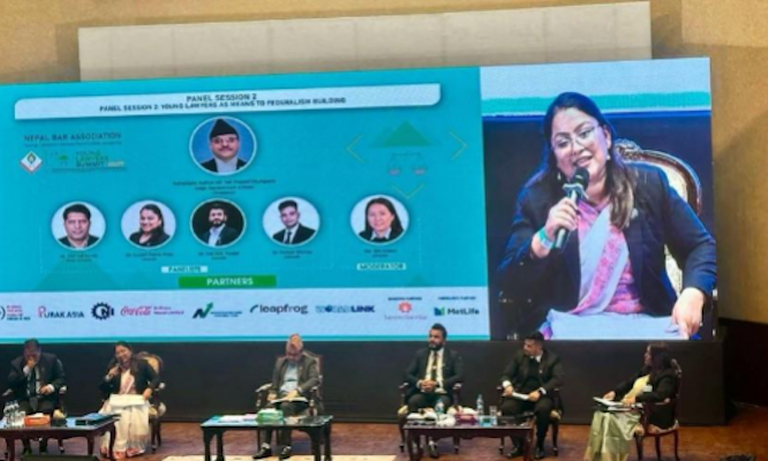
Beyond policy and media, I found myself standing before the Young Lawyers Summit in Kathmandu, advocating for inclusion as a cornerstone of Nepal’s federalism. That moment symbolised what this journey has been about: taking space where Dalit women are told they don’t belong, and then building more space for others to join.
Through WOSSO, I’ve expanded my network to include civil society leaders, policymakers, and feminist allies. While the challenges of caste and gender inequality remain entrenched, the momentum we’ve created through partnerships, political will, and public dialogue is undeniable.
This is not just my story, it is a collective step forward in ensuring that Dalit women are not merely represented, but respected and empowered in shaping Nepal’s democracy.