South Africa : Justice for Women with Intellectual Disabilities

“Sometimes spend time with the person, get to know them, get to understand them, then you can advocate better. You cannot be advocating for people you don’t understand. And we have to remember people are not the same—they might have the same disability, but they are not the same.”
These words from Scado Mkhondo, a Disability GBV Community Peer Educator, capture the essence of advocacy for women with intellectual disabilities. Her journey is one of resilience, empathy, and determination to ensure justice for those who are often invisible in society.
A Voice for the Voiceless
Scado lives in Emaphupheni, Etwatwa, Gauteng. As a woman with a learning disability herself, she understands the daily struggles faced by persons with disabilities. Before joining the Enabled Women Arise (EWA) project. Scado was already a passionate advocate for disability rights in her community. But her efforts often hit a wall—authorities dismissed her concerns, and cases of abuse were ignored.
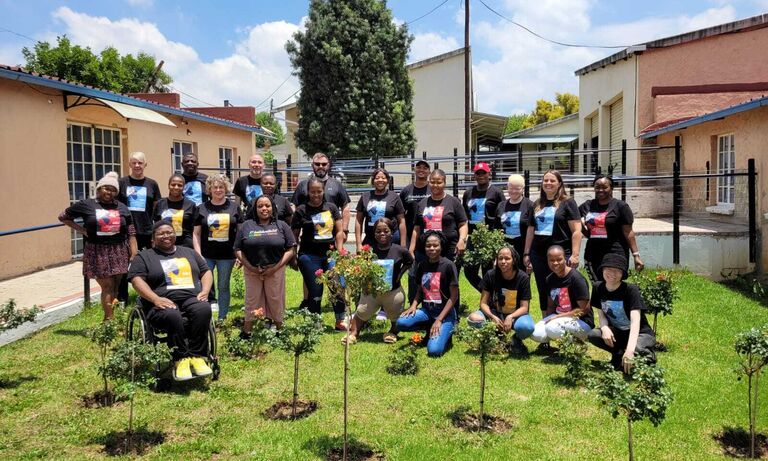
The EWA project changed that. Through intensive training on disability rights within the context of gender-based violence (GBV), Scado gained the tools and confidence to amplify her advocacy. She became one of 20 women trained to fight GBV against persons with disabilities. Her work soon uncovered heartbreaking stories—stories like Prim’s.
Prim’s Struggle for Justice
Prim is a 31-year-old woman with epilepsy and an intellectual disability. She has no formal education and no identity document, making her ineligible for social protection grants. After losing her parents, Prim and her 12-year-old son were left at the mercy of relatives who subjected her to psychological, emotional, and physical abuse. Her brother and sister-in-law refused to help her obtain an ID, leaving her vulnerable and destitute.
When Scado met Prim, she was loitering in the streets of Benoni, exposed to crime and exploitation. Scado took up her case, navigating the complex and often hostile criminal justice system. Despite her relentless efforts, the response from authorities was slow and indifferent. “I contacted Captain Bell, and she referred me to her colleagues, but they have not responded to my messages,” Scado lamented.
Uncovering Hidden Abuse
Prim’s case was not isolated. At a home for persons with intellectual disabilities in Benoni, Scado discovered multiple cases of abuse—some by fellow residents, others by staff members. The survivors had normalized the abuse, unaware of their rights. Through disability GBV workshops, Scado helped them recognize the violence they had endured and encouraged them to seek counselling and legal advice.
Working alongside a qualified social worker, Scado facilitated healing sessions and guided survivors toward justice. Yet systemic barriers persisted. Police attitudes and lack of urgency in handling cases involving women with intellectual disabilities remain a major concern. In one instance, Scado and her colleagues arrived at Benoni FCS for a disability sensitization session, only to be turned away despite months of planning. “Investigating officers leave early for the field,” they were told.
Impact Beyond the Programme
Despite these setbacks, Scado’s commitment never wavered. Her exit interviews at the home were emotional. “We are very unhappy that you are going,” said Maria, a resident with a learning disability. “You taught us a lot—about sexual harassment and rights, what you can do when it happens to you. You did help us.”
For Scado, the end of the EWA programme is not the end of her mission. “One thing for sure—even after the programme, I am still going to be advocating for women with disabilities,” she promised.
Why This Matters
Women with intellectual disabilities face compounded vulnerabilities—gender-based violence, poverty, and systemic exclusion. Scado’s story highlights the urgent need for disability-sensitive justice systems and sustained advocacy. Her work under the EWA project demonstrates how empowerment and education can transform lives, even in the face of entrenched discrimination.
By: Scado Mkhondo.
Comments
Related Drivers Of Change