Southern Africa: Turning menstrual health into regional action

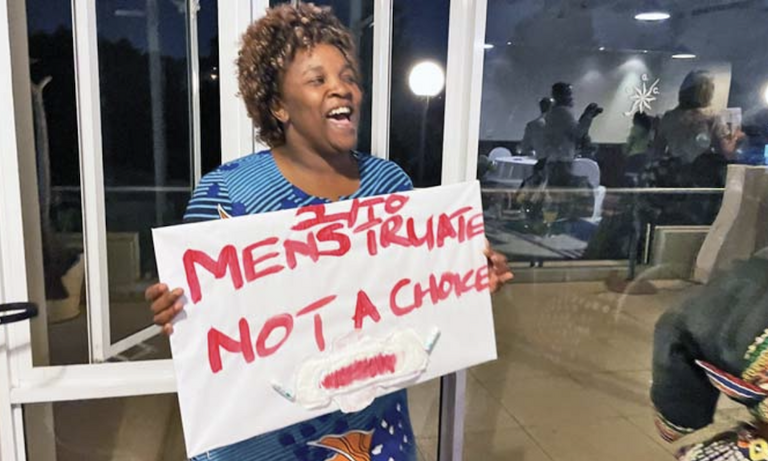
On the International Day of the Girl Child, I had the privilege of moderating the launch of the Menstrual, Maternal and Family Planning Health chapter of the 2026 Barometer. It was more than a meeting. It was a reminder that when girls and young women are trusted with information, resources, and platforms, they do not simply ask for change, they lead it.
Across Southern Africa, girls continue to navigate periods without products, pregnancies without choices, and conversations about their bodies that are too often silenced by stigma. Yet the evidence and the lived experiences shared during the launch showed something powerful: solutions already exist in our region. What we need now is the political will to scale them.
The evidence cannot be ignored
The 2026 Southern African Gender and Development Index (SGDI) chapter presented a regional gender equality score of 75 out of 100 - a sign of progress, but not a reason for comfort. Maternal mortality remains high in the DRC, Lesotho and Madagascar, while seven countries continue to record elevated adolescent birth rates. At the same time, HPV vaccination coverage has reached 60% regionally, proving that coordinated health investments can deliver results.
One of the most striking gaps is that the SADC Gender Protocol remains silent on menstrual health. Menstruation is not a private inconvenience; it is a matter of dignity, education, health, and equality. A girl who cannot manage her period safely may miss school, face shame, or be pushed further away from the information and services she needs to make informed decisions about her body and future.
Girls are already leading
From Bindura, Zimbabwe, Rita shared how Re-Inspiration for Girls Child Empowerment (RIGE) is supporting girls through psychosocial support, economic empowerment, sexual and reproductive health and rights (SRHR), and self-care. Their work goes beyond distributing knowledge—it engages male leaders, challenges child marriage, and creates space for girls to claim their autonomy.
In Namibia, Veronica showed how youth-led digital innovation can break barriers to contraceptive services. Through a digital referral app and trained young leaders, adolescents were connected to accurate information and youth-friendly services. In South Africa, Leah described a peer education model that trains young advocates in schools to sustain menstrual health and comprehensive sexuality education long after external programmes leave.
These initiatives confirm what many of us in the SRHR movement already know: girls are not passive beneficiaries. They are advocates, innovators, educators, and accountability champions.
Can menstrual health open the door to more difficult SRHR conversations?
Our session showed that participants believe it can, but that it should not be the only route. While 10 participants supported a gateway approach, 15 called for direct advocacy on each issue, including comprehensive sexuality education, safe abortion, and gender-diverse SRHR.
The message was clear: menstrual health can help start the conversation, but it cannot carry the whole agenda. Girls need more than pads. They need information, safe schools, confidential health services, supportive communities, and laws that protect their rights. Menstrual health matters - but comprehensive SRHR cannot wait at the door.
What must happen now
As we look toward the post-2030 agenda, the call to action is clear.
1. Push SADC to mandate the Protocol review by the end of 2026
SADC member states must formally mandate a review of the SADC Gender Protocol before the end of 2026. This review must include a dedicated menstrual health subsection, grounded in rights, access, dignity, and financing. Regional frameworks shape national priorities; leaving menstrual health invisible in the Protocol leaves millions of girls without the policy protection they deserve.
2. Scale proven country solutions across the region
Southern Africa does not need to start from zero. South Africa’s Sanitary Dignity Implementation Framework provides a model for coordinated procurement, distribution, menstrual health education, sanitation, and waste management, with a focus on indigent girls and women. Zimbabwe’s Education Amendment Act requires the State to provide sanitary ware and menstrual health facilities in schools. Namibia’s VAT reform on menstrual products shows how fiscal policy can directly improve affordability and access.
These are not isolated successes. They are regional blueprints with potential to be adapted, financed, and implemented at a SADC scale.
3. Turn country evidence into regional pressure
Local evidence is power. Data from community organisations, youth-led initiatives, schools, clinics, and grassroots movements must be shared with the SRHR Thematic Cluster. When country-level progress is documented and connected, it becomes regional evidence. When regional evidence is amplified, it becomes political pressure.
As a Programmes Officer at Women’s Action Group and a member of the SRHR Thematic Cluster, I have seen how grassroots realities often reveal what national statistics conceal. Our role is to make those realities impossible to ignore.
A Region that works for girls
The International Day of the Girl Child should not end with speeches. It should end with commitments - budgeted, time-bound, and accountable.
To SADC leaders: mandate the Protocol review.
To governments: scale what works, the best practices.
To civil society, youth movements, and communities: document, share, and demand!
Girls in SADC are not waiting for permission to lead. They are already leading. Now, the region must meet their courage with action.
#Girlchild #PushForward4Equality #Post2030
(Written by Vimbai R. Nyika, WOSSO Alumni, Programmes Officer, Women’s Action Group (WAG) and member of the SRHR Thematic Cluster)