South Africa: Kicking silence, passing hope, fighting GBV

| Gender Links
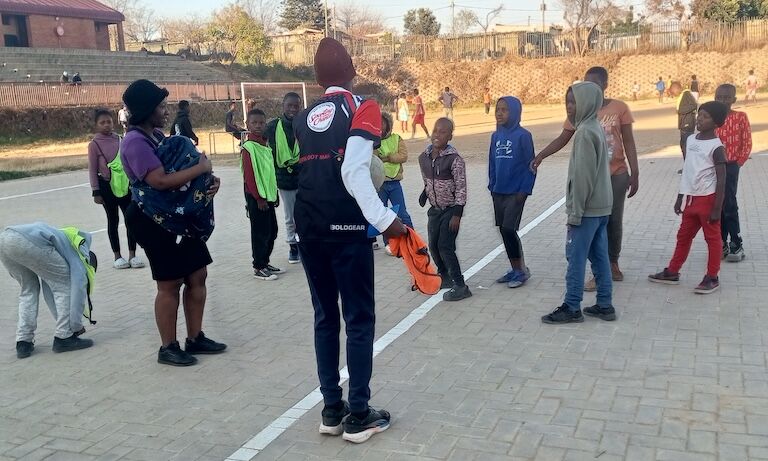
In Diepsloot and Riverside View, sport is more than a game; it is a lifeline. On dusty fields and makeshift courts, young people come together to play netball and soccer. They run, sweat, and laugh, but when the whistle blows and the laughter fades, the real work begins. The field becomes a place of truth, where conversations about gender-based violence (GBV) emerge, carried by the voices of those who live with its shadow every day.Working with these teams alongside my facilitator, Mpho Pasmeni, and the coaches who help manage them, I have seen how sport can be a bridge into difficult dialogues. At first, the field was simply a space for fun. Over time, it has become a space for honesty. Recently, we held talks about GBV; what it is, the many forms it takes, and what to do when you or someone you know is affected. For many of the boys, this was the first time they had been included in such a conversation. For too long, the boy child has been sidelined in discussions of GBV, as though it were only a woman’s issue. Including them has been eye-opening and transformative.One boy, half serious and half joking, asked, “So, coach, if I tell my dad he’s wrong, will I still have a bed to sleep on?” We laughed, but uneasily. That is the thing about dark humour: it reveals what words sometimes cannot. Resistance inside families often comes at a cost.The coaches also reflected, admitting that despite their passion for guiding youth, they may not always recognise the silent cries of a child in distress. A player who seems withdrawn or suddenly aggressive may not simply be distracted or tired; they could be carrying the heavy weight of trauma. The realisation was sobering. Being a coach, they realised, is not only about drills and tactics but about listening differently, learning to see what is not said, and recognising the signs of a child who is hurting.The young people themselves raised another difficult, but vital truth: parents and guardians must be part of these conversations. Excluding them would be like trying to fix a leaking roof by only mopping the floor. Some of the bravest admissions came from girls who spoke openly about their experiences. One said, “If I tell my mom my uncle touched me, she will beat me for lying.” The silence that followed was heavy. She is not alone. In South Africa, 1 in 3 young people will face GBV in their lifetime, and nearly 50% of survivors under 18 say they are not believed when they report abuse. Imagine the courage it takes to speak, only to be silenced twice.And yet, despite these painful realities, there is hope. The field has become a place of resistance. Every pass of the ball, every shared cheer, and every burst of laughter is a small act of defiance against the silence that GBV demands. The youth are realising that teamwork is not just about winning matches but about defending one another in life. Coaches are learning that their influence stretches far beyond sport. Parents are being called in, not called out, to face their role in either fuelling or ending the cycle of violence.Of course, there is pushback. Some in the community dismiss these dialogues as unnecessary or inappropriate. Others laugh off the idea of involving boys. Some parents deny there is a problem at all. But every honest question, every nervous joke, every brave story is proof that the next generation refuses to stay silent.This is how we resist backlash: not always with marches or placards, but with conversations on dusty fields, with coaches who choose to listen differently, with boys who dare to ask uncomfortable questions, and with girls who speak out even when they risk not being believed. These small acts, stitched together, become collective action. They form a movement of young people and allies who are challenging harmful norms and building new ones grounded in dignity, respect, and safety.What keeps me hopeful is the courage of these youth. In a society where GBV is normalised and survivors are often dismissed, they are speaking, questioning, laughing through the pain, and refusing to give in. With support from Mpho, the coaches, and the players themselves, we are creating a culture where GBV is confronted as a community issue, not hidden as a private one. The work is messy and emotional, but every time a child leaves the field knowing they are not alone, that their voice matters, and that their community stands with them, we move a step forward.The field may look ordinary to passers-by, but for us it is a classroom, a stage, and a sanctuary. As long as the ball keeps rolling, these conversations will continue. And with every whistle blown and every laugh shared, we are showing that GBV does not stand a chance against a team that refuses to play by its rules.(Written by Nokukhanya Khumalo, a WOSSO Fellow)
Comments
Related news