

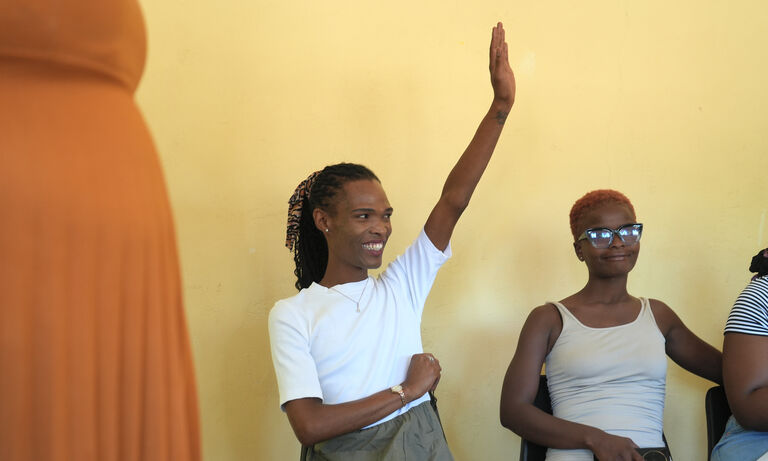
The Rainbow Justice project strengthens legal literacy among LGBTIQ communities, service providers and the wider public in Namibia. Through interactive trainings, dialogue and accessible educational materials, the Legal Assistance Centre is helping communities understand their rights and address discrimination.
The Legal Assistance Centre (LAC) is a Namibian public interest law organisation based in Windhoek, working nationally to advance the rights of vulnerable communities. Through the Gender Research and Advocacy Project (GRAP), the LAC focuses on legal education, policy advocacy and outreach on laws that affect families, including those impacting LGBTIQ communities.
The Rainbow Justice project responds to a complex legal and social landscape in which constitutional promises of equality contradict statutory laws that still criminalise same-sex intimacy between consenting males. This inconsistency fuels discrimination and contributes to limited legal awareness among LGBTIQ communities, the general public and service providers such as police and healthcare workers.
To address these gaps, GRAP delivers interactive legal literacy trainings across Namibia, including in the Kunene, Zambezi, Kavango East and Otjozondjupa regions, with the aim of reaching ten regions in total. Trainings include an introduction to Namibia’s sources of law, legal protections, discriminatory laws and key case developments. Scenario-based work helps participants reflect on challenges faced by LGBTIQ individuals and encourages open conversation.
These workshops create safe environments where participants can ask questions, challenge assumptions, and build confidence. For LGBTIQ groups, change is often seen in increased willingness to speak openly about discrimination. For community groups, growth appears in participants reconsidering initial scepticism and recognising the relevance of equality and dignity. At a workshop in Katima, when an individual described gay people as “unnatural,” another community member respectfully corrected the misconception before facilitators intervened—an indication of collective ownership of new knowledge.
For service providers, trainings clarify misconceptions around the law and create space to discuss challenges in applying legal protections fairly. GRAP uses this feedback to shape future advocacy and research.
The project’s impact extends beyond workshops. GRAP collaborates with partners such as Positive Vibes Foundation and MPOWER to produce accessible educational materials, including a comic on LGBTIQ rights distributed in 5000 newspapers, and a paralegal manual. These tools encourage continued learning and dialogue. Planned legal aid clinics will allow individuals to seek confidential legal advice and support.
By improving legal literacy and fostering spaces for informed dialogue, Rainbow Justice contributes to safer, more inclusive communities and advances efforts to align Namibia’s laws with constitutional principles of dignity, equality and non-discrimination.
Quotes:
Anonymous - I learned many things I did not know, like laws and my rights. It was very informative, and it was a free space to open up.
Anonymous - I never thought I would enjoy this. I really enjoyed this and learned that everyone has a right to live life as they want.
Anonymous - I am fully capacitated by the topic discussed today. I have an insight into civic and human rights and feel empowered to contribute my thoughts.