

Comoros: Economic and climate justice
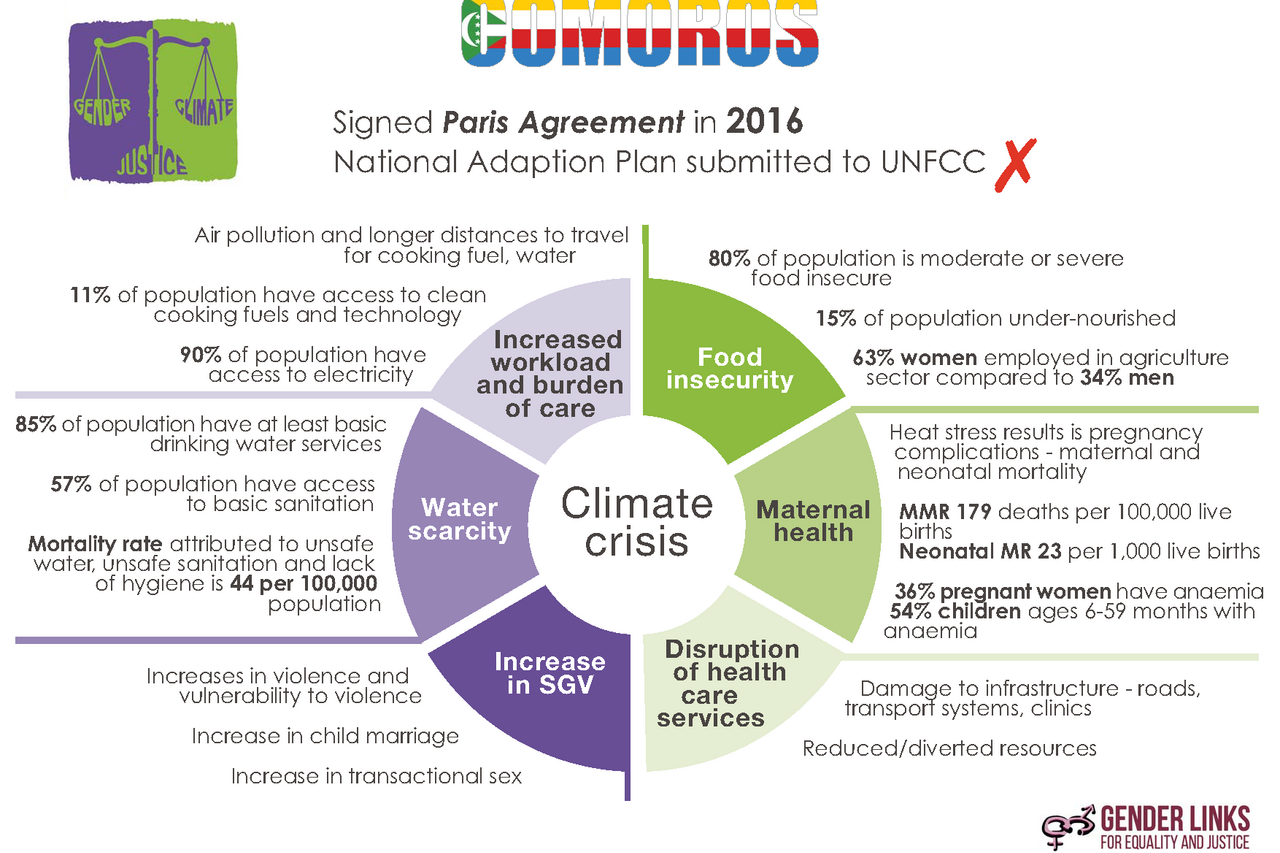
The Comoros is a small archipelago in the south-western Indian Ocean and is made up of diverse coastal and marine environments, from low coasts to cliffs and mountains, and it has an active volcano. The Comoros is densely populated, with approximately 465 inhabitants per square kilometre, and more than half of the population (53%) of 869 595 (2020) people is under the age of 20. High population density places intense pressure on natural resources and the environment. Poverty is widespread throughout the Comoros, with 40% of the population living below the poverty line.
Due to its location and topography, the Comoros is among the most climate vulnerable countries in the world, and 54.2% of the population live in at-risk areas. Changes in climate by 2050 are estimated to be a raise in mean annual air temperature to an average of 28°C, a change that represents a 1°C increase compared to the current situation. A sea level increase of 4mm/year for a total increase of 20cm by 2050 is also expected.
Agriculture, including fishing, hunting and forestry, accounts for 50% of GDP, employs the majority of the labour force and provides most of the exports. Export income is heavily reliant on the three main crops of vanilla, cloves and ylang ylang (perfume essence); and the Comoros’ export earnings are easily disrupted by disasters such as fires and extreme weather.