

Angola: Economic and climate justice
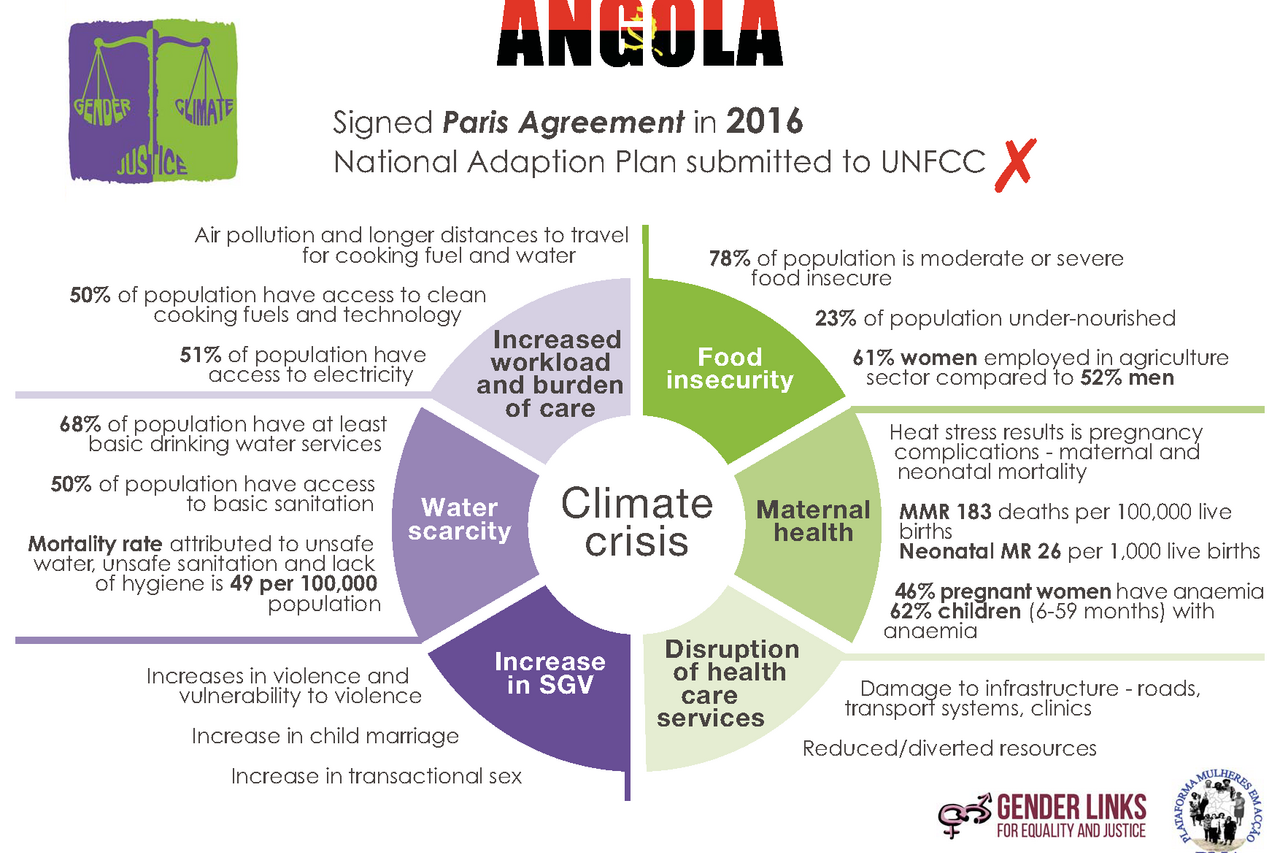
Several lasting impacts of the 27-year civil war have increased Angola’s vulnerability to the effects of climate change. While historically data is limited due to the destruction of weather stations, making it difficult to predict climate variability, recent cycles of drought and floods in the south have caused an estimated $242.5-million in agricultural losses.
Food insecurity has increased since people left their farms and moved into cities during the war, with devastating effects on the agricultural sector. Smallholder farmers comprise 90% of the sector, primarily through subsistence, rain-fed cultivation. Despite the country's fertile soil, just 10% of its arable land is cultivated. Angola is one of the top three food-insecure countries in the SADC region. Migration to coastal areas has concentrated the population on coastlines, which are vulnerable to rising sea levels.
Malaria and diarrhoea are the leading causes of death in the country. More frequent extreme rainfall and flooding could lead to increased incidences of waterborne diseases, and temperature shifts may alter the range of disease vectors and duration of malaria transmission seasons.