Malawi: Challenging stereotypes through gender sensitive reporting

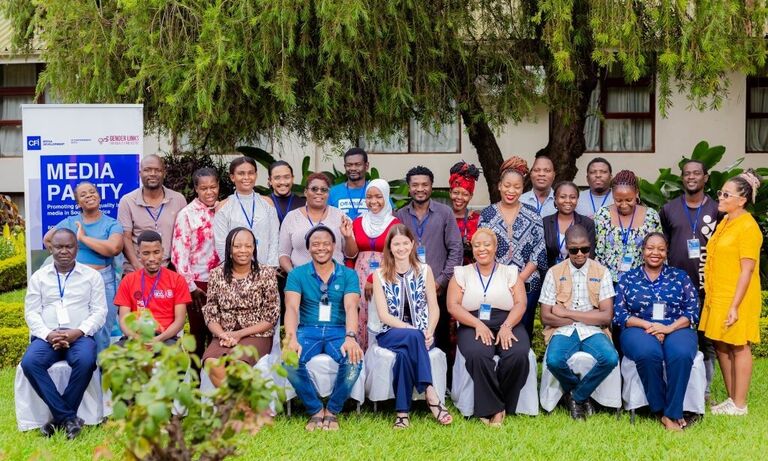
In a world where headlines shape perceptions, a new initiative is teaching journalists to write with balance, empathy, and inclusivity.
The Media Parity Project is more than a project, it’s a call to reimagine storytelling so that every voice, regardless of gender, is represented with fairness and dignity.
Launched earlier this year, the program equips journalists with the skills needed for gender aware and gender sensitive reporting. Its mission is clear: to challenge stereotypes, foster inclusive narratives, and ensure that media coverage reflects the diverse realities of women, men, and marginalized groups across society. By reshaping the way stories are told, the initiative seeks to build a media landscape where representation is not an afterthought but a guiding principle.
One of the participating journalists, Catherine Tinto, who has been practicing journalism for the past six years, shares that the program has significantly enhanced her storytelling skills. She explains that it has helped her craft compelling narratives that shine a light on gender disparities.
“The program has expanded my professional network and boosted my confidence in tackling complex gender issues,” she reveals
As a participant, Tinto emphasizes that such programs are vital in the media landscape because they provide journalists with the essential tools and perspectives needed to report on gender issues effectively. She says by fostering gender awareness and sensitivity, these initiatives promote more inclusive and balanced storytelling, ultimately contributing to a media environment that reflects diverse voices and experiences.
Nkhotakota’s Umunthu FM journalist, Tamandani Hau, who is also a beneficiary of the program, describes it as both a career and personal game changer.
“Before the program, I had little interest in gender issues. I thought they were feminine topics, best pursued by my female colleagues,” he recalls.
Hau explains that the program has reshaped his perception of gender, inspiring him to embrace solution-oriented journalism that goes beyond traditional reporting. Today, he is able to generate ideas with a strong gender aware perspective, enriching both his work and the stories he tells.
He expresses hope that the program will be expanded to more media institutions, fostering a vibrant and impartial media landscape. He believes such growth would help dismantle the negative consequences of gender bias and address the injustices that arise from it, paving the way for more balanced and responsible journalism.
Veteran and award-winning journalist Rebecca Chimjeka Matemba, credits trainings and fellowships such as the Gender Parity Program for shaping and enhancing her skills.
“In my years of practice, I have participated in various trainings, including those focused on gender reporting. But the Media Parity Program is intense, comprehensive, and continues to add significant value to my journalistic skills,” she says.
Matemba explains that through the program, she has gained knowledge of various acts and declarations on gender, which she now confidently cites and applies in her reporting. These references, she says, add depth and enrich the stories she produces.
“This kind of program should reach all journalists at every level of practice. It would bring a huge positive change to the profession,” she adds.
Vice Chairperson of the Media Institute of Southern Africa (MISA) Malawi, Chisomo Ngulube, underscores the importance of training journalists in gender aware reporting.
She notes that research consistently shows women remain underrepresented in the news both as sources and as authors, stressing that the lack of gender-aware reporting has wider consequences:
“Consequently, we continue to alienate women as readers, viewers, and listeners because they don’t see themselves reflected in the media. And that, in essence, leads to media houses losing audiences and with them, valuable business opportunities,” she highlights.
She emphasizes that gender sensitive reporting should be the norm rather than a one-off practice. Media houses, Ngulube argued, must actively cultivate both female and male sources to ensure balanced representation.
He appealed to women to open up, share their stories, experiences, and expertise, noting that women are specialists in diverse fields. Too often, however, they shy away from engaging with the media, which limits the visibility of their voices and contributions.
According to program facilitator, Josephine Chinele, the initiative is vital because it ensures that the media remains current, reflecting societal trends and best practices essential for a modern, dynamic news space.
She emphasizes that in Malawi, gender is a cross-cutting issue that influences every beat, from health and education to agriculture and politics.
Chinele’s assessment of the program so far, highlights the remarkable energy, professionalism, and dedication of the participating journalists.
“They haven’t just attended the trainings; they have actively engaged with the complex concepts of gender aware reporting and applied them immediately to their work. This shows a deep commitment to enriching their craft,” she notes.
Ultimately, the Media Parity Program is not just about improving journalism—it is about reshaping society’s narrative. By empowering reporters to challenge stereotypes and amplify diverse voices, it sets a new standard for fairness and inclusivity in the media. If expanded and embraced widely, such initiatives could transform newsrooms into spaces where representation is the rule, not the exception, ensuring that every story told reflects the dignity, complexity, and humanity of all people.
Written by Chimwemwe Mikwala. This article, first published by YONECO FM, is part of the Media Parity Capacity Building Programme and republished as part of the programme series.
Comments
Related news