Malawi: Breaking barriers in agriculture

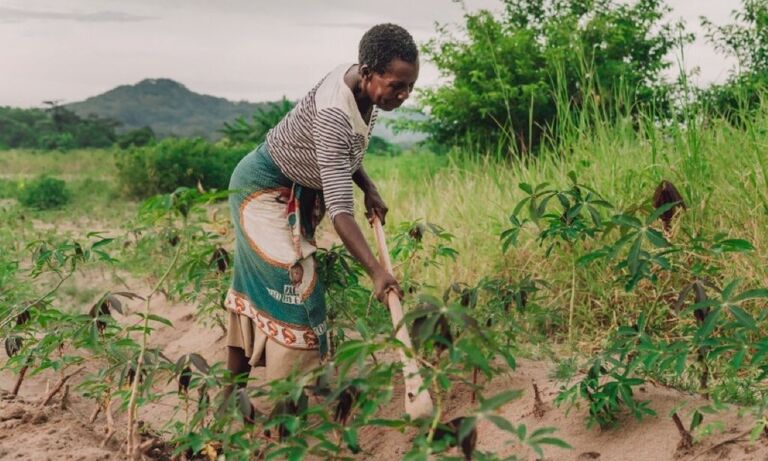
At 27 years of age, Vanesa Mzembe is already a full-fledged farmer. Using irrigation farming, Vanessa grows various crops such as tomatoes, maize and onions at her land in Bunda, Lilongwe.
But for Vanessa, farming is not a hobby.
Having finished her undergraduate studies in animal science at Lilongwe University of Agriculture and Natural Resources (Luanar)in 2021, lack of employment drove her into farming as a source of income.
“When l completed my studies, l even found it difficult to secure an unpaid internship from the government and other organisations, that's why in 2023, I decided to venture into farming so that as a first born in my family, I could be able to support my siblings,” says Vanessa.
Despite the struggles she has faced due to climate change and several others, Vanessa says she is making it in farming to the extent that she is able to pay for her master’s degree in animal science at the same institution.
Currently, Vanessa is now a proud owner of a farmer where she says is able to make around K200, 000 a week in tomato sales.
“This means that there is a lot of potential in agriculture which l earlier could not realise as my focus was to finish my studies and find employment,” Vanessa says.
She advises fellow young people to change their mindset and think of other avenues for economic empowerment other than employment.
According to Vanessa, there is also need for the government to provide enough support for young people to actively participate in agricultural activities.
“The young youth have no choice but to think of taking part in agriculture as a viable alternative to employment especially in the work of diminishing opportunities.
“On the other hand, there is motivation to venture into agriculture because there is high demand for food crops meaning whatever may be grown, will eventually find a place on the market,” says Vanessa.
Elsewhere in Lilongwe, Esnart Mwabi Msiska tends livestock at her small farm. The small farm consists of pigs and chickens. Like Vanesa, it is adversity that drove Esnart into farming.
“After finishing my studies, I was finding it very difficult to find employment, but l was lucky that l was invited to take part in a survey and when l finished the survey, l decided to invest the money into farming, here we are,” Esnart says.
While encouraging fellow youth to embrace farming, Esnart is quick to say that it is all about passion.
She says despite the benefits, there are also a lot of challenges that farmers face in the wake of climate change and unlimited profitable markets for their produce.
“So, at the end of the day, it is all about passion, passion to begin, passion to withstand the challenges and the passion and drive to finish what you started,” Esnart says.
Vanesa and Esnart’s story is not unique.
In Malawi, many more young are finding solace in farming in the face of unemployment.
They’re using their education and skills to innovate and improve agricultural practices.
As in most Southern African countries, most of the food in Malawi is grown by women, most of whom are smallholder farmers.
But several challenges including limited access to resources such as land remain a challenge.
To Vanesa and Esnart, that challenge has been overcome by renting and eventually buying their own pieces of land to expand.
This is also going a long way in creating business and employment opportunities for themselves and others.
A 2018 Malawi population and Housing Census report places unemployment in the country at 18.5 percent.
The country awaits results of a recent labour force survey, but Malawi’s unemployment struggles are there for all to see.
Experts say the agricultural sector has even a high potential of reducing unemployment in the country as well as ending inequalities.
During the campaign in the run up to the 2020 fresh presidential poll, political parties under the Tonse alliance, campaigned on a promise to create over 1 million jobs for the youth through mega farms among others.
However, 5 years down the line, that promise was yet to be fulfilled as the alliance lost power to the former ruling Democratic Progressive Party (DPP) which is now back in power.
In his latest comment on the mega farms, President Peter Mutharika reiterated that the concept remains viable but faulted its implementation saying his government will consider changing the strategy to make it more beneficial to Malawians.
“It is a good concept, but there was too much favouritism and too much corruption in the programme,” said Mutharika of the flagship project.
Malawi’s National Agriculture Policy (NAP) of 2024 specifically pays attention to the participation of the youth, women and other vulnerable groups in agriculture.
According to the policy, inclusivity remains critical to the attainment of the objectives of the Malawi 2063 development agenda (MW2063) and the United Nations’ Sustainable Development Goals (SDGs).
“Both the MW2063 and the SDGs support and recognise the importance of gender equality and social inclusion for men, women, and the youth in enhancing national development.
“Malawi is cognisant of the adverse impacts of gender inequalities and the challenge that the youth are facing across all sectors of the economy, particularly the agricultural sector,” reads the policy in part.
It then goes on to commit the government to gender equality and addressing challenges young people experience in agriculture as well as improving the socio-economic status of all people to realise an inclusive wealth creation agenda.
Speaking just after being sworn in to office, minister of agriculture Roza Mbilizi announced plans for more investments in agriculture as one of the key sectors that can provide employment and business opportunities to young Malawians.
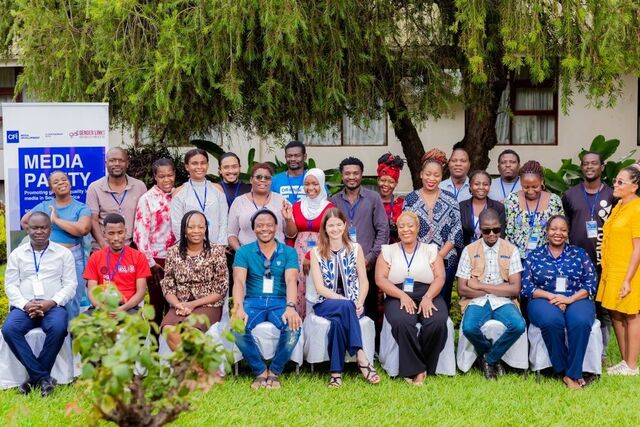
Written by Eric Msikiti. This article, first published by The Times Group is part of the Media Parity Capacity Building Programme and republished as part of the programme series.
Comments
Related news