GL@25: Personal reflection and tribute to excellence and resilience

17 March 2026: As GL turns 25, it is both a moment of pride and reflection for me at personal and professional levels. It is hard to believe GL is only 25 years old, because I feel like it has been around much longer – the journey of GL is intertwined with the story of the Southern African women’s movement.
This story begins at the end of the 1990s, following the 1995 UN Conference on Women held in Beijing, China. I had temporarily taken off my academic hat to establish an institutional base for Emang Basadi, a human rights organisation we had started in the mid-1980s in Botswana.
I found myself among a coalition of activists determined to “bring Beijing back home” to the Southern Africa Development Community (SADC). This group successfully lobbied for the adoption of the Beijing Declaration, and the introduction of a policy and institutional framework for gender issues in SADC.

It was during this time that I met Colleen Lowe Morna, who brought her passion, skills and experience as a media professional and gender expert to found Gender Links, starting from her home in Johannesburg. Her name is synonymous with Gender Links, and she deserves our commendation and gratitude for her vision and commitment in starting what today has become a regional and global brand – a force to reckon with.
But let me not get ahead of the story. In 1998, I extended my leave of absence from the University of Botswana to become the inaugural head of the SADC Gender Unit, in order to maintain the momentum of the regional effort towards gender equality.
The rest, as they say, is history – or in feminist lingo, herstory! Gender Links was formally registered 25 years ago. Since then, I have occupied different professional roles - as a judge of the High Court of Botswana, Attorney General and Ambassador. In all these roles, I had the honour and privilege of contributing to gender equality issues – among others – at a high policy level.
During the past quarter century, therefore, I have not worked directly with GL. But along with other founding members, I have remained a loyal member of the GL Association. I have watched with immense pride as Gender Links entrenched itself and expanded its footprint as a “go-to” regional and global gender equality organisation.
GL’s many achievements include successfully lobbying for the adoption of the SADC Gender Protocol and, through the regional Alliance, monitoring its implementation and that of other regional and global instruments. GL has been a regular presence at SADC and African Union Heads of State Summits, the UN Commission on the Status of Women and other fora tracking progress towards gender equality.
The organisation has developed a modern governance structure at regional level, established affiliates in some SADC countries, and conducted gender training and empowerment programmes in others beyond the region. Research conducted by Gender Links, statistical gender-disaggregated data and publications such as the Gender Barometers have become important sources of knowledge globally and have directly influenced policy.
In other words, GL’s impact has been immense and has earned it a place among global thought leaders in the field of gender equality.
However, as we all know, despite progress in some areas, many challenges remain in the social, political and economic spheres where deep inequalities between women and men persist. Much more still needs to be done, and the current uncertain geopolitical environment presents further challenges. But what I know is that, as in the past 25 years, Gender Links will rise to the occasion.
Along with its trusted partners, it will continue confronting these challenges head on. The full programme of events during this year’s Voice and Choice Summit – which coincides with the 25-year commemoration and the adoption of the 2026–2030 Strategy – is clear testament to this resolve.
To quote this GL forward-looking blueprint: “The 2026–2031 period will be defined by instability, economic strain and human rights regression. Yet it also presents opportunities for bold, rights-based leadership.”
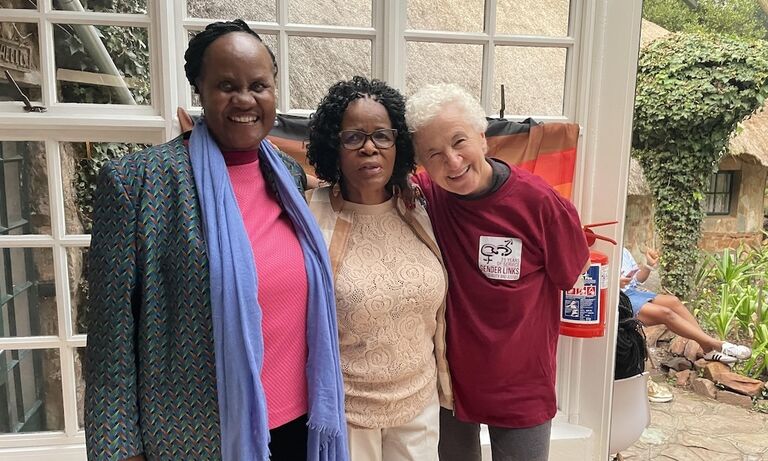
We must continue to be hopeful. Personally, I am excited to have returned to a more active role with the Gender Links Botswana Board. I would like to take this special moment to congratulate the entire GL family on this momentous occasion, as we forge ahead to consolidate the work for the next 25 years and toast to another quarter century – and many, many more.
#PushForwardForEquality
Dr Athaliah Molokomme is the interim Chairperson of the Gender Links Botswana Board. A former Attorney-General of Botswana, human rights lawyer and gender activist, she also served as a High Court judge, Head of the SADC Gender Department, and Botswana’s Ambassador to Geneva.