South Africa: Being LGBTIQ+ Does Not Affect Mentality and Skills of a Human Being

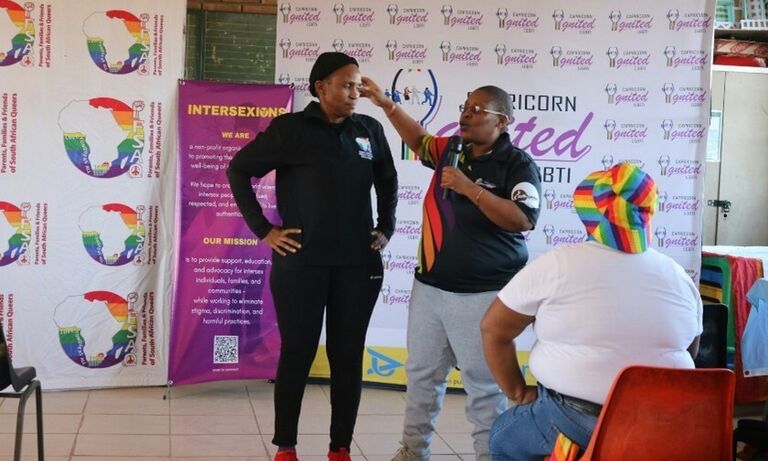
In the rural heartlands of Limpopo, South Africa, Maburwana Lebo Monama is leading a quiet revolution. As an activist and community leader, she is challenging long-held cultural beliefs that stigmatize LGBTIQ+ individuals, proving that identity does not diminish intellect, skill, or humanity.
Lebo is the Managing Director of Capricorn Ignited LGBTI (CIL), Flower Admire Organization For All (FAOFA), Dingaka Madupe Herbal Associates (DMHA), and Maburwana Projects (MABUS). Through these platforms, she champions human rights, youth and elderly empowerment, traditional health advocacy, and spiritual activism. Her work is rooted in a simple but powerful truth: being LGBTIQ+ does not affect the mentality or capabilities of a human being.
In many rural communities, LGBTIQ+ identities are misunderstood, often seen as urban trends or un-African practices. Lebo’s approach is to educate, not confront. “The community existed long ago,” she explains, “but the difference now is that people are expressing themselves openly. We must awaken to the understanding that diversity is part of humanity.”
Her leadership has helped shift perceptions. LGBTIQ+ individuals are now participating in broader community activities, school campaigns, safety searches, spiritual gatherings, and government stakeholder meetings. This visibility is breaking down stereotypes and showing that LGBTIQ+ people are not isolated or unskilled, but active contributors to society.
The change is evident. Communities are learning about the biology, anatomy, and behavioural characteristics of LGBTIQ+ persons. Lebo’s programs emphasize empathy and understanding. “It’s not about you,” she says, “but about the other person and how they feel.”
This inclusive approach has led to a blossoming of LGBTIQ+ participation in professional and entrepreneurial spaces. Local influencers and service providers are gaining recognition, and their work is being embraced by both government and private stakeholders. LGBTIQ+ individuals are registering businesses, forming support groups, and becoming brand ambassadors. Schools are requesting sensitization workshops to better support LGBTIQ+ learners, and community elders are being celebrated through annual events that bridge generational gaps. The impact is deeply personal.
Quote 1: Name and Surname or Pseudonym: Lebohang Lehonye - My life has changed and improved in so many ways. I’ve gained confidence and started to believe in my facilitating skills. Before, I was shy and unsure. Now, I affirm myself every morning and manage my time better. I’ve grown.
Quote 2:
Name and Surname or Pseudonym: Kholofelo Madiba - We would like to take this opportunity to thank you for the service you rendered not only to our organization but to our participants as a whole. Our sessions have imparted very important information to our youth. Le ka moso, let’s work together to build our communities. Salute leadership.
Quote 3:
Name and Surname or Pseudonym: Joe Rapulana -The tough position as a leader is to sometimes make tough decisions. Continue to keep focus, leadership - those are the perks of leadership.
This transformation did not happen overnight. Advocacy in Limpopo was once dormant, and cases of violence against LGBTIQ+ individuals were rising. Lebo and her peers chose a path of education and engagement, not retaliation. They built organizations that foster understanding, patience, and community integration. Their work has sown seeds of hope and possibility.
Looking ahead, sustainability is key. Lebo and her team are actively raising funds to ensure the movement continues beyond her leadership. The goal is to capacitate young advocates who will carry the torch forward, building a future where LGBTIQ+ persons are accepted and integrated into society without stigma or discrimination.
By: Maburwana Lebo Monama