Malawi: Chlorine dispensers ease women’s caregiving burden

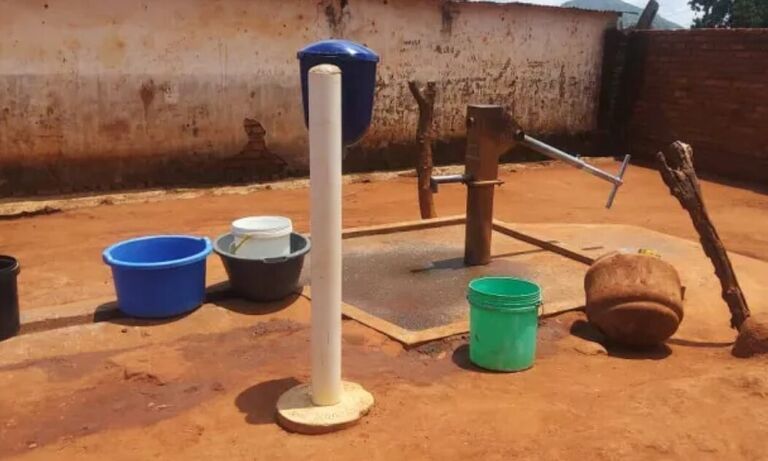
In the rural village of Nyenje, nestled in the rolling hills of Mangochi, a simple yet revolutionary solution has brought hope and health to countless families. The introduction of chlorine dispensers, has transformed the lives of women, reducing their burden of seeking medical care for waterborne diseases and freeing them up to pursue other activities.
For 27-year-old Trinity Chimtengo, a mother of two, the chlorine dispenser has been a game-changer.
Her youngest child, 5-year-old Chikondi, had been suffering from chronic diarrhoea and stomach pains, which Trinity suspected was due to the contaminated water they were drinking.
“I was worried sick about my child’s health, we would spend a lot of money on medication, but the illnesses would keep coming back,” Trinity recalls.
But since the chlorine dispenser was installed in their village, Trinity says Chikondi’s health has improved dramatically. “My child no longer suffers from diarrhoea and stomach pains. The chlorine dispenser has brought us so much relief,” says Trinity with a smile.
“I’ve seen a big change in my family since the chlorine dispenser was installed,” says 35-year-old Gladys Mbewe, a mother of four. “My children used to get sick all the time, but now they’re healthy and happy. And I have more time to focus on my business.”
According to Mbewe, chlorine dispensers contain a chlorine source installed at boreholes and is mixed with water, creating a disinfection solution.”
But what’s even more remarkable is the role that men are playing in protecting the dispensers and promoting hygiene and sanitation practices in their communities. In Nyenje, men are taking ownership of the chlorine dispensers, ensuring that they are well-maintained and that everyone in the community has access to clean drinking water.
“I’ve seen the impact of the chlorine dispenser on my family and community,” says 38-year-old Joseph Banda, a father of three. “My wife used to spend a lot of time caring for our sick children, but now she has more time to focus on our farm. We’re grateful for the chlorine dispenser and the positive impact it’s had on our lives.”
Moses Chisangwala, Programs Manager for Evidence Action said “The chlorine program is a vital investment in human capital, yielding significant economic returns, thereby demonstrating the potential for improved health and prosperity.
“By preventing waterborne diseases through the distribution of chlorine, we are increasing productivity, reducing healthcare costs, boosting education, supporting entrepreneurship, and enhancing economic stability.”
The success of the chlorine dispenser initiative has not gone unnoticed.
The National Water, Sanitation and Hygiene Coordinator in the Ministry of Health, Hollystone Maumsamatha Kafanikhale, praised the initiative, saying: “The success of the chlorine dispenser initiative is a testament to the power of partnership and collaboration. We are grateful to Evidence Action for the initiative, and we look forward to continuing to work together to improve the health and wellbeing of our citizens.”
About 150 households in Nyenje village have benefitted from the initiative.
Reporting by Meclina Chirwa. This special article, produced by The Atlas, is part of the Media Parity Capacity Building Programme and shared as part of the programme series.
Comments
Related news