Lesotho: Voices from the Highlands

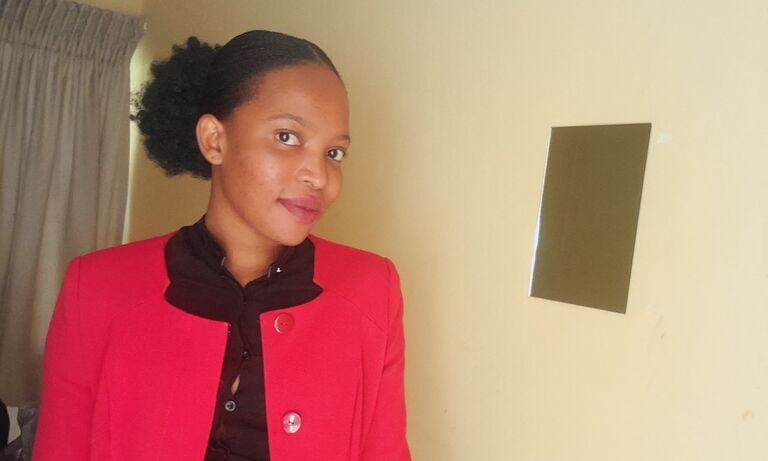
"Behind every mountain view lies a story untold - stories of resilience, pain, and hope that shape the lives of many in the Kingdom in the Sky." As someone who grew up in the southern part of Lesotho, I recently had the privilege of touring the northern region - a journey that was both personal and professional. Lesotho’s breathtaking landscapes never fail to inspire me. Connecting with nature is one of my greatest joys, and this trip allowed me to capture the beauty of my country while engaging in meaningful work.
Along the way, I witnessed the remarkable progress of the Lesotho Highlands Development Authority projects, including the Polihali Dam, transfer tunnels, and landmark bridges. The newly completed Senqu Bridge in Mokhotlong stood out as a true masterpiece of engineering. Observing its scale and precision reminded me that technology is amazing, when harnessed for development, is indeed a gift to humanity. At one viewpoint en route to Mokhotlong, the scenery evoked the iconic Table Mountain in Cape Town - a reminder of how Lesotho’s natural beauty rivals some of the world’s most celebrated landscapes.
During this journey, I worked closely with officers from the Lesotho Mounted Police Service, particularly the Child and Gender Protection Unit (CGPU). Their warmth and professionalism created a strong foundation for collaboration. Traveling through mountainous terrain that was once inaccessible due to poor infrastructure, we relied on a Toyota Fortuner to reach remote communities. The vehicle’s resilience made our work easier, and I left with a personal aspiration: one day, I will own a Fortuner to continue exploring and serving in the land of mountains.
The most anticipated part of this fieldwork was engaging with survivors of gender-based violence (GBV). Some chose to meet us at police stations to avoid drawing attention to their homes, while others welcomed us into their private spaces. Regardless of location, each story carried immense weight. Initially, I feared that listening to survivors’ experiences would overwhelm me emotionally. To my surprise, I managed to adhere to the principle of non-emotional involvement throughout the interviews. Yet, on Friday night of that week, I experienced flashbacks - voices echoing in my mind, vivid recreations of survivors’ pain. It was a difficult moment, but I reminded myself that strength lies in empathy balanced with professionalism.
At times, when survivors cried, I felt tears welling inside me, though I kept my face composed. I realized that being strong does not mean being unfeeling - it means channeling compassion into support. As a woman, hearing stories of intimate partner violence was particularly challenging. I often wanted to ask, “Why not leave?” but professionalism required restraint. Survivors deserve understanding, not judgment.
One of the most striking observations was how cultural norms shape responses to GBV. In Sesotho, there is a proverb: “Monna ke nku ha a lle” - a man is a sheep; he does not cry meaning a man suffers in silence but does not express their pain.. This belief has long silenced men’s suffering. Yet, during our interviews, some men broke that silence, shedding tears as they shared their experiences. It was deeply moving to witness men reclaiming their right to express pain without shame. Patterns also emerged among retired miners and soldiers. Many men who had worked in the mines reported emotional and economic abuse from their spouses, while some retired soldiers were abusing their wives, emboldened by the lack of accountability after leaving service. These dynamics revealed how GBV is not confined to one gender or socio-economic group—it is a national crisis that cuts across all boundaries.
Young girls in rural villages spoke of sexual abuse by older men they trusted as elders. Women described financial control by husbands especially those who are unemployed, even when they themselves were employed they still get abused .These stories underscored a painful truth: GBV does not discriminate. It affects the educated and uneducated, the wealthy and the poor, professionals and laborers alike.
Collecting I-Stories was more than a research exercise - it was a journey of professional growth. I learned to balance empathy with ethics, to listen without judgment, and to provide psychosocial support that empowers survivors. Talking, I realized, is part of healing. Survivors found hope in being heard, and I found fulfillment in being part of their journey toward resilience. This experience reaffirmed my commitment to evidence-based policy and practice in GBV response. It reminded me that every story matters, and every survivor deserves dignity, respect, and support.
My time in the northern highlands of Lesotho was both inspiring and humbling. From marveling at engineering feats like the Senqu Bridge to sitting with survivors of GBV, I witnessed the intersection of progress and pain, resilience and vulnerability. I am grateful to Gender Links for this opportunity. The I-Stories I collected will remain close to my heart - not only as testimonies of suffering but as symbols of courage, healing, and hope.
(Written by Rethabile Lipholo, Gender Links Intern)
Comments
Related news