
Zimbabwe: Driving climate justice through horticulture and fruit farming at local level in Ward 14, Bubi District

Nomuhle Ncube is a Proportional Representative (PR) Councilor forWard 14, Bubi District in Matabeleland North reflects on the ground beneath her feet, now covered in vibrant green vegetation which used to be barren and deeply scarred by gullies. As she looked across the thriving fruit trees and vegetable beds, she would say to herself, “This land tells a story our story. A story of where we were, and where we are determined to go.”
As one of the directors of the Global Women in Mining Empowerment Trust (GWIMET), she had watched the transformation unfold with pride and determination. Being a daughter of this community, she carried the weight of its struggles which were, high unemployment, women facing gender-based violence, food insecurity, and land that seemed to give up long before the people did.
When the idea of introducing safe and environmentally friendly horticulture first came to life, she knew it was more than an agricultural project, it was a lifeline. In the beginning, the project was just a small field with a handful of seedlings, papaya, oranges trees and a few seasonal vegetables. It seemed almost impossible that these tiny plants would one day turn the ward into a centre of environmental renewal as well as women’s empowerment. Councilor Ncube and her team believed in the power of starting small thus “If we do not heal our land, then we cannot heal our people.” she would remind the community during meetings
The challenges were many with land degradation which had worsened over the years as gullies expanded with every rainy season. Women had little economic independence, and many had no skills in climate-smart farming, access to markets was limited, and knowledge of seasonality was lacking. However, with persistence GWIMET began to introduce climate-smart agriculture, safe horticultural practices, Integrated Water Management, and fruit tree farming. Agritex officers conducted capacity building sessions, teaching local women how to care for crops, manage pests, replenish soil, and choose the right fruit trees for each season.
Slowly, the land had started to show signs of life. with ward 14 being home to 300 orange trees from 200 avocado trees, blueberries, soursop, and papaya trees that are already being harvested. The gullies that once threatened the community’s future have been rehabilitated with vegetation that stabilizes the soil. The area has become a hub of activity as women work side by side, weeding, watering, harvesting, and proudly showcasing what they have grown.
Nomuhle Ncube who is spearheading the project described how deeply the project has changed her life. “The horticulture project has changed my life. I used to struggle to make ends meet, but now I have a steady income and can provide for my family. The training and support from GWIMET has given me confidence. I am proud to be a role model to women in my community.”
Her story is echoed by others, including Thandeka Moyo, who initially doubted the project’s potential. “I was skeptical at first, but the fruit tree plantation has been a game changer. I can now provide for my family and contribute to the community. GWIMET’s support has been tremendous. These voices represent the heart of GWIMET’s work: women transformed through skills, opportunities, and confidence. As employment increased, so did dignity. Young women previously vulnerable and without income can now earn enough to support themselves, including purchasing essential items like sanitary wear. Cases of gender-based violence have significantly declined as women gain financial independence and self-worth. What once was barren land is now a productive oasis, and the community’s sense of hope has returned.
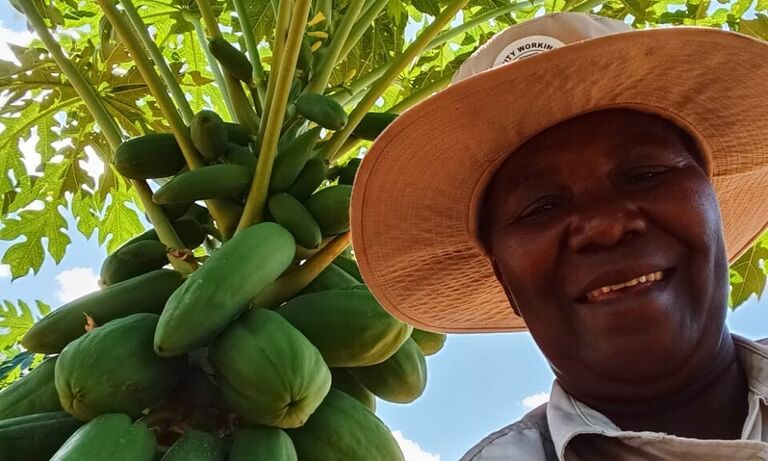
There is great evidence Videos and photographs capture the lush vegetation, women tending crops, rehabilitated landscapes, and fruit trees thriving in areas that were once desolate. This visual evidence supports the lived experiences of the women whose futures have been changed.
To ensure long-term sustainability, the project continues to invest in continuous training, climate-smart techniques, and environmental monitoring. Fruit trees like papaya, which have a limited lifespan, are regularly replenished. As the project grows, it requires more hands, leading to increased employment and extended benefits. GWIMET is now expanding into Ward 22, where land has been allocated to replicate the Ward 14 model. Projected outcomes for the next two years show widespread transformative potential across multiple wards in Bubi District.
Photos taken during the project such as Councillor Nomuhle monitoring papaya trees, soursop trees being checked for pests, and Thando Ncube standing proudly beside her thriving crops serve as powerful reminders of how far the community has come.
The story of Ward 14 is a story of reclaiming land, restoring dignity, and rebuilding futures. Through horticulture and environmental stewardship, GWIMET has not only planted trees it has planted hope, confidence, resilience, and opportunity.
Nomuhle Ncube is a proportional woman representative Councillor fromWard 14, Bubi District in Matabeleland North. She is one of the directors of Global Women in Mining Empowerment Trust (GWIMET) a transformative organization rooted in her home community which works to respond to urgent needs of environmental restoration, economic empowerment, and social wellbeing.
Her relationship with Gender Links Zimbabwe was ignited during councillors’ inductions where issues of Gender Responsive Budgeting and women empowerment were the subject matter under discussion. Issues of women in leadership and economic empowerment drove her to what to bring lasting change to herself and also impact on her community.
Her community was affected by land degradation, high unemployment rate, as well as gender-based vulnerabilities. She had experienced and witnessed some harsh realities and challenges faced by most people. Now she is living to tell the story of how GWIMET is turning degraded land into green life, turning hopelessness into empowerment, and victims of gender based violence (GBV) into independent, skilled women leaders.
GWIMET is committed to sustainable horticulture and fruit farming, focusing on environmental sustainability, community capacity building, climate-smart agriculture, employment creation especially for young women and girls thereby boosting socio-economic empowerment. Our farming model is safe, eco-friendly, and climate-sensitive, ensuring year-round yields by growing seasonal vegetables, fruit trees, and drought-tolerant crops. We believe that “a green environment is the foundation of a healthy community and a thriving local economy”.
Nomuhle had successfully established a thriving orchard with orange, avocado trees, mango and various other species. The project is employing local residents to render manual labour which they are being paid for. However, before our interventions, ward 14 faced severe land degradation, expanding gullies, high unemployment and gender-based violence was rampant which fuelled economic dependency. There was lack of farmer skills and knowledge, limited market access for produce, and poor understanding of seasonal planting and climate-smart practices. The community needed a practical, sustainable solution that would restore both the land and the lives of the people.
GWIMET launched a land restoration initiative by planting fruit trees and vegetables directly on degraded gullies which assisted in reducing soil erosion, restored vegetation cover, and stabilized the ecosystem. The project created jobs, income, skills, and dignity to over 60 community women. The workshops and training sessions done by GWIMET gave participants confidence which led to a decline in gender-based violence in the community.
There are notable changes that have been registered that includes the following; women are affording to buy essentials such as sanitary wear, support their families, and participating fully in community development initiatives. The project has shown remarkable growth were orange trees have increased from 200 to 300, while 130 avocado trees were planted, blueberries, two soursop trees, and over 200 papaya trees are thriving and being harvested. The project now supports expanded employment, including casual and permanent positions, prioritizing young women.
In achieving this Nomuhle collaborated with Agritex officers, local authorities, environmental specialists, and market suppliers from Bulawayo. An integrated water management system was introduced and drought-tolerant crop varieties were planted, and promotion of conservation agriculture was implemented. The collaboration with various government departments and the private sector managed to promote climate-smart agriculture through the tailored workshops and trainings.
We collectively established market linkages and created strong relationships with buyers to ensure fair prices, reliable markets, and reduced post-harvest losses. Continuous monitoring allowed us to track soil stability, gully rehabilitation, tree growth, and climate patterns. Through this approach, the project has grown into a model of environmental and socioeconomic resilience.
To ensure long-term sustainability, we focus on continuous monitoring and evaluation, regular staff and community trainings, replenishing short-lifespan species such as papaya, and sensitizing the community to maintain participation. As the project grows, more employment opportunities are created. Due to the efforts and results on the ground the organization was allocated land in Ward 22 to replicate the Ward 14 model, and in the next two years, we anticipate significant change spreading across more wards in Bubi District.
Evidence of the change can be accessed on videos and photographs showing increased vegetation cover, extensive fruit tree plantations, rehabilitated land, reduced gullies, and community members employed and actively participating in sustainable agriculture. This demonstrates tangible improvements in environmental restoration, reliable income opportunities, community wellbeing, and women’s empowerment.
The voices of those impacted speak volumes., “The horticulture project had changed my life, I used to struggle to make ends meet, but now I have a steady income and can provide for my family.” Thandeka Moyo shares,
Thando Ncube added by saying “I was skeptical at first, but the fruit tree plantation project has been a game changer for me. Not only do I get to provide for my family, but I am also contributing to the wellbeing of my community. These visuals document not only environmental restoration but also active participation by empowered community members.
By Nomuhle Ncube, Zimbabwe
Comments
Related Drivers Of Change